“Cacoon or Cocoon” often causes confusion in English. Cocoon means the silky covering made by insects during change. Cacoon is a tropical bean from the snuffbox bean plant.
Many people ask, is it cocoon or cacoon? The words sound the same but have different meanings. Choosing the right spelling is very important.
In daily English, cocoon is correct for insects, comfort, and design. Cacoon is rare and only used in botany. Knowing the difference avoids spelling mistakes.
Why is There Confusion?
The confusion comes mainly from the fact that the two words sound almost identical in cocoon pronunciation. In English, many spelling variations exist, like “gray” and “grey,” so people assume that cacoon might be an acceptable version. However, when it comes to insects and transformation, the only correct spelling is cocoon.
Spelling errors in English similar to cacoon are common. For example, words like “seperate” instead of “separate,” or “definately” instead of “definitely,” are widely seen online. In the same way, many people type cacoon without realizing that it either refers to a plant or is just a misspelling.
What is a “Cacoon”?
The cacoon meaning is very different from what most people think. In everyday American English, it is almost never used. The botanical term cacoon refers to the tropical bean of the snuffbox bean (Fevillea cordifolia), a climbing vine native to Africa and the cacoon plant West Indies. The beans are flat, large, and have a hard shell that resembles old-fashioned snuffboxes.
The cacoon plant is used in traditional ways. Local communities in the Caribbean and Africa have long relied on cacoon bean medicinal uses for treating ailments, while artisans use the shells for crafts and decoration. In cacoon traditional medicine, the seeds have been linked to healing properties, though scientific evidence is still limited.
To sum up, while most people see cacoon as a spelling error, it is actually a real word in botany. However, it is very rare in the USA and should not be confused with the insect casing.
What is a “Cocoon”?
Now let’s look at the cocoon meaning most people are familiar with. The cocoon definition is the silky protective case that insects, especially caterpillars, spin around themselves during transformation. This stage is known as cocoon in metamorphosis. Inside this safe covering, the insect changes from larva into its adult form, usually a butterfly or moth.
The most famous example is the silkworm cocoon silk production, where each cocoon can be unwound to produce a long silk thread. This process has been central to textile industries for thousands of years. Other examples include cocoon in insects like beetles and moths, which use cocoons for protection while they grow.
The word cocoon is also used in many metaphorical ways. The cocoon metaphor meaning represents comfort, safety, and transformation. You might hear phrases like being “wrapped in a cocoon of comfort,” which suggests warmth and protection. In psychology, this is sometimes called cocoon protection symbolism, meaning creating a shield around oneself to feel safe.
In modern design, cocoon furniture / cocoon chair is very popular. A cozy cocoon chair design creates a private, enveloping space, often used in homes, offices, or outdoor lounges. This style of furniture takes its name from the snug and enclosed shape of an insect’s cocoon.
Finally, the cocoon verb usage is also common. To cocoon means to wrap something up completely or to isolate oneself. For example, “He decided to cocoon himself in his room to rest,” shows how the word is used in daily life.
“Cacoon” vs “Cocoon”: The Differences
Although both words exist, they are not interchangeable. Below is a table showing the cacoon vs cocoon distinctions:
| Aspect | Cocoon | Cacoon |
| Correctness | Standard and correct spelling in English | Often seen as a spelling error |
| Definition | Protective casing spun by insects during metamorphosis | Large bean from the snuffbox bean (Fevillea cordifolia) |
| Usage | Everyday use in science, literature, design, and metaphors | Rare, mostly in botany and traditional medicine |
| Context | Common in USA and globally | Limited to Africa and West Indies |
| Metaphorical Usage | Yes – comfort, protection, transformation | No metaphorical use |
| Common Mistake | People misspell it as cacoon | Mistaken for cocoon |
This clear breakdown shows that in almost every American context, the correct spelling is cocoon.
Examples of “Cacoon” and “Cocoon” in Context
To understand the words better, let’s look at some cocoon example sentences and sentences with cacoon.
“Cacoon” in Context
Researchers in Jamaica studied the cacoon plant to understand its growth patterns. Local farmers in the Caribbean often harvest the beans for crafts. In cultural ceremonies, the cacoon bean is sometimes used as a symbol of protection. Traditional healers in the West Indies still use cacoon bean medicinal uses as part of herbal remedies.
Cocoon in Context
The caterpillar spun a delicate cocoon in metamorphosis, hiding itself from predators. After a few weeks, the cocoon in insects split open to reveal a butterfly. She wrapped herself in a blanket and felt wrapped in a cocoon of comfort. In modern interiors, a cozy cocoon chair design gives people a place to relax.
Read Also : Totalling or Totaling: Which Spelling to Use?
Origins of “Cacoon” and “Cocoon”
Origins of “Cacoon”
The cacoon origin Yoruba word is believed to be kàkàùn selà, which referred to similar vines. The word entered English in the late 1700s and has remained a regional botanical term ever since. Because of this, most Americans are unfamiliar with it.
Origins of “Cocoon”
The cocoon origin etymology can be traced back to the Greek word kokkos, meaning berry, which later evolved into the Latin coccum. The French word cocon then gave rise to the English cocoon spelling in the 1600s. The metaphorical use of cocoon, meaning comfort and safety, appeared in English in the 1800s. The word is closely tied to the natural process of transformation, making it powerful both scientifically and symbolically.
Conclusion: Cacoon or Cocoon?
So, is it cocoon or cacoon? The answer depends on context. In almost every case in American English, the correct word is cocoon, which refers to insect coverings, furniture design, and powerful metaphors of safety and transformation. The word cacoon is real but is extremely rare, referring to the cacoon plant and its beans found in Africa and the West Indies.
To avoid mistakes, remember this simple tip: Cocoon = Caterpillar + Comfort. This makes it easy to recall the right spelling.
When writing essays, blogs, or even simple notes, always use cocoon unless you are talking about the snuffbox bean (Fevillea cordifolia). By understanding the difference between cocoon and cacoon, you can avoid confusion and communicate with clarity.
Cacoon or Cocoon: Understanding the Correct Spelling
The words cacoon and cocoon are often confused because they sound the same. In reality, only one spelling is widely correct in everyday English. The word cocoon refers to the silky case insects make during transformation, while cacoon has a rare botanical use. Knowing this difference avoids unnecessary spelling errors.
In American English, cocoon spelling is always preferred when writing about insects, comfort, or furniture. The word cacoon does exist, but it refers to the bean of the snuffbox bean (Fevillea cordifolia) plant. Since most readers expect “cocoon,” using the wrong spelling can make your writing appear careless or confusing.
Why People Mistake Cocoon for Cacoon
Many people ask, is it cocoon or cacoon, because both words have the same sound. English allows multiple spellings for some words, so people assume cacoon spelling mistake is just another accepted form. Search engines even show both terms, which adds more confusion for students, writers, and everyday readers.
The reality is that cocoon meaning is globally recognized, while cacoon meaning is rare and limited. Mistakes usually happen when people type quickly, rely on phonetic spelling, or are unfamiliar with the botanical word. To avoid this confusion, it helps to remember that cocoon connects to caterpillars, silk, and comfort.
The True Meaning of Cocoon
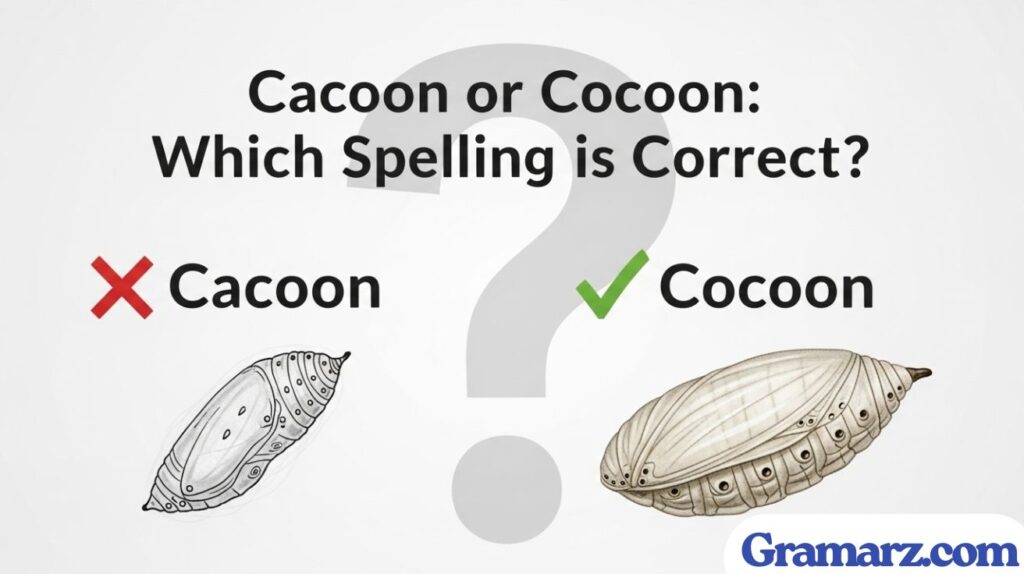
The cocoon definition is simple: a silky protective case spun by insects during metamorphosis. Caterpillars use cocoons to protect themselves as they grow into butterflies or moths. This stage, also called cocoon in metamorphosis, symbolizes transformation and growth, making the word both a scientific and cultural reference in many societies.
Beyond science, cocoon is used metaphorically. The cocoon metaphor meaning represents safety, comfort, and transformation. People often describe themselves as being wrapped in a cocoon of comfort when feeling warm or safe. In modern design, cocoon furniture / cocoon chair adds the same feeling by creating a private, cozy space.
The Rare Meaning of Cacoon
Unlike cocoon, the cacoon plant is not about insects. It refers to the bean of the snuffbox bean (Fevillea cordifolia), which grows in the cacoon plant West Indies and parts of Africa. These beans are large, flat, and used in crafts, ornaments, and even local remedies, especially in traditional Caribbean medicine.
The cacoon origin Yoruba word shows its roots in African languages. Communities in the Caribbean still use cacoon bean medicinal uses, though it is far less known in the USA. For most American readers, writing “cacoon” instead of “cocoon” will look like a spelling mistake, even though the botanical meaning is correct.
FAQ,s
What is the meaning of Cacoon?
Cacoon refers to the bean of the snuffbox bean (Fevillea cordifolia) plant, mainly found in Africa and the West Indies.
Is it cocoon or cacoon?
The correct spelling is cocoon in almost all contexts; cacoon is rare and botanical.
How do you spell cocoon in English?
It is spelled cocoon, meaning the silky casing spun by insects during metamorphosis.
What exactly is a Cacoon?
A cacoon is not an insect covering but a tropical bean used in crafts and traditional medicine.
Conclusion: Cacoon or Cocoon?
After exploring the details, it becomes clear that the question “Cacoon or Cocoon: Which Spelling is Correct?” has a simple answer. In almost every situation, especially for readers in the United States, the right choice is cocoon. This word has a strong connection to insects, growth, protection, and even design elements like the cocoon chair.
The word cacoon, on the other hand, does exist but is extremely rare and specific. It only refers to the bean of the snuffbox bean (Fevillea cordifolia) plant, found in Africa and the Caribbean. Unless you are writing about botany, it will almost always be seen as a cacoon spelling mistake. Remember: Cocoon = Caterpillar + Comfort, while cacoon is strictly botanical.