When you live with chronic depression, the world can feel persistently heavy. You might find yourself going through the motions of your daily life, dragging an invisible weight that makes even simple tasks feel monumental. For many people, the first step toward healing involves standard options like talk therapy or prescription antidepressant medications. These tools work well for some, but they do not work for everyone. If you have tried multiple medications and felt little to no relief, or if the side effects of those drugs made you feel worse, it is completely normal to feel frustrated and exhausted.
You might start to wonder if you will ever find something that actually lifts the fog. Fortunately, medical science has advanced significantly, offering new ways to target mood disorders directly at their source. Transcranial Magnetic Stimulation, commonly known as TMS, is an innovative, FDA-cleared option designed specifically for individuals who have not responded well to traditional treatments. If you are looking for TMS Therapy Norwood MA: Advanced Relief Close to Home, understanding how this technology works and how it fits into your life can help you make an informed decision about your health อาการปวดหลังบน.
The Science of Moving Beyond Standard Treatments
To understand why this approach works when medications fail, it helps to look at what happens inside the brain during chronic depression. Neurological research shows that certain regions of the brain, particularly the prefrontal cortex, often exhibit reduced activity and slowed metabolic rates in individuals experiencing long-term depression. When you take oral medications, those chemicals circulate throughout your entire body, affecting your digestive system, your sleep patterns, and your weight, but only a fraction of the medicine targets the specific brain networks responsible for your mood.
This localized therapy takes a completely different approach. Instead of flooding your system with chemicals, it uses focused magnetic pulses to stimulate the underactive nerve cells in your brain. These magnetic fields are identical in strength and type to the ones used in standard MRI machines. By passing gently through your skull, these pulses encourage your brain cells to fire more effectively, effectively reawakening the pathways that regulate your emotions. Over time, this stimulation helps your brain rebuild healthy neural connections, leading to lasting improvements in how you feel and function.
Because this method targets only the specific areas of the brain involved in mood regulation, you do not have to deal with the systemic issues caused by pills. There are no struggles with sudden weight gain, emotional numbing, sexual dysfunction, or dry mouth. It offers a precise, elegant solution for people who need advanced mental health support but cannot tolerate the heavy toll of traditional pharmaceuticals.
What to Expect During Your Treatment Journey
Beginning a new medical treatment can feel intimidating, especially when it involves technology you might not be familiar with. Knowing exactly what happens during a typical session can ease your anxiety and help you prepare for the process. This therapy is entirely non-invasive, meaning it requires no surgery, no sedation, and no recovery time. You remain fully awake, alert, and conscious throughout every single appointment.
When you arrive for your first session, your care team will perform a mapping process to customize the treatment to your unique biology. They will identify the exact location on your scalp where the magnetic coil needs to rest and determine the precise level of magnetic energy required to stimulate your brain cells effectively. Once these measurements are locked in, your actual daily sessions can begin.
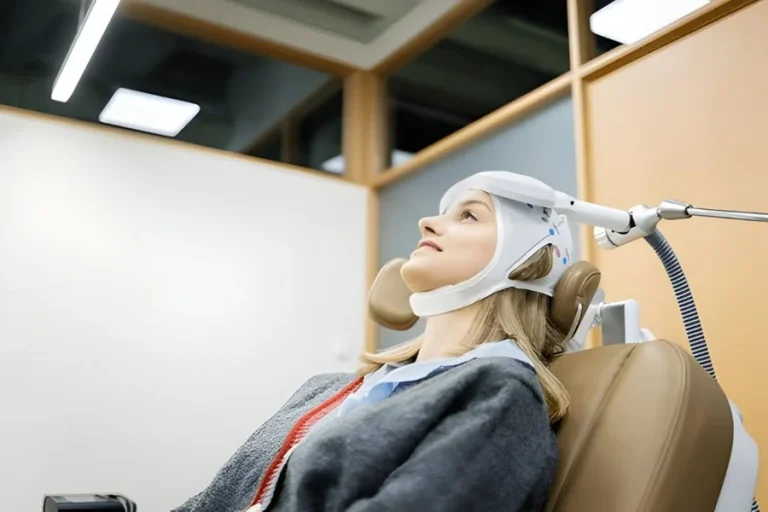
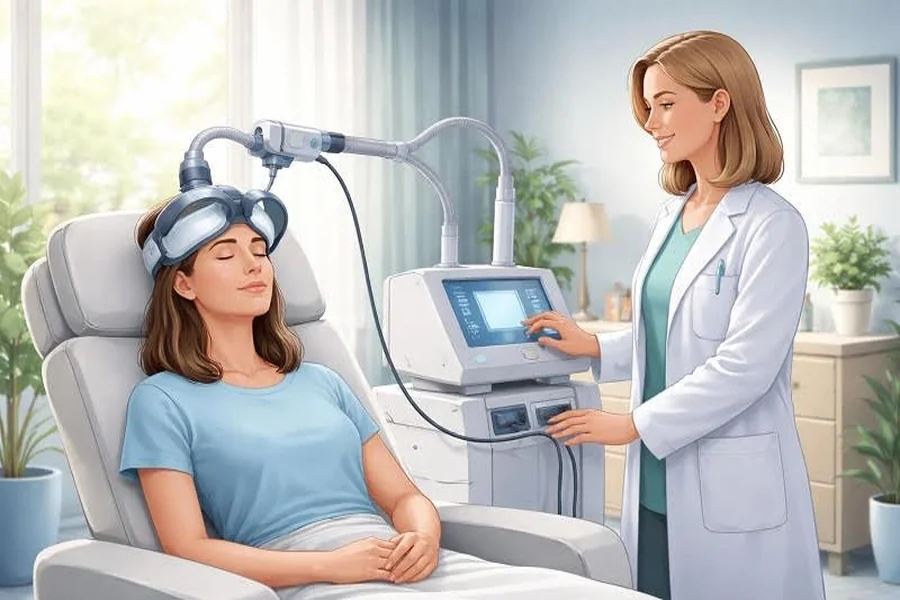
During a standard session, you sit comfortably in a reclining chair, much like a dentist’s chair. A small, curved magnetic coil rests gently against your head. When the machine turns on, you will hear a clicking sound, often compared to the sound of a woodpecker, and you will feel a light tapping sensation on your scalp. Most people find this sensation easy to tolerate and adapt to it within the first few days. A single session usually lasts between twenty and forty minutes. Because there is no anesthesia involved, you can read a book, listen to music, or chat with the technician while the treatment is underway. As soon as the session ends, you can stand up, drive yourself home or back to work, and continue with the rest of your day without any downtime.
The Importance of Consistency and Neuroplasticity
A typical course of treatment involves daily sessions, five days a week, for a period of four to six weeks. This schedule might sound demanding at first, but the frequency is vital to the success of the therapy. The brain changes through a process called neuroplasticity, which is its ability to reorganize itself by forming new neural connections. Just like going to the gym once will not build muscle, a single session will not permanently alter your brain chemistry. The repetitive, daily stimulation reinforces the new pathways, making them stronger and more permanent over time.
Many patients begin to notice subtle improvements around the third or fourth week of treatment. You might find that your sleep becomes more restful, your energy levels start to even out, or the heavy thoughts that used to dominate your morning begin to lose their grip. By the end of the full course, many individuals experience a significant reduction in their symptoms, and some achieve complete remission from their depression.
Why Localized Care Near Norwood Matters
Because consistency is the backbone of successful treatment, choosing a clinic that is close to home or work is a major factor in your success. Trying to fight heavy traffic or commute long distances every day for six weeks can quickly turn a healing experience into a stressful chore. When you choose a provider right in your local area, you remove a massive barrier to your own recovery.
Opting for a local clinic also means you can easily integrate your care into your existing routine. You can schedule your appointments before your workday begins, during a extended lunch break, or on your way home in the evening. This seamless integration ensures that you can prioritize your mental health without completely disrupting your family life or professional commitments. Additionally, a community-focused clinic often provides a warmer, more compassionate environment than a massive, impersonal metropolitan hospital. You get to know the staff, the environment becomes familiar and safe, and you receive the personalized attention you deserve.
If you are tired of solutions that only treat half the problem, it might be time to consider an effective depression treatment that looks at your brain biology differently. You do not have to accept chronic sadness as your permanent reality, and you do not have to travel far to find modern, science-backed care.