A manufacturer’s shingle warranty can run 15 years, and some product coverage stretches past 30. The crew nailing those shingles down may not last two seasons. That mismatch is the entire risk in hiring a roofer after a storm, and on Islip’s South Shore it turns into real money every autumn, when out of town crews work the blocks door to door with clipboards and a discount that expires Friday. The argument here is blunt. You are buying a company rather than a price, because only one of those is still around when the ceiling stains show up. Anyone comparing roofing companies islip ny homeowners actually recommend should sort on staying power first and total second.
The Numbers Behind Vanishing Roofing Contractors
Start with why the door knocking happens at all. Insurance money moves after a storm, and more of it is in play than five years ago. Insurance Journal reported in March 2026 that home premiums climbed in 95% of U.S. ZIP codes between 2021 and 2024, with the Consumer Federation of America putting the increase at $648 for a typical homeowner. Bigger premiums travel with bigger deductibles and bigger claim checks, and that combination pulls crews in from three states away. The complaint we see most often is not a botched install at all. It is a phone number that stopped working in February.
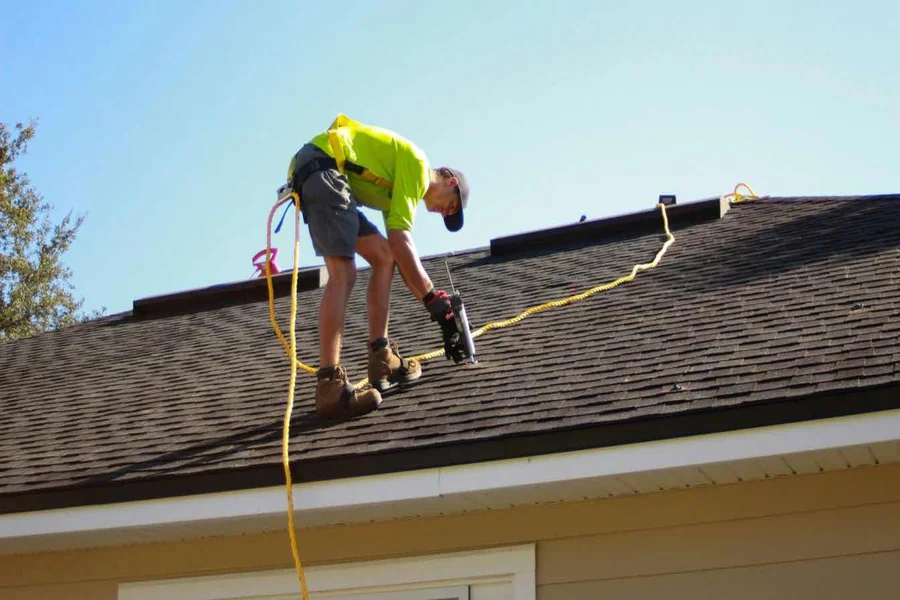
Storm damage is also harder to read than it looks from a lawn chair. Age changes how a roof fails, and a 2025 study in Frontiers in Materials measured a 108% difference in hail damage between naturally weathered shingle specimens and unweathered controls, which means a fifteen year old roof can be wrecked by the same hailstone that barely marks a new one. Do not climb a storm damaged roof to check it yourself, because fall protection under 29 CFR 1926.501 was OSHA’s single most cited standard for the year ending September 30, 2025, and a wet, loosened deck is where a good share of those falls happen. Hire an insured professional and get the findings in writing.
Warranties Only Matter If The Company Survives
Read the warranty language on any proposal and notice how it splits in two. There is manufacturer coverage on the material itself, and there is the installer’s own labor warranty, and the second one is the half that fails first. Material defects are rare. Installation errors are not, and they surface at the valleys, the chimney flashing, and the pipe boots, usually a year or three later, once the original crew has relocated to whichever county got hit hardest that spring. A 15 year labor warranty from an owner operated business that has worked the same county for decades is a completely different instrument from the same 15 years printed by an LLC that registered in April. Ask who picks up the phone in December. Homeowners comparing roofing companies islip ny has kept in business for twenty years tend to find those firms are not the low bid, and the gap on a full replacement runs a couple of thousand dollars. Cheap now, expensive later, and the bill comes due the first time water finds a seam.
A homeowner a few blocks off Union Boulevard found this out in January. She had paid half down to a crew working her street after a nor’easter, got a roof that looked fine from the curb, and then learned the warranty certificate named a company that had already dissolved. Her second roofer charged $2,400 to redo the flashing and the ridge vent. That first payment bought a delay and nothing else.
Questions That Separate Pros From Storm Chasers
Vetting a contractor is a fifteen minute phone call, and almost nobody makes it. The questions below make a storm chaser restless, because each answer has to be a document rather than a reassurance. Ask them before any deposit changes hands.
- How long has this business operated under this exact name and license number? A good answer includes a Suffolk County home improvement license you can look up in about a minute.
- Who actually carries the labor warranty, you or the manufacturer, and what voids it? A good answer separates the two plainly and hands you the document before you sign anything.
- Will the owner be on the job, or is the crew subcontracted? A good answer names the person and says how often they will be on site.
- When does work start, and what happens if that date slips? A good answer gives a real range and a written change order policy.
- Can I get your liability and workers compensation certificates directly from the insurer? A good answer is a certificate emailed by the carrier, not a photocopy from a folder.
That fourth question carries more weight than it appears to. Roofing Contractor’s homeowner survey found that 88% of contractors begin work within two weeks of the agreement, so a lead time measured in months deserves a follow up question rather than a shrug. Honestly, the trade’s scheduling reputation is worse than its record, and much of that grudge dates to the era of four month waits on one shingle color. Back to the deposit. A reasonable one lands somewhere between 10% and 30%, held against materials, and anything near half up front on a residential tear off deserves a real explanation.
Hiring A Roofer Who Stays Reachable
Put the five signals in one place. Years under one registered name, a labor warranty written by the installer and not only the manufacturer, an owner who shows up on the job, insurance certificates that arrive from the carrier, and a deposit that stays modest. None of that guarantees a flawless roof, and anybody promising one is selling. It does guarantee somebody to call when a stain appears on the bedroom ceiling in year four, which is the one thing a low bid cannot cover. Collect two or three estimates, verify the license numbers yourself, and keep the proposal that reads like a contract instead of a sales sheet. The company answering the phone next January is almost always the one that was answering it last January.