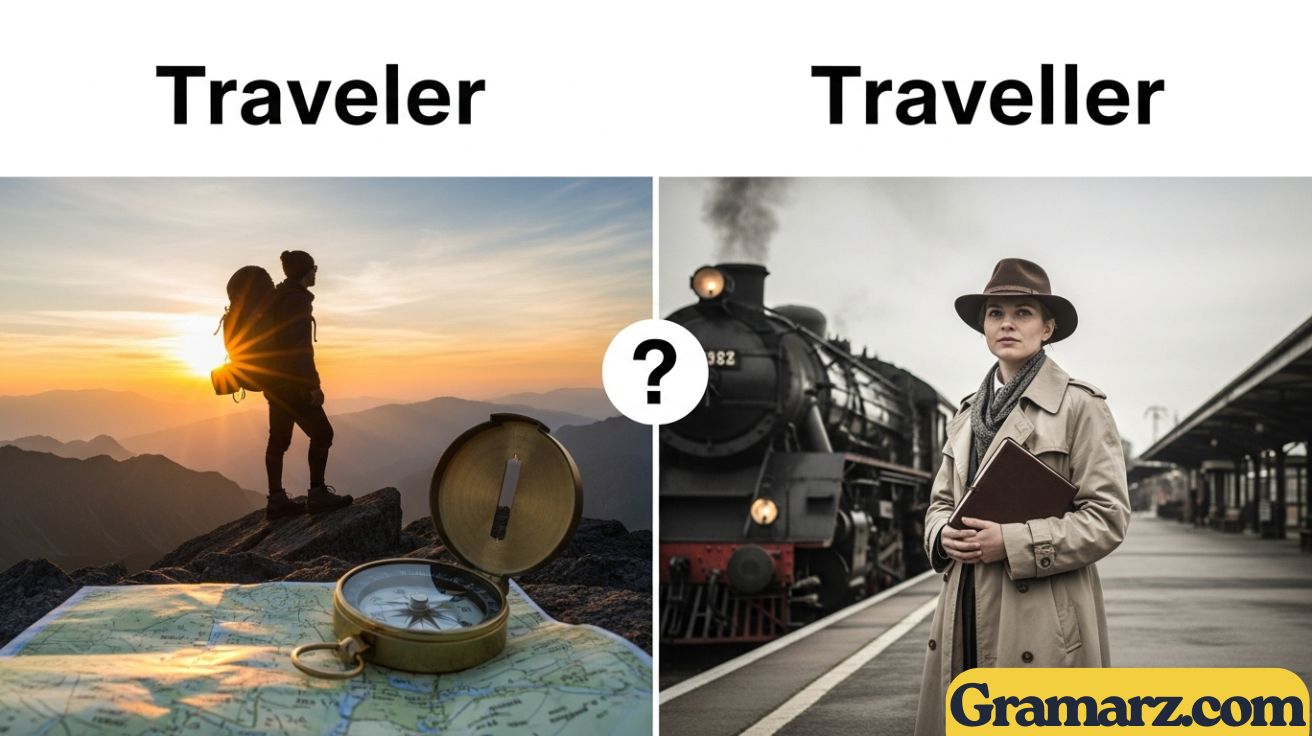
A traveller or traveler is a person who goes from one place to another. They may travel for work, fun, or adventure. The word can be spelled with one “l” or two depending on the region.
Many people get confused about the correct spelling. Should it be traveller or traveler? This small difference can matter in writing and reading. Knowing the right spelling helps you write clearly.
The spelling depends on where you are. In the US, traveler with one “l” is common. In the UK and other countries, traveller with two “l” is used. Both forms mean the same thing: someone who travels.
The Tale of Two Spellings
The difference between traveler and traveller is not random. It is a result of language evolution and English spelling conventions shaped over centuries. The word “travel” comes from the Old French word travailler, meaning “to work hard,” and it entered the English language during the medieval period. Over time, English developed regional variations influenced by cultural, political, and historical factors.
Noah Webster simplifications led to dropping extra letters in words to make them simpler and more phonetic. In contrast, the British retained older forms of words, giving rise to the double “l” in traveller spelling. These differences illustrate how historical spelling changes and regional preferences have shaped modern English.
The American Way: ‘Traveler’

In the United States, the preferred spelling is traveler. This spelling is a reflection of the US English spelling rules that emphasize simplicity and phonetic logic. Noah Webster simplifications in the 19th century encouraged dropping unnecessary letters, which is why Americans spell it with a single “l.” The American style is consistent with other spelling rules, such as “canceled” instead of “cancelled” or “traveled” instead of “travelled.”
In practical terms, using traveler spelling in American publications is essential for consistency and professionalism. For example, in sentences like “The weary traveler finally reached his destination” or “American Airlines welcomes all travelers to enjoy our services,” the single “l” version is preferred. This reflects audience-focused language and aligns with style guide recommendations like the AP Stylebook.
British Style: ‘Traveller’
Across the Atlantic, British writers prefer traveller spelling, keeping the double “l” in both the noun and its derivatives. This approach follows UK English spelling rules, which often retain historical forms and respect commonwealth English spelling traditions. The British method also aligns with the consonant doubling rules, where a final consonant is doubled when a suffix is added, even if the stress does not fall on the final syllable.
British publications, such as The Guardian, use “traveller” consistently: “The seasoned traveller had visited every continent by the age of 30.” Here, the double “l” is not merely a stylistic choice but a reflection of English spelling conventions rooted in history. Past tense spelling differences are also evident, as “travelled” replaces “traveled,” demonstrating the British commitment to traditional forms.
Beyond the US and UK: Global Usage
English is a global language, and not every country strictly follows American or British rules. In many nations, the choice between traveler and traveller depends on historical ties and cultural influences. While the US leans toward simplicity, the UK’s influence spreads to many Commonwealth nations, creating a mixture of global English differences that writers should be aware of when targeting international audiences. Understanding these variations is crucial for travel vocabulary differences and professional communication across borders.
Canadian Conundrum
Canada represents a unique case in the traveler vs traveller debate. Canadian English often blends American and British practices. While traveller spelling is common, traveler spelling is also widely accepted, reflecting the country’s position between US practicality and British tradition.
Writers in Canada must choose spelling based on audience, context, and brand standards, which highlights the importance of audience-focused language and brand identity in writing.
Down Under Decisions
In Australia and New Zealand, Australian English spelling generally favors the British form, using traveller. However, the influence of American media, technology, and online content has created some flexibility, particularly in informal writing.
This reflects the growing impact of digital age writing tools and the interconnectedness of global English. Younger writers and bloggers often mix traveler spelling with traveller spelling, demonstrating the ongoing evolution of English spelling conventions.
The Rules Behind the Spellings
Understanding the rules behind traveler spelling and traveller spelling helps explain why these variations exist. The British system follows the consonant doubling rules, which state that when a word ends with a single consonant preceded by a single vowel, the consonant is doubled before adding a suffix, such as -ed or -ing.
In contrast, American rules simplify this process, keeping only one consonant unless pronunciation is affected. The word “travel” is irregular because the stress is on the first syllable, making it a special case in the past tense spelling differences between US and UK English.
Consonant Doubling: A Quick Guide

To clarify, the consonant doubling rules can be summarized with a few simple examples. In British English, “travelling” doubles the “l,” whereas in American English, “traveling” keeps it single.
The same applies to “cancelled” vs “canceled” and “modelled” vs “modeled.” This knowledge is crucial for writers who aim to maintain accuracy in travel vocabulary differences and follow English spelling conventions consistently.
Why ‘Traveler/Traveller’ is Special
The word “travel” does not follow the usual stress pattern that triggers consonant doubling. The stress is on the first syllable, which is why American English favors traveler spelling, while British English chooses traveller spelling.
This irregularity shows that language evolution is not always logical. It also highlights how historical preferences and cultural identity shape writing practices.
Table of Words, Meanings, Examples, and Synonyms
| Word | Meaning | Example | Synonyms |
| Traveler/Traveller | A person who is traveling | The seasoned traveler had visited over 50 countries. | Voyager, Tourist, Globetrotter, Wanderer |
| Journey | Traveling from one place to another | Their journey to the mountain top was rewarding. | Trip, Expedition, Voyage, Odyssey |
| Itinerary | A planned route or journey | She planned her itinerary carefully. | Schedule, Plan, Agenda, Route |
| Wanderlust | A strong desire to travel | His wanderlust led him to explore remote corners. | Travel bug, Restlessness, Nomadism |
| Excursion | Short trip for pleasure | The cruise offered several excursions to nearby islands. | Outing, Trip, Jaunt, Expedition |
| Sojourn | Temporary stay | Her sojourn in Paris lasted three months. | Visit, Stay, Stopover, Residence |
| Expedition | Journey for a specific purpose | The scientific expedition to Antarctica was successful. | Quest, Venture, Mission, Voyage |
| Nomad | Person who does not stay long in one place | As a digital nomad, she worked from different countries. | Wanderer, Rover, Itinerant, Drifter |
| Globetrotter | Person who travels widely | The globetrotter had visited every continent by 30. | World traveler, Jet-setter, Cosmopolitan |
| Wayfarer | Traveler, especially on foot | The weary wayfarer sought shelter as night fell. | Pilgrim, Wanderer, Journeyer, Rover |
Digital Age Implications
The digital age has added new layers to the traveler vs traveller discussion. Online content, blogs, and social media have made it essential to choose the correct spelling for SEO and audience engagement. Using traveler spelling for a US audience ensures better alignment with digital age writing tools, while ignoring these nuances can reduce search visibility. Furthermore, many writing tools rely on regional settings for spell-check and autocorrect, which can introduce inconsistencies if not properly configured.
SEO and Online Searches
In the world of online content, spelling impacts how your audience finds you. Search engines often match queries like “best traveler tips” with traveler spelling in American English. Ignoring regional preferences can limit reach and reduce engagement. Writers targeting a US audience should stick to traveler spelling for SEO optimization.
Spell-Check and Autocorrect
Modern writing tools automatically apply either American or British spelling. For instance, Microsoft Word or Google Docs may flag traveller spelling as incorrect in the US. These tools are helpful but can also reinforce global English differences, so writers need to manually check their work to maintain consistency.
Industry-Specific Usage

Travel and Tourism
In the travel industry, both spellings are often used depending on the target audience. Global companies like Lonely Planet adopt traveller spelling on their UK site and traveler spelling on their US site. This reflects careful consideration of brand identity in writing and audience-focused language.
Journalism and Publishing
Style guides dictate which spelling to use. In the US, the AP Stylebook recommends traveler, while UK publications like The Guardian use traveller. Following style guide recommendations ensures consistency in professional writing and publishing.
The Great Debate: Does It Really Matter?
Comprehension and Communication
While the difference between traveler and traveller is minor, it can impact professional perception. Readers in the US expect traveler spelling, and inconsistency can distract from content quality. However, in general communication, both forms are understood due to linguistic diversity in English.
Brand Identity and Target Audience
Choosing the correct spelling signals attention to detail and audience awareness. American brands using traveler spelling emphasize their local roots, while British brands using traveller spelling convey tradition and historical connection. This illustrates the subtle but powerful role of brand identity in writing.
Language Evolution and Future Trends
Historical Changes
English spelling has always evolved. Words like “color/colour,” “canceled/cancelled,” and “jewelry/jewellery” illustrate historical spelling changes similar to traveler vs traveller. This shows that language evolution is continuous, shaped by culture, technology, and regional preferences.
Predictions for the Future
Some linguists predict that globalization and online communication may lead to a convergence of spelling, but regional differences will likely persist. The choice between traveler and traveller will remain a marker of cultural identity and audience targeting.
Read Also : 150 Fascinating Science Words That Start With Y
Why the Traveler vs Traveller Debate Exists
The debate between traveler and traveller stems from the historical evolution of English. American English favors simplified spellings, while British English preserves older forms. This distinction reflects language evolution, cultural influences, and historical spelling changes. Understanding the origin of these differences helps writers choose the correct form for their audience and maintain consistency in writing.
Over time, these differences have influenced travel vocabulary differences worldwide. American writers typically use traveler spelling, aligning with US English spelling rules, while British writers use traveller spelling. Recognizing these variations is essential in digital content, publishing, and professional communication, ensuring that writing matches audience expectations and style guide recommendations.
The Role of Noah Webster Simplifications
Noah Webster simplifications significantly shaped American spelling. By removing unnecessary letters and streamlining words, Webster aimed to make English easier and more phonetic. This is why Americans write traveler instead of traveller. His reforms influenced other common words like “color” and “canceled,” demonstrating how US English spelling rules differ from British conventions.
Webster’s influence continues today, especially in education and professional writing. Writers in the US often default to traveler spelling to maintain clarity and follow widely accepted American English vs British English spelling standards. These simplifications also help non-native speakers learn English more easily while preserving comprehension across global audiences.
Understanding British Style: Traveller
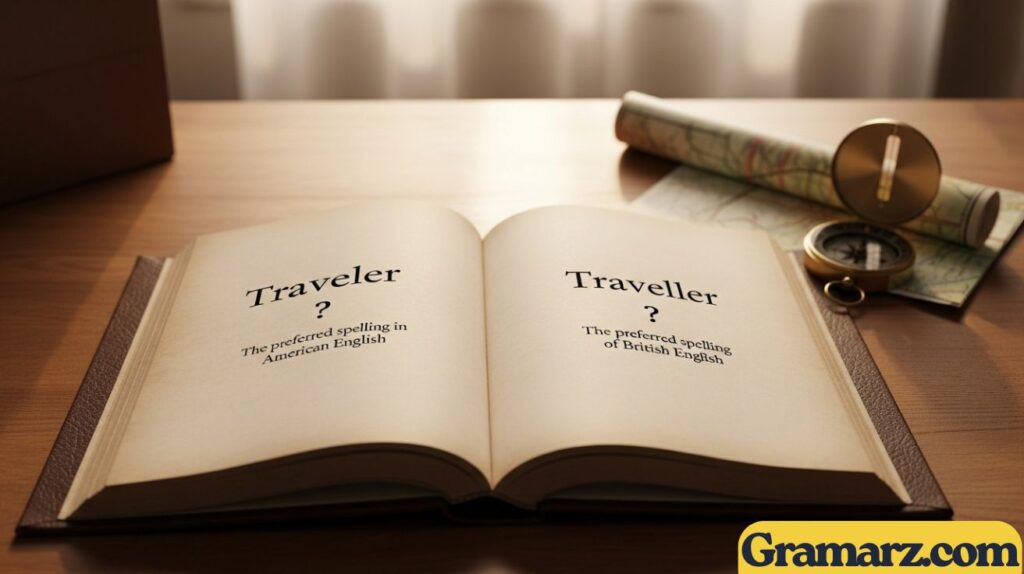
British English keeps the traditional double “l” in traveller spelling, reflecting a respect for historical forms. UK English spelling rules often favor consonant doubling, even when stress patterns differ. This approach aligns with Commonwealth English spelling and emphasizes linguistic heritage, making the written word a connection to English history and historical spelling changes.
In the UK, “travelled” is also standard for the past tense, showing consistency with past tense spelling differences in British English. Writers and editors targeting international audiences should recognize these conventions to ensure accurate usage of travel terminology, maintaining both professional credibility and audience trust.
How Global English Differences Affect Writers
English is no longer confined to the US or UK. Global English differences mean that writers must adapt their content depending on region. Countries like Canada may use either traveler spelling or traveller spelling, reflecting cultural and historical influences. Awareness of these nuances helps writers avoid confusion and maintain audience-focused language in international publications.
Australian English usually favors traveller, but exposure to American media has introduced traveler spelling into informal contexts. Writers must consider digital age writing tools, SEO, and readability when addressing global readers. Recognizing linguistic diversity ensures communication is clear, professional, and culturally sensitive.
The Impact of Digital Writing Tools
Modern writing often relies on digital age writing tools, such as spell-checkers and autocorrect. These tools may default to traveler spelling for US settings and traveller spelling for UK settings. While convenient, this can create inconsistencies if documents are shared internationally, highlighting the importance of manual proofreading.
Writers must also consider SEO when choosing spellings. For example, American audiences search for “best traveler tips,” making traveler spelling more effective in online content. Understanding English spelling conventions and using tools wisely ensures consistency while maximizing digital visibility.
Travel Industry Preferences for Spelling
The travel industry must navigate the traveler vs traveller debate carefully. Companies like airlines, travel agencies, and guidebooks often use traveler spelling in the US and traveller spelling in the UK. This practice aligns with brand identity in writing and caters to audience expectations while respecting linguistic diversity.
Content marketing, blogs, and guides require consistent spelling for professionalism. Writers must balance audience-focused language with brand tone. For example, using traveler spelling in US promotions improves engagement, while traveller spelling appeals to UK and Commonwealth readers, reflecting both style guide recommendations and cultural accuracy.
Practical Tips for Writers and Editors
Writers targeting American audiences should always use traveler spelling to maintain US English spelling rules and meet reader expectations. Consistency is key, whether writing articles, blogs, or marketing content. Checking style guides, reviewing spell-check settings, and understanding travel vocabulary differences are essential for professional writing.
Editors should ensure that documents maintain uniform spelling, especially when content crosses borders. Considering digital age writing tools and audience-focused language helps prevent errors. Awareness of linguistic diversity and historical spelling changes ensures clarity, credibility, and polished communication across American and international contexts.
Practical Tips for Writers and Editors
For American writers, the key to mastering this spelling is simple. Always know your audience: stick to traveler spelling for US readers. Follow style guide recommendations like AP Style. Maintain consistency throughout your document, whether writing an article, blog post, or marketing content. Consider context when quoting or referencing international sources. Above all, understand that the choice reflects both professionalism and respect for linguistic diversity.
FAQs
Which is correct, travellers or travelers?
Both are correct; travelers is American English, and travellers is British English.
How do you spell traveller in Canada?
Canada accepts both, but traveller is more common.
Is traveler spelled with one L or two?
In American English, it’s spelled with one L: traveler.
Does traveller have one L or two?
In British English, it’s spelled with two Ls: traveller.
Conclusion
traveler vs traveller is more than a spelling issue. It represents centuries of language evolution, English spelling conventions, and cultural history. For American audiences, traveler spelling is the standard, but understanding the global context and rules behind the spellings ensures clarity, professionalism, and proper engagement with readers. Whether you are a writer, editor, or traveler yourself, using the correct form is part of navigating the rich and diverse world of English.