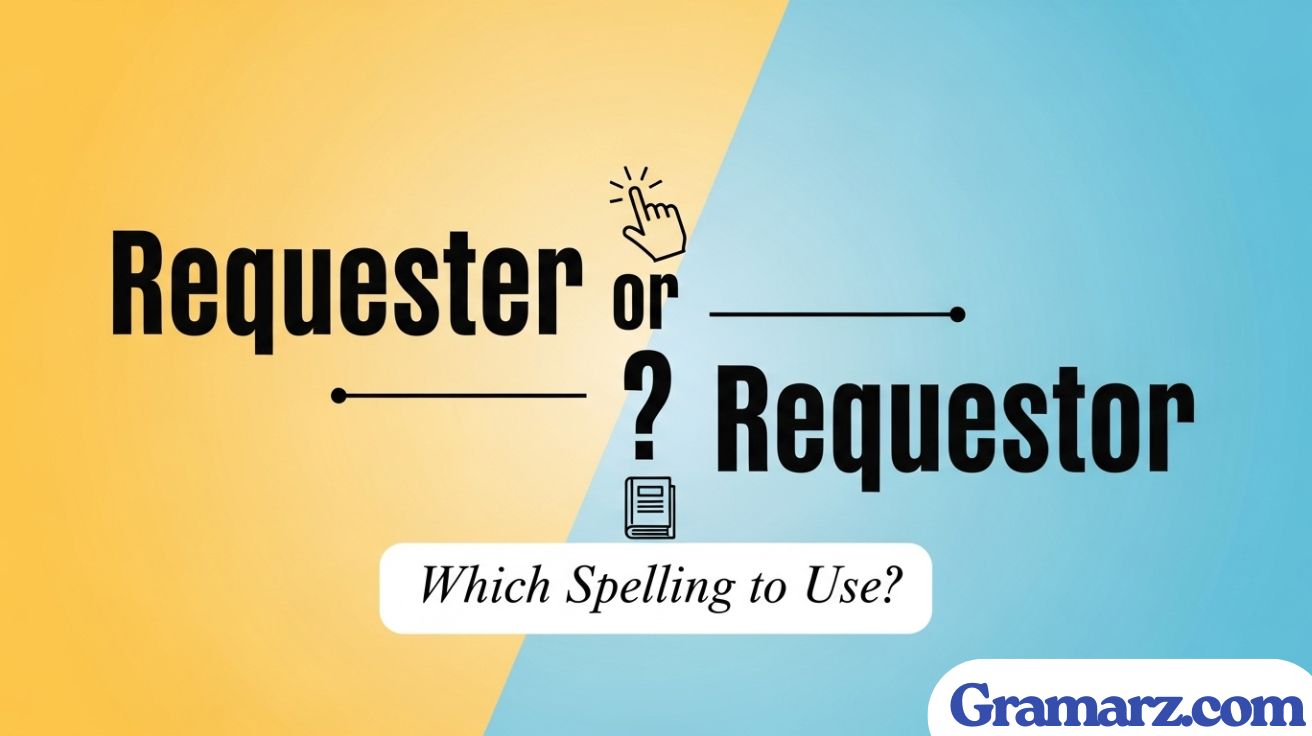
Requester or requestor means someone who makes a request. It could be asking for information, help, or access. Both words have the same meaning.
Ever stopped and wondered which spelling is right? You’re not alone. Many people get confused between the two.
Requester is used more in everyday writing. Requestor appears in technical or legal fields. Knowing when to use each helps your writing look better.
What do “Requester” and “Requestor” Mean?

Before diving into the comparison, it’s important to understand the requester definition and the requestor definition. In simple terms, both words refer to someone who makes a request. That’s it. Whether you say requester or requestor, you are referring to a person or entity that asks for something — information, permission, documents, or services.
So, what is a requester? A requester is someone who asks for something in a general context — this could be in a work email, an application form, or a customer service interaction.
And what is a requestor? A requestor is also someone who makes a request, but this version of the word tends to show up in more specialized fields, such as legal documents or programming terminology. Some software systems, for example, use the word “requestor” to refer to the source of a digital or system-generated request.
Even though they both carry the same meaning, their usage varies depending on the audience and the context.
“Requester” vs “Requester”
You might have noticed that this heading looks odd — it seems like a typo. In reality, this is a common confusion that happens when you type too quickly. What we really want to compare is requester vs requestor.
So, what’s the difference between requester and requestor? The answer lies not in the meaning but in how these terms are used.
The word requester is the more commonly accepted spelling in both American and British English. It’s seen in business communication, everyday writing, and even in legal documents. It’s also the spelling most people are familiar with. If you’re writing a general report, an email, or even a government form in the USA, “requester” is your safest bet.
On the other hand, requestor is less frequently used, but it is not incorrect. It appears more often in domain-specific language, especially in technical fields such as computer programming or specialized legal writing. This version tends to have a more formal or technical tone, and while it’s not the mainstream spelling, it’s still valid — especially if your field has standardized it.
Let’s take a look at a quick comparison in the table below:
| Aspect | Requester | Requestor |
| Definition | Someone who makes a request | Someone who makes a request |
| Common Usage | General, everyday use | Technical, legal, or specialized contexts |
| Spelling Preference | Preferred in American and British English | Less common, often US-only in technical domains |
| Contexts | Business communication, forms, legal settings | API documentation, code, formal or niche legal writing |
| Tone | Neutral, flexible for any context | Slightly formal or technical |
| Safe for General Use | Yes | Use with caution; context-specific |
As you can see, the correct spelling requester or requestor depends largely on what you’re writing and who your readers are. If you’re ever unsure, go with requester — it’s the more widely recognized option in the U.S.
Choosing the Right Term
When deciding when to use requester versus when to use requestor, your best guide is context.
If you are writing a business email, a policy document, or submitting a formal request, you’ll want to stick with requester. It is easy to understand, fits most situations, and aligns with common language usage in writing across the U.S.
However, if you are writing for a technical field, like API documentation or cybersecurity software, requestor might be the more appropriate choice. In fact, requester in API documentation often gets replaced with “requestor” because of stylistic language choices in programming terminology.
Here’s a general rule:
- For general writing, use requester.
- For technical or domain-specific writing, consider using requestor if your industry prefers it.
This distinction matters especially in environments where professional writing tips suggest consistency and clarity. Whether you’re drafting a user manual, submitting a patent, or writing legal contracts, choosing the right form enhances both professionalism and understanding.
Origins of the Word “Requester and Requestor”
The reason we have both forms — requester and requestor — lies in the history of the English language.
Both words come from the Latin root of request, which is “requaerere”, meaning “to seek” or “to ask for.” This Latin term evolved into the Old French word “requeste,” which later became part of Middle English.
When forming nouns that describe the “doer” of an action, English often uses agent noun endings: -er or -or. The suffix -er is more common in modern English (like teacher, worker, driver), while -or is used in some words with Latin origins (like actor, donor, collector).
So, requester and requestor are both technically correct, but English spelling variations and grammar tips suggest that -er is the more natural and modern choice, especially in American English.
Examples in Context
Understanding the real-world use of each term can make things clearer. Let’s explore how both words appear in context.
Requester
In everyday conversation, a requester might be someone asking for customer support or applying for a service. For example:
“The requester submitted their application online and received a confirmation email within minutes.”
In business communication, a requester could be someone inside the organization:
“Make sure the requester fills out the budget approval form before the finance meeting.”
In legal terminology, it may look like this:
“The requester of the official court record must present a valid ID and pay the processing fee.”
Requestor
In technical fields, like programming, the word often appears in system documentation:
“The requestor must authenticate their credentials before accessing the secure endpoint.”
In a legal document with specialized wording, it may say:
“The requestor seeks an official interpretation of the statute based on the given circumstances.”
And in formal writing, you might find:
“The requestor submitted a formal appeal outlining the reasons for the policy revision.”
These examples highlight that while the two words have the same meaning, their tone and placement are quite different.
Synonyms of the Word “Requester”
Sometimes, especially in formal vs informal language, you might want to avoid repetition. Here are some useful synonyms of requester that you can use in different contexts:
- Applicant – Often used in job applications or grant requests
- Petitioner – Common in legal documents or court-related requests
- Seeker – A broader term used for someone pursuing something
- Inquirer – Used in situations involving questions or information gathering
- Claimant – A legal term for someone making a formal claim
- Candidator – Refers to someone running for an office or position
- Proposer – Used in meetings or projects when someone proposes an idea
- Solicitor – Has a legal context in British English but sometimes used generally
- Pleader – Someone making a case or asking earnestly
- Claimer – A person who claims something, similar to a requester
Knowing when to use these terms depends on the language usage in writing and the tone you’re aiming for.
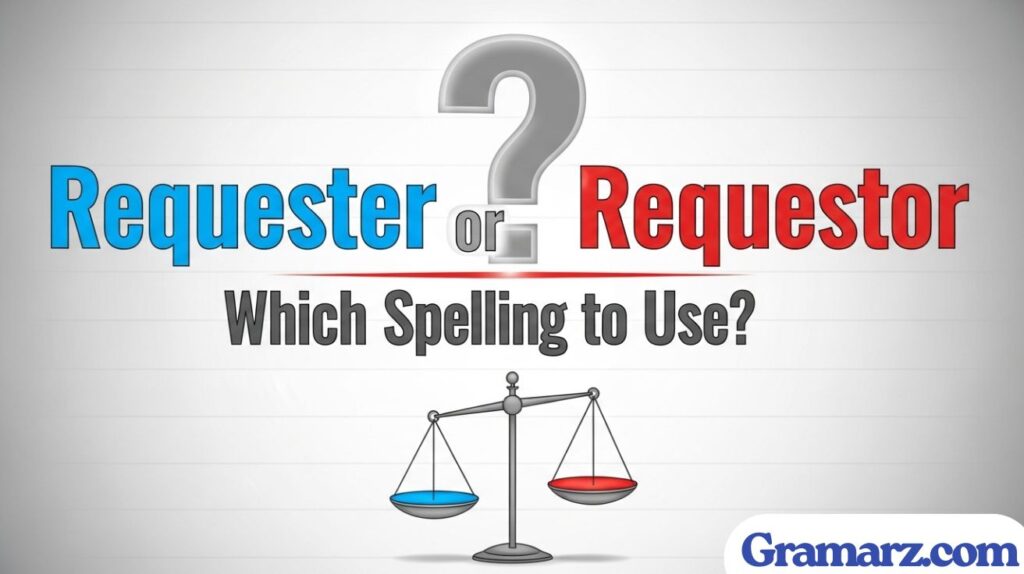
Requester or Requestor: Which Spelling to Use?
Choosing between requester or requestor might seem like a small thing, but spelling can affect how professional your writing looks. Whether you’re working on business communication, legal documents, or technical fields, it’s important to know the right form. Many people wonder about the difference between requester and requestor, but both words are correct depending on context.
This article breaks down the spelling differences, usage, origins, and meanings of both words. We’ll also look at real-life examples, synonyms, and how to choose the right version. If you’ve ever searched for the correct spelling requester or requestor, this guide will help. It includes easy grammar tips, English spelling variations, and advice based on American English standards.
Read Also : Excel or Accel: What is the Correct Spelling?
Understanding the Meaning Behind the Words
The words requester and requestor both refer to a person who makes a request. That could be for information, help, or permission. So, what is a requester? It’s simply someone who asks for something in general situations like filling out a form or sending an email. The same goes for what is a requestor — they both mean the same thing.
However, the context where these words are used can be different. Some professionals argue that requestor sounds more formal or fits certain industries better. For example, it may appear more often in legal terminology or programming terminology. Even though the meaning is the same, the word choice might be influenced by style, industry, or domain-specific language.
Why the Spelling Matters in American English

In the United States, spelling plays a key role in communication. While both versions are accepted, requester is more commonly used in American writing. Whether you’re writing for school, business, or legal purposes, requester is a safer and more familiar choice. This makes it the best option for general readers in the U.S.
On the other hand, requestor appears in more specialized texts. You might see it in technical fields like APIs or cybersecurity. Some companies even standardize the spelling in their internal documents. Understanding the preferred form for your audience can help improve your writing’s clarity and consistency.
How “Requester” Became the Popular Form
The word requester comes from the Latin root of request, “requaerere,” which means “to ask or seek.” It entered English through Old French as “requeste,” and then became part of Middle English. Adding the -er ending followed typical English word patterns for forming nouns like teacher, driver, and worker.
This history explains why requester sounds more natural in modern English. It’s consistent with how other agent nouns are formed, making it easier for readers to understand. The spelling of requester fits common language rules, especially in American and British vs American English comparisons.
When to Use Requester vs Requestor
If you’re writing for general readers, always go with requester. It fits well in business communication, emails, forms, and even legal documents. Most American audiences expect and recognize this spelling. So, when you’re unsure about which version to use, requester is the better choice in almost every situation.
You can still use requestor, but it’s better suited to specific industries. For example, in programming terminology or legal case files, the term “requestor” might be the standard. Always consider who will read your work before making a choice. This helps maintain language usage in writing that’s clear and correct.
Examples Show How Each Term Is Used
Let’s look at real examples to understand each word better. In general writing, you might say, “The requester submitted their job application on time.” Or, “The requester of the report asked for it to be sent by email.” These are typical uses in daily or professional writing across the U.S.
In contrast, requestor appears more in formal or technical texts. For example: “The requestor in the system must have access rights to view the file.” Or, “The legal requestor submitted a formal appeal.” These show how stylistic language choices and context can affect the spelling you choose.
Table Comparing Both Terms in Simple Terms
Here’s a helpful table that compares the two spellings and where they are best used. This can help you quickly decide which to use depending on your situation or writing needs.
| Aspect | Requester | Requestor |
| Meaning | Someone who makes a request | Someone who makes a request |
| Use | General, business, legal | Technical, legal, niche writing |
| Common in USA? | Yes | Less common |
| Example Context | Emails, forms, job applications | API documentation, legal appeals |
| Formality | Neutral | Slightly more formal or technical |
This comparison shows the difference between requester and requestor clearly. It’s easy to see why requester is the more flexible choice.
FAQ,s
What does requestor mean?
A requestor is someone who makes a request, typically used in technical fields or legal terminology.
How do you spell requestor in England?
In British English, the preferred spelling is requester; requestor is rarely used.
What is the meaning of requesters?
Requesters are individuals or entities who formally or informally ask for something like data, services, or permission.
Is “requester” or “requestor” more common?
Requester is the more common and accepted spelling in both the United States and the UK, especially in general use.
Final Thoughts on Requester or Requestor
So, back to the big question: Requester or Requestor: Which Spelling to Use? The final answer is that both are correct, but requester is more common, especially in the United States. It’s more readable and fits standard writing styles for most fields.
If you work in a technical field or a niche legal environment, requestor may be accepted or even preferred. But when in doubt, go with requester. It’s the safer, clearer, and more widely recognized choice for everyday and professional writing.