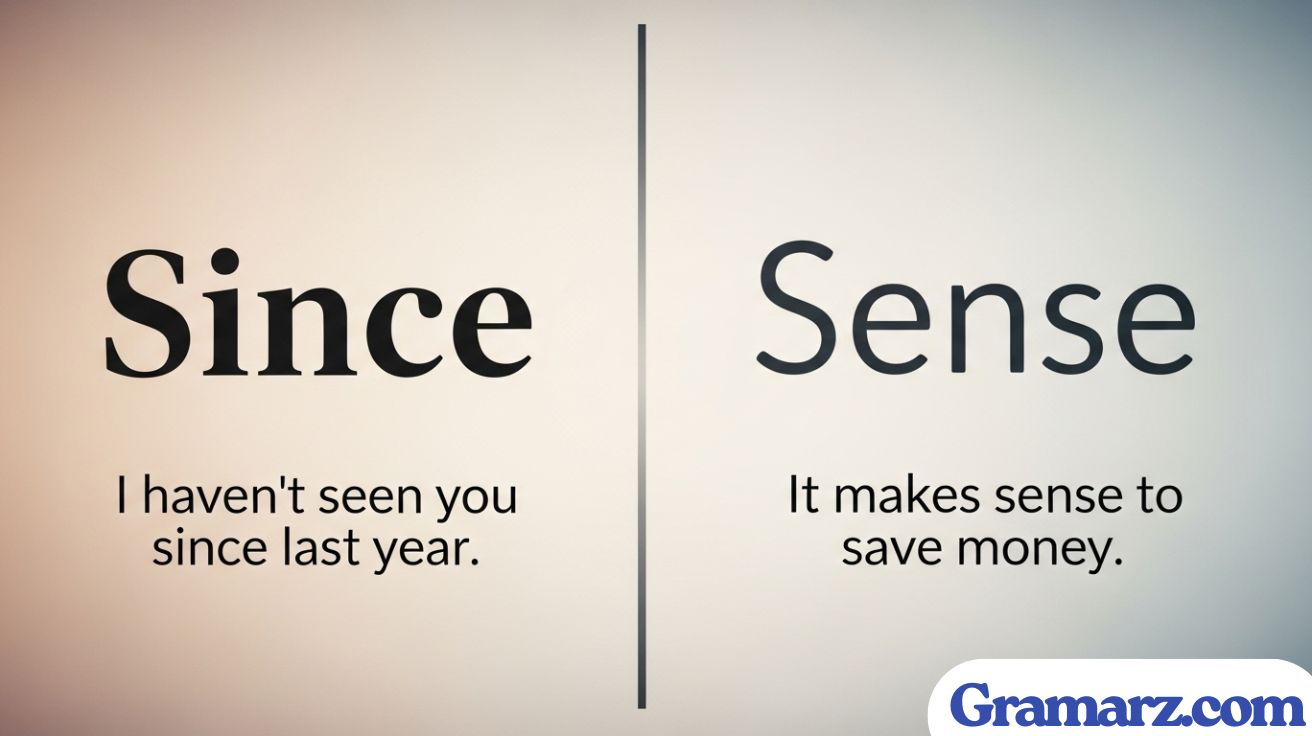
“Since vs Sense” looks confusing because the two words sound the same. But they have very different meanings. “Since” is about time or reason, while “sense” is about feeling, meaning, or understanding.
Many people mix them up in speaking and writing. It can make sentences wrong or unclear. Learning the difference is simple and very useful.
“Since” shows when something started or why something happened. “Sense” shows understanding, logic, or perception. Knowing the since vs sense difference makes your English clear and correct.
Defining “Since” and “Sense”
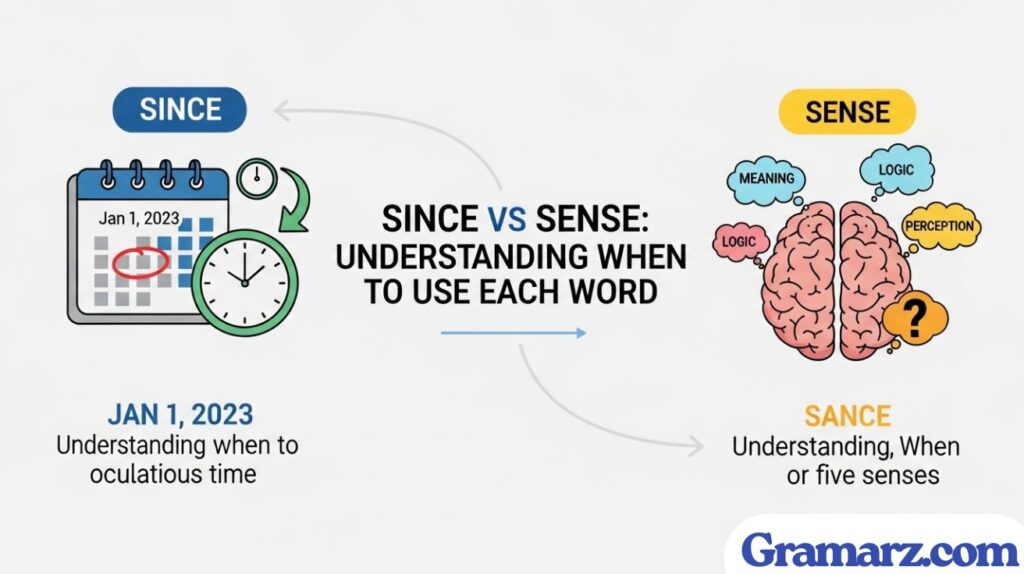
To begin, it is important to know the since definition and the sense definition. The word “since” usually connects to time or reason. You use it when you want to say something started in the past and continues to the present, or when you want to explain why something happened. On the other hand, the word “sense” connects to your five senses, your feelings, your understanding, or the meaning of something.
The sense meaning understanding is different from the way we use “since,” which is why mixing them up causes grammar mistakes. Learning the proper since grammar rules and the correct sense synonyms will help you avoid these errors.
Since
The word since can act in three different ways: as a conjunction, as a preposition, and as an adverb. Each role has its own special use, and understanding them makes English much easier.
As a conjunction:
When we use since as a conjunction, it connects two parts of a sentence. There are two main jobs here. First, it can mean time, like in this sentence: “I have been here since morning.” This shows the starting point of an action that continues. Second, it can mean because, which explains a reason, as in: “Since it is raining, we will stay inside.” If you replace “since” with “because” and the sentence still makes sense, then you are using it correctly. This is why many teachers say that since meaning because is one of the easiest grammar shortcuts.
As a preposition:
When you use since as a preposition, it points to the starting time of something. For example: “I have lived in New York since 2015.” This shows when the action began. It works the same way in many since examples sentences: “We have been friends since childhood,” or “She has been nervous since the exam.”
As an adverb:
When we use since as an adverb, it usually refers back to a time mentioned earlier. An example is: “He left the city last year and has not been seen since.” Here “since” stands alone, but it still connects the past to the present. Understanding since as an adverb helps writers avoid clumsy phrasing.
Sense
Now let’s look at sense vs meaning. The word sense is very different from “since.” It usually refers to the human ability to feel or understand.
As a noun:
When you use sense as a noun, it can mean several things. It can mean the five senses: sight, hearing, taste, touch, and smell. It can also mean intuition or feeling, as in “I had a sense of danger.” Many people talk about common sense, which means practical, everyday judgment. You can also hear phrases like sense of direction, sense of humor, or sense of community. In each of these, “sense” means perception, awareness, or meaning. In another example, “This sentence makes no sense,” it means the words do not have a clear or logical meaning.
As a verb:
When used as a verb, sense means to detect or to perceive. For example: “She could sense the tension in the room.” This is connected to the makes sense meaning, which shows that “sense” often deals with understanding or perception.
“Since” vs “Sense”
The since vs sense usage question comes up because these are homophones in English. They sound alike but mean very different things.
“Since” as a Time Traveler (or Reason Giver):
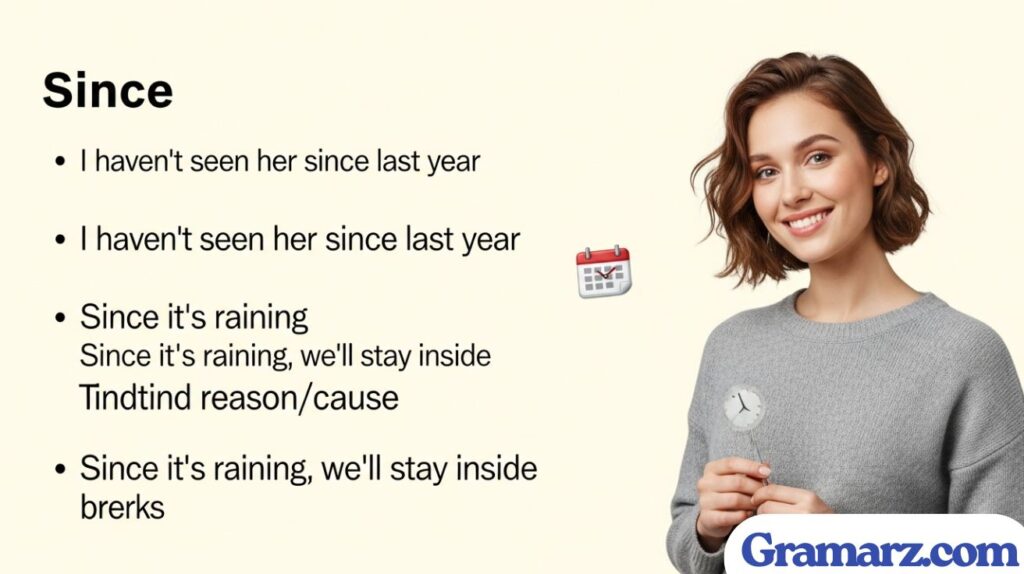
Think of “since” as a time traveler. It marks a starting point in the past and carries it into the present. For example: “I have worked here since 2010.” But it is also a reason giver, just like “because.” For example: “Since it is raining, we cannot play outside.” If you can replace it with “because” and the sentence still works, you know “since” is correct.
“Sense” as Your Internal Compass:
On the other hand, “sense” is your internal compass. It helps you understand, feel, and give meaning to things. For example, “This explanation makes sense,” or “I have a bad sense about this investment.” While “since” looks backward in time or explains a cause, “sense” focuses on perception and meaning.
Putting it into Practice: Makes Sense or Since?
One of the most common grammar confusion examples is whether to say makes sense or since. The correct choice is makes sense. If you write “makes since,” it is always wrong. People sometimes confuse this because “since” and “sense” sound alike, but the phrase “makes since” does not exist in proper grammar.
If you are not sure, try this trick. Replace “sense” with “meaning.” If the sentence still works, then “sense” is correct. For example: “His answer makes sense.” That means “His answer has meaning.” You cannot do the same with “since.”
Examples in Context
To fully understand the since vs sense in English, it helps to look at examples in real sentences.
Since (Time and Reason):
“Since dawn, the team has been working.” This shows the starting point in time.
“Since you finished early, we can go to lunch.” This shows a reason.
“We haven’t met since high school.” This connects the past to the present.
Sense (Understandings and Feelings):
“The instructions do not make sense.” This shows a lack of clarity.
“I have a strong sense of community in my neighborhood.” This shows a feeling.
“Her sense of humor makes everyone laugh.” This shows perception and personality.
Words You Can Use in Place of “Since” and “Sense”
Sometimes it helps to know synonyms for since and sense synonyms so your writing feels more natural.
Since
When indicating time, you can use words like from, after, and following. Each of these shows when something started. For example: “I have been here from 2015.” When indicating reason, you can use because, as, due to, or even the more formal phrase inasmuch as.
Sense
When referring to perception or feeling, you can use sensation, perception, awareness, or intuition. When referring to meaning or understanding, you can use meaning, significance, understanding, or interpretation.
Here is a simple table that shows the word usage differences between the two:
| Feature | Since | Sense |
| Part of Speech | Conjunction, Preposition, Adverb | Noun, Verb |
| Function | Time or Cause | Understanding, Perception, Meaning |
| Example | “I’ve been here since 2010.” | “That makes sense.” |
Origins of “Since” and “Sense”
The word since comes from Old English “siþþan,” which meant “after” or “from that time.” Over the centuries it evolved into Middle English “sithen” or “sithence,” and later became “since” in modern English.
The word sense comes from Latin “sensus,” meaning “feeling” or “perception.” It entered English in the 14th century and has kept its meaning connected to awareness and understanding.
Read Also : Trailer or Trailor: Which Spelling Is Correct and Why?
Common Mistakes with “Since” vs “Sense”
The most frequent since vs sense mistake is writing “makes since” instead of “makes sense.” Another mistake is overusing “since” when “because” is clearer. Writers sometimes also confuse sense vs meaning, using “sense” when “meaning” or “understanding” would be better. Keeping these English grammar tips in mind will make your writing stronger.
Understanding the Core Difference Between Since and Sense

The confusion between since vs sense often comes from their similar sounds. However, they have completely different meanings. Since usually deals with time or cause, while sense connects to perception, feelings, and understanding. Knowing the difference between since and sense helps writers avoid embarrassing grammar mistakes and communicate with precision.
For example, you might say, “I’ve lived here since 2012,” showing time. Or, “This story makes sense,” showing understanding. These examples highlight the since vs sense usage in everyday English. If you can swap “since” with “because,” it fits as a reason. If you can swap “sense” with “meaning,” it fits as logic or perception.
Common Mistakes People Make with Since vs Sense
One of the biggest grammar confusion examples is writing “makes since” instead of “makes sense.” The phrase “makes sense” is correct because it relates to meaning and understanding. “Since” has no role here, so using it creates a mistake. Many learners mix them up because they are homophones in English.
Another mistake is overusing “since” when “because” is clearer. For instance, “Since I was tired, I left” is correct, but “Because I was tired, I left” sounds smoother. Paying attention to English grammar tips like these helps avoid problems. Always test sentences by swapping with synonyms for accuracy.
Practical Tips to Remember Since vs Sense
To master since vs sense in English, use memory tricks. Think of “since” as a time traveler or a reason giver, always pointing to a past starting point or explaining cause. Think of “sense” as an internal compass, helping you understand meaning or feel something. These simple images help learners quickly recall correct usage.
You can also try the replacement test. Replace “since” with “because.” If it works, your sentence is correct. Replace “sense” with “meaning.” If it still works, you’re using the right word. These quick checks stop you from making the common since vs sense mistake and improve your overall writing clarity.
FAQs
How do you use sense?
You use sense to show perception, feeling, understanding, or meaning, like “This idea makes sense.”
Where do we use since?
We use since to show a starting point in time (“I’ve lived here since 2010”) or to give a reason (“Since it’s raining, stay inside”).
Is it common sense or common since?
The correct phrase is common sense; writing common since is a mistake.
What’s the difference between sence and sense?
Sense is the correct spelling; sence is just a spelling error.
Conclusion: A Final Look
Now you know the difference between since and sense. The word since acts like a time machine and a reason giver, showing when something began or why it happened. The word sense is your internal compass, helping you understand, perceive, and give meaning to the world. Remember the quick trick: if you can replace it with “because,” then “since” is correct; if you can replace it with “meaning,” then “sense” is correct.
By understanding the since vs sense meaning, following since grammar rules, and practicing with since vs sense examples, you can avoid the most common mistakes in English. This knowledge will sharpen your writing, improve your communication, and give you confidence whenever you face another pair of commonly confused words in English.