Totalling vs Totaling are two spellings of the same word. Both mean adding numbers to find a complete sum. The only difference is the spelling style in English.
Are you confused about which one to use? Many writers face this problem when switching between British and American English. A small change in spelling can make a big difference.
In British English, people write totalling with two Ls. In American English, people write totaling with one L. Both are correct but used in different regions.
What do “Totalling” and “Totaling” Mean?
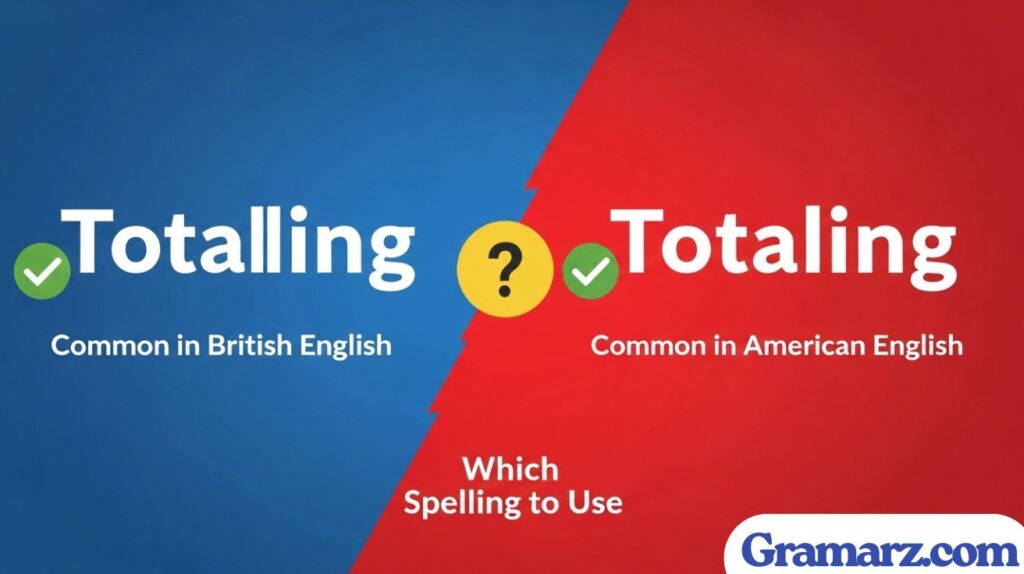
At their core, both totalling and totaling come from the total verb meaning, which is “to add up numbers to find a complete sum.” This verb is used in many areas of life such as accounting, shopping, business reports, school math, and even daily routines like adding up bills or expenses.
As a verb in the continuous tense spelling, both words are the present participle spelling rules form of “total.” For example, “She is totaling the receipts” or “He is totalling the expenses.” The meaning does not change, no matter which spelling you use.
The word can also work as a noun, meaning the final sum itself. For instance, you can say, “The totalling of the figures gave us the final answer” or “The totaling of the invoices showed the real budget.” It may also function as an adjective, describing something related to the action of adding up, such as “a totaling process” or “a totalling report.”
In short, the difference between totalling meaning and totaling meaning is not in what they mean, but in how they are spelled in different parts of the world.
“Totalling” or “Totaling”: What’s the Difference?
The spelling difference is simply based on regional spelling variations. In British English grammar, words ending with “-l” usually keep a double “l” when adding endings such as “-ing” or “-ed.” In contrast, American English grammar tends to simplify by using a single “l.” This is why British writers use totalling, while American writers use totaling.
Here is a simple comparison:
| Totalling (UK) | Totaling (US) |
| Double “l” spelling | Single “l” spelling |
| Common in British spelling | Standard in American spelling |
| Example: “The company reported profits totalling £2 million.” | Example: “The company reported profits totaling $2 million.” |
This is part of a wider pattern. If you look at spelling examples: travelling vs traveling or canceling vs cancelling, you can see the same UK vs US spelling difference. Words like “modelled” vs “modeled” or “fuelled” vs “fueled” all follow the same pattern. These are clear cases of how verbs ending in “-l” are treated differently across the two systems.
Why there is Confusion Between “Totalling” and “Totaling”?
The confusion began in the early 20th century when American reformers pushed for English spelling simplification. The goal was to remove unnecessary letters and make words shorter and easier to write. This is why Americans began writing totaling instead of totalling, traveling instead of travelling, and canceling instead of cancelling.
For readers exposed to both versions, especially online, it can seem inconsistent. Sometimes, you see a U.K. website using totalling and an American website using totaling, which makes people wonder which one is right. The answer is that both are correct, but the key is to follow your language style guides and use the version that fits your audience.
A simple trick can help you remember: think of double “l” vs single “l” words. If the word looks “longer,” it is usually the British spelling. If the word looks “shorter,” it is the American spelling. So totalling is British, and totaling is American.
Synonyms of “Totalling” or “Totaling”
Even though the spelling may change, the meaning does not. The action is always about adding things up. There are many synonyms of totalling / totaling that you can use in your writing depending on the context. Some common alternatives include adding up, summing, tallying, calculating, tabulating, aggregating, and computing.
Writers sometimes prefer to use these words to avoid repetition. For example, instead of saying, “The accountant is totaling the bills,” you can say, “The accountant is adding up the bills.” In another example, instead of “The manager is totalling the sales,” you might write, “The manager is tabulating the sales.”
Using “Totalling” and “Totaling” in Sentences
It is always helpful to see words in context. Below are clear examples showing both spellings in real sentences so that you can see the difference.
Totalling (British English)
She spent the afternoon totalling the expenses for her European holiday. The company’s annual report showed profits totalling more than £5 million. The student worked hard, totalling his study hours each week. The manager was busy totalling the day’s sales before closing the shop. The scientist recorded data, totalling hours of observations.
Read Also : Tying or Tieing? The Right Way to Spell It
Totaling (American English)
The accountant is currently totaling the yearly expenses for the tax season. The construction project’s costs are totaling more than expected due to delays. The detective is totaling the evidence gathered from the crime scene. The mechanic is totaling the cost of car repairs. The wedding planner is totaling the expenses for the ceremony and reception.
These examples show that while word usage in English changes by region, the present participle spelling rules remain the same in terms of grammar. The only change is the double “l” vs single “l” words rule.
Totalling or Totaling: Understanding the Spelling Difference in English
The words totalling vs totaling look almost identical, but they reflect a clear British spelling vs American spelling difference. In British English grammar, words with verbs ending in “-l” usually keep a double “l” before adding suffixes like “-ing.” This is why British writers prefer totalling with two Ls.
In contrast, American English grammar often uses a simpler form. Americans drop one “l” and write totaling. This fits into a broader English spelling simplification movement in the U.S., which also explains spelling examples: travelling vs traveling and canceling vs cancelling. Both spellings mean the same, but which one you choose depends on your audience.
Total Verb Meaning and How it Became Two Spellings
The total verb meaning is simple: to add things together to reach a sum. When we use it in the continuous tense spelling, it becomes totalling or totaling. Both words follow the same present participle spelling rules; the difference is not about meaning but entirely about UK vs US spelling.
In the United States, spelling reform in the 20th century encouraged shorter, simpler forms of words. That is why Americans write totaling with one “l.” In the UK, however, traditional spelling remained, so totalling is still the standard. This small change in word usage in English highlights larger regional spelling variations between the two systems.
Why Americans Use Totaling and British Writers Use Totalling
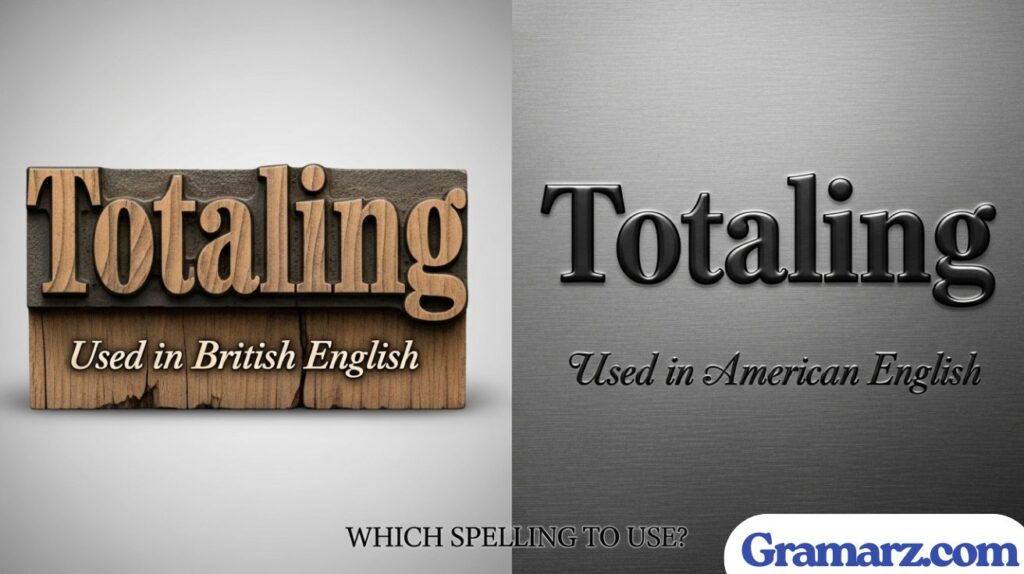
The choice between totalling vs totaling is not random. It reflects differences in language style guides and traditions. In the UK, double “l” vs single “l” words remain part of British English grammar, so words like travelling and totalling are still correct. Americans, on the other hand, follow simplified rules.
This simplification makes American spelling shorter but still clear. For example, totaling is no less correct than totalling. In fact, it has become the standard in U.S. schools, media, and official documents. If you are writing for an American audience, choosing totaling is always the right approach to stay consistent and professional.
Synonyms of Totalling / Totaling in Everyday English
Even though there is a spelling difference in English, the meaning does not change. You can replace the word with synonyms like adding up, summing, tallying, calculating, or tabulating. These words are often used in accounting, research, business, and everyday life. They work the same in both British spelling vs American spelling.
For example, instead of saying “She is totaling the bills,” you might say “She is adding up the bills.” Instead of “He is totalling the data,” you can use “He is tabulating the data.” These synonyms make writing more varied while keeping the same totalling meaning and totaling meaning clear to readers.
FAQ,s
Does totaling have one L or two?
In American English, it’s spelled with one L (totaling), while in British English, it has two Ls (totalling).
Which is correct, totalled or totaled?
Both are correct—totaled is American English, and totalled is British English.
How do you spell totalling in the UK?
In the UK, it’s spelled with a double L: totalling.
How do you use totalling in a sentence?
Example: “The company reported profits totalling over £2 million.”
Conclusion: Totalling vs Totaling
In the end, the debate of totalling vs totaling comes down to a simple spelling difference in English. In the United States, totaling with one “l” is the correct and preferred form. In the United Kingdom and other countries that follow British standards, totalling with two “l”s is the accepted spelling.
The key takeaway is consistency. If you are writing for an American audience, always choose totaling. If your readers are British, then stick to totalling. Both are correct, and both follow the logic of their own grammar systems. As long as you use one consistently and keep your audience in mind, you will be correct.
As the famous American writer Noah Webster once said, “The spelling of words should be adapted to the convenience of the people.” This is why Americans embraced English spelling simplification, and why today you will see totaling meaning “to add up” as the standard in the U.S.