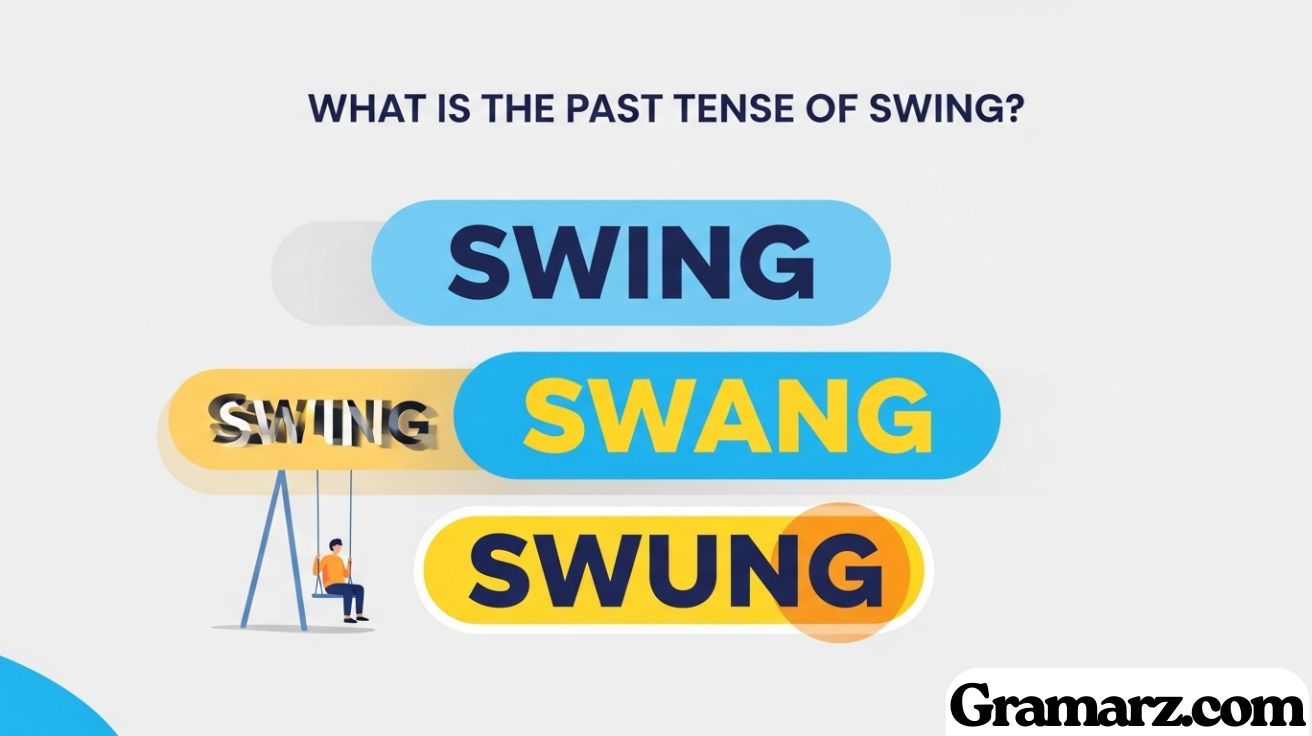
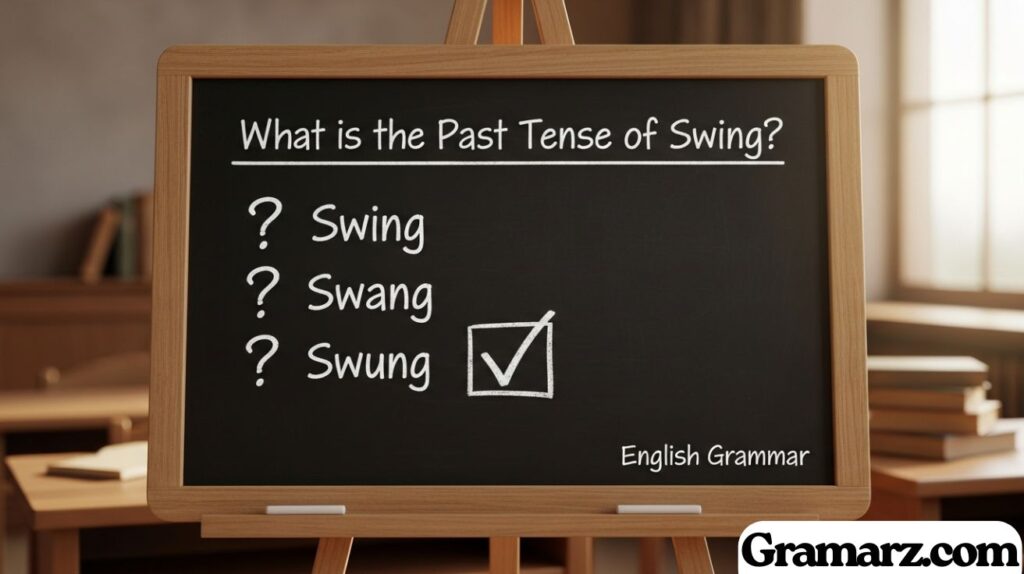
The words swang or swung often confuse English learners. Both look like past forms of the verb swing, but only one is correct in modern English. The right past tense of swing is swung, while swang is an old form no longer used today.
Many people wonder which one to use when writing or speaking. This small difference can change how correct your sentence sounds. Knowing the right form helps you follow proper grammar rules and sound fluent in English.
In today’s English, swung is the standard form used everywhere. You can say “He swung the bat” or “The door swung open.” Understanding swang or swung will make your grammar stronger and your sentences clearer.
The Correct Past Tense Form: Swung
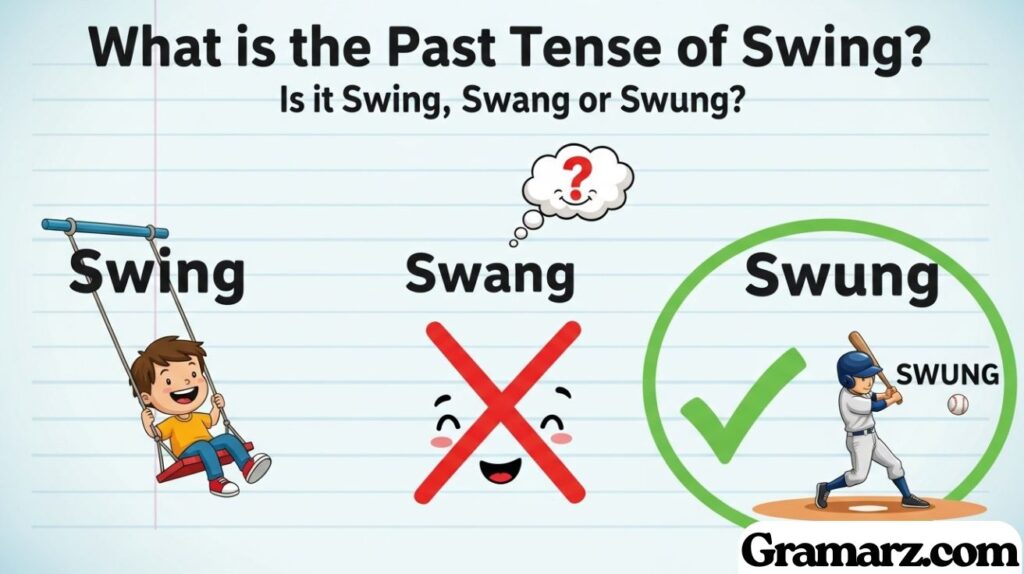
Let’s start with the most important fact: the correct past tense form of swing is “swung.” In modern American English, swung is used both as the simple past tense and as the swing past participle. This means you should never say swang in standard English writing or speaking. The form swang was used centuries ago but has now disappeared from modern grammar.
Here’s a quick verb conjugation table for better understanding:
| Tense | Form |
| Present | swing |
| Past | swung |
| Past Participle | swung |
Both the simple past and past participle use swung. So, when you are writing or speaking, always choose swung as the correct swing past and present tense difference. For example, you can say, “I swing on the playground every morning,” and “Yesterday, I swung on the playground.” If you say “I swang,” it will sound wrong in modern English verb usage.
The Etymology of Swing: A Journey Through Time
To understand swing verb forms, we can look at its history. The word swing comes from the Old English verbs swingan which meant “to beat or strike.” Over time, its meaning changed to describe the back-and-forth motion we now use today. The early English form used swang as the past tense, but during Middle English, it evolved into swong, and finally into swung.
This shows how Old English verbs often changed over centuries as pronunciation and grammar simplified. The difference between swing and swung is not only grammatical but historical. In modern American English, swung became the accepted form because it matched the pattern of other irregular verbs list like sing–sang–sung and ring–rang–rung. Over time, English speakers naturally settled on swung as the easiest and most natural form.
Conjugation: Swing in All Its Forms
Like other action verbs in English, swing has multiple forms depending on tense. Here’s a detailed verb tense chart showing how to use it properly in sentences.
| Tense | Example Sentence |
| Present | I swing the bat every weekend. |
| Present (3rd person) | She swings her arms while walking. |
| Past | He swung the door open with force. |
| Present Participle | The kids are swinging on the swings. |
| Past Participle | The pendulum has swung all day. |
| Future | They will swing by later. |
Learning this verb conjugation table is a simple way to improve your grammar and understand how to use swing correctly in all past present future tenses. Knowing these forms helps you follow proper English grammar rules and avoid common verb mistakes that many learners make.
Pronunciation Guide: Mastering Swing and Swung
Many learners find the swing pronunciation challenging. The word swing is pronounced /swɪŋ/, rhyming with “ring,” while swung is pronounced /swʌŋ/, rhyming with “hung.” The key difference lies in the vowel sound. To master the pronunciation guide swing vs swung, practice repeating these sound pairs: swing – ring – sing and swung – hung – sung.
If you want to know how to use swung in a sentence naturally, try practicing aloud. For example: “I swung the bat and hit the ball.” Speaking and listening carefully will help you learn how to improve English grammar through real pronunciation habits.
Swing vs. Swung: Context is Key
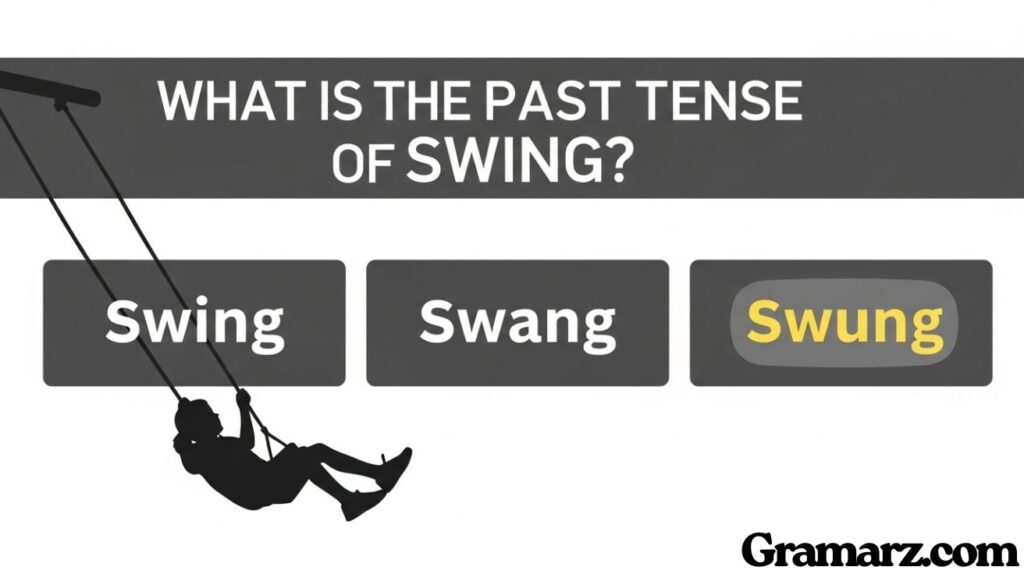
The difference between swing and swung depends on time. You use swing for actions happening now or regularly, and swung for actions that happened in the past. For instance, you can say, “I swing by the park every day,” to describe a present habit, but “I swung by the park yesterday,” for a completed action.
Here are some examples of swing in sentences to make it clearer:
“I swing the bat before every game.”
“He swung the bat yesterday.”
“They have swung the door open many times.”
Using these patterns helps you follow English grammar rules correctly and avoid tense confusion in English.
Read Also : Well Deserved Meaning? Understanding the Correct
Common Mistakes and How to Avoid Them
One of the biggest common verb mistakes is using swang instead of swung. Many learners assume it follows the same pattern as sing–sang–sung, but swing doesn’t follow that rule anymore. Another mistake is saying swinged, which sounds like a regular verb but is completely wrong.
To remember easily, try this simple phrase: “Yesterday I swung, not swang.” You can also write your own examples of swing in sentences every day. Practice helps you avoid small grammar errors that can make a big difference when you want to learn English grammar online.
Synonyms and Related Words
Understanding related words can help you master the concept. Other action verbs in English with similar meanings include sway, oscillate, fluctuate, and waver. These words can be used in different contexts, but not all of them mean exactly the same thing. For example, you can “swing a bat,” but you cannot “oscillate a bat.”
Here’s a short table to understand better:
| Verb | Meaning |
| Swing | Move back and forth |
| Sway | Move gently side to side |
| Oscillate | Move in regular rhythm |
| Fluctuate | Change or vary frequently |
| Waver | Move or shake unsteadily |
Knowing these helps improve vocabulary and overall English verb usage, which is a key part of how to improve English grammar effectively.
“Swing” in Popular Culture
In American culture, swing is more than just a verb—it’s part of art, music, and language. In music, Swing Jazz became famous in the 1930s, with artists like Duke Ellington and Benny Goodman. In sports, people talk about “a perfect swing” in baseball or golf. In politics, we have swing states, meaning states that can change their voting choice.
These examples show how one word can hold many meanings. Understanding swung meaning in English helps you appreciate how language connects to culture and history.
The Importance of Mastering Irregular Verbs
Learning irregular verbs examples like swing is one of the most important steps in improving your fluency. These verbs don’t follow the usual “-ed” pattern and require memorization. Knowing them helps you write and speak with confidence.
To master irregular verbs list, practice through repetition, reading, and listening. When you regularly use verbs like swing – swung – swung, you build better sentence structure and reduce tense confusion in English. This practice also helps beginners who are looking for effective language learning tips or want to learn English grammar online.
Case Study: The Evolution of “Swing”
A short linguistic case study shows how swing evolved from swingan in Old English to the modern swung. Early speakers used swang but eventually dropped it as English simplified. This process was not unique to swing. Many Old English verbs changed forms during history.
For example:
Sing → Sang → Sung
Ring → Rang → Rung
Swing → Swang → Swung
While swang disappeared from use, swung survived and became part of modern American speech. This case shows that language naturally changes to make communication easier for speakers.
Quotes About Swinging
Quotes can bring life to grammar learning. One famous baseball player, Babe Ruth, once said, “I swing big, with everything I’ve got. I hit big or I miss big.” His words show both the literal and emotional meaning of swing. Another quote says, “Life is like a swing. Beware that it doesn’t hit you when you’re down.” These examples show how swing can be used both in language and in life’s lessons.
Practical Exercises for Mastering “Swing” and “Swung”
Practice is the key to mastering swing verb forms and understanding how to use swung in a sentence. Try filling in blanks like: “Yesterday, the pendulum ___ (swing).” The correct answer is swung. Or correct errors like: “She swinged the bat” → “She swung the bat.” You can also write short paragraphs using both swing and swung to strengthen your grammar.
When you keep practicing with real examples of swing in sentences, your understanding of English grammar rules will grow naturally, and you’ll avoid tense confusion in English in the future.
Understanding What Is the Past Tense of Swing
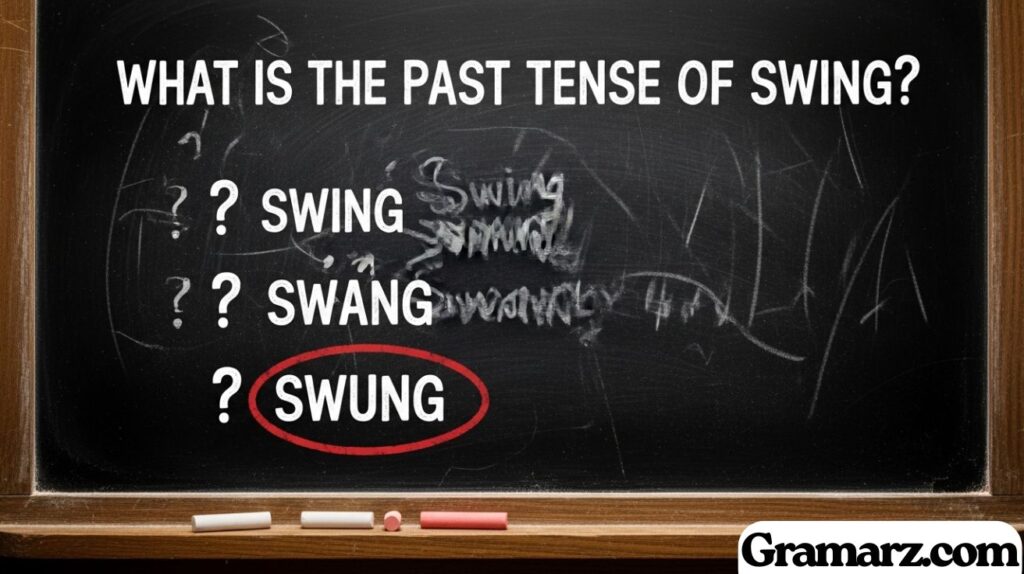
The question, what is the past tense of swing, often confuses English learners. The correct form is swung, not swang. According to English grammar rules, swing is an irregular verb, which means it doesn’t follow the regular -ed pattern. Many people mistakenly say swang, but that form is considered outdated and incorrect in modern grammar.
Learning the swing past tense form helps improve your overall understanding of verb tense chart usage. Knowing how to form and apply the past tense correctly is an important part of how to improve English grammar effectively. Using swung in sentences makes your writing sound fluent and grammatically correct.
The Difference Between Swing and Swung in English Grammar
The difference between swing and swung depends on time and action. Swing refers to something happening now or regularly, while swung refers to something that already happened. This distinction is essential for learners who want to reduce tense confusion in English and apply the right tense naturally.
For example, “I swing by the store every day” describes a habit, while “I swung by the store yesterday” describes a completed action. Understanding this pattern improves your ability to recognize swing past and present tense and makes sentence construction more accurate in both speaking and writing.
Exploring Swing Verb Forms and Conjugation
The swing verb forms follow the pattern: swing – swung – swung. This simple pattern shows that the swing past participle and past tense are the same. You can use swung in both simple past and perfect tenses, such as “He swung the bat” or “He has swung the bat before.”
Here is a short verb conjugation table to guide learners: Present – swing, Past – swung, Past Participle – swung. Knowing these forms helps avoid common verb mistakes and improves accuracy when writing or speaking. It also strengthens your command of English verb usage and supports better grammar habits.
How to Use Swung in a Sentence Correctly
Learning how to use swung in a sentence helps in mastering grammar. You can say, “She swung on the swing set,” or “The door swung open.” These examples of swing in sentences show how the word works naturally in real contexts. Each example reinforces the rule that swung is always used for past actions.
Practicing with new sentences every day is one of the best language learning tips. When you repeat correct grammar structures, your fluency increases. By mastering swung, you improve your understanding of action verbs in English and strengthen your ability to speak confidently.
Pronunciation Guide: Swing vs Swung
Understanding the pronunciation guide swing vs swung is essential for learners. The word swing is pronounced /swɪŋ/, while swung is /swʌŋ/. The vowel sounds are different, and mastering them helps avoid mistakes in speaking. Practicing pronunciation improves both clarity and listening skills.
For better results, try saying: swing–sing–ring and swung–hung–sung. These sound patterns help train your ear to recognize differences between the present and past forms. Clear pronunciation of the swing past tense form enhances your overall communication and ensures accurate use in conversations.
Avoiding Common Mistakes with Swing Verb Forms
A major common verb mistake is using swang instead of swung. Although swang once appeared in Old English verbs, it is now obsolete. The only correct form in modern English is swung. Another error is saying swinged, which doesn’t exist in standard grammar.
To avoid these mistakes, study the irregular verbs list regularly. Practice using swing – swung – swung in sentences to build memory. Following these English grammar rules will help eliminate confusion and strengthen your writing skills. Regular review ensures better accuracy and long-term retention.
FAQs
Is swang grammatically correct?
No, swang is not grammatically correct in modern English; the correct past tense of swing is swung.
Which is correct, swang or swung?
Swung is the correct and accepted past tense of swing, while swang is outdated and incorrect today.
Is there a word “swang”?
Swang once appeared in Old English, but it’s no longer used in standard English grammar.
What’s the difference between swung and swang?
Swung is the modern and correct form; swang is an old or nonstandard form rarely used today.
Conclusion
To sum up, the past tense of swing is always swung, not swang. This simple rule is a perfect example of how mastering irregular verbs examples can make you more confident in speaking and writing. Understanding swing past tense form, learning its pronunciation, and practicing swing verb conjugation will help you sound more natural in conversation.
Keep learning with patience, practice daily examples, and always remember that learning grammar is a journey. The more you practice, the more fluent you become. So, keep swinging through your English studies—and soon, your language skills will have truly swung to a higher level!