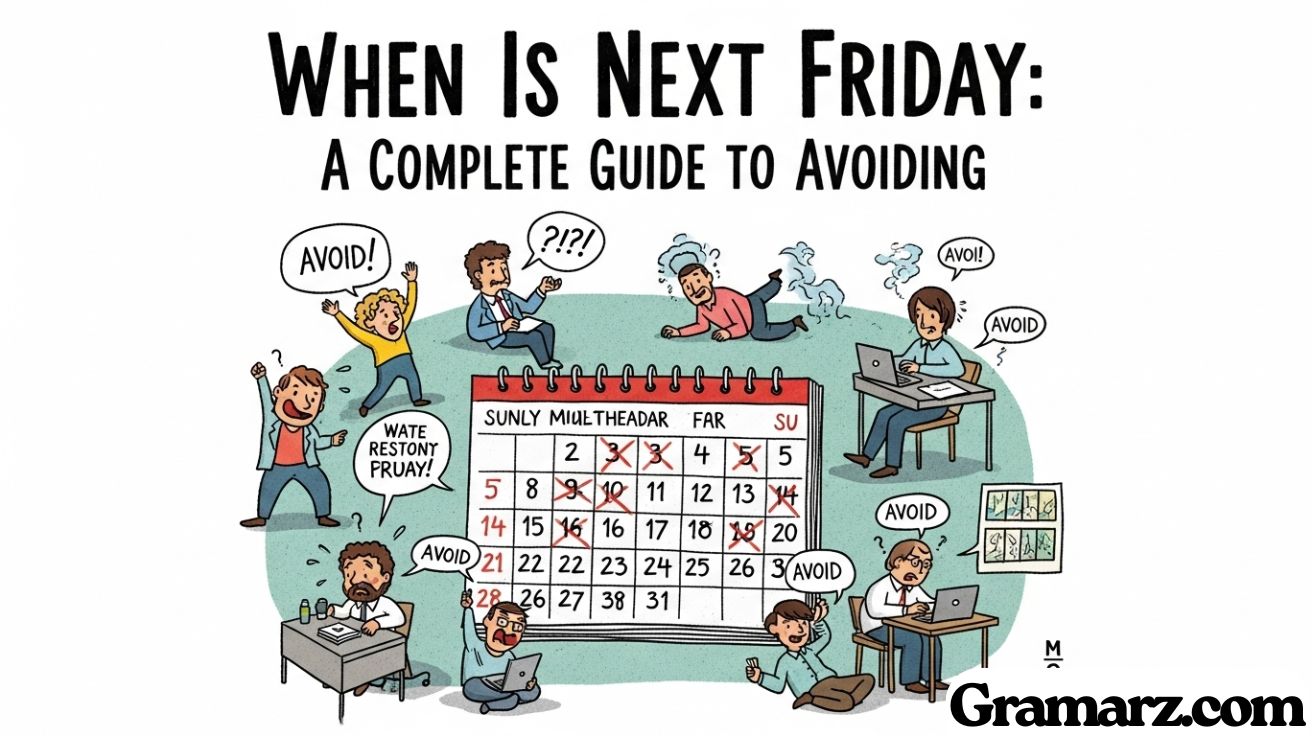
“When is next Friday” is a question people ask to know the date of the Friday after this week. It is not the Friday coming soon, but the Friday in the following week. Many people get confused about its exact meaning.
It can be tricky to figure out “when is next Friday.” Some think it means the closest Friday, but it usually does not. Understanding it helps you plan better.
Knowing when next Friday is helps in work, meetings, and social plans. The meaning changes depending on the current day. Asking or checking a calendar clears any confusion.
The Basics of Next Friday vs. This Friday

When people discuss dates, it’s easy to mix up what “next” and “this” actually mean. In English, time phrases depend heavily on contextual meaning of next and this. “This Friday” usually refers to the Friday that falls within the current week, while “Next Friday” often points to the Friday in the following week.
This may sound straightforward, but misunderstandings happen because weeks don’t reset in our heads until Monday. For example, if today is Saturday, some people still think of “this week” as ending yesterday, while others see Sunday as the start of a new week. That’s where calendar reference words and week structure explanation become important for clear communication.
What Does “This Friday” Mean?
So, what does this Friday mean exactly? “This Friday” typically means the upcoming Friday that belongs to the current calendar week. In other words, it’s the Friday that’s closest to today within this week’s timeframe.
If today is Monday, “This Friday” is just four days away. If it’s Wednesday, “This Friday” is two days away. The meaning of this Friday depends on where you are in the week, but it always connects to the current week’s structure.
Here’s a simple table to clarify:
| Current Day | This Friday Refers To | Days Away |
| Monday | Upcoming Friday (same week) | 4 days |
| Wednesday | Upcoming Friday (same week) | 2 days |
| Friday | Today | 0 days |
| Saturday/Sunday | The Friday that just passed | -1 or -2 days |
Understanding how to talk about days in English helps reduce date misunderstanding examples. In English time expressions, “this” means belonging to the present period—so “this Friday” belongs to your current week.
What About “Next Friday”?
Now, let’s look at the meaning of next Friday. Generally, “Next Friday” means the Friday of the following week, not the one that’s just around the corner.
If it’s Monday and you say “Next Friday,” you’re talking about the Friday that comes after this week’s Friday. If it’s Wednesday, the same rule applies—it’s not the upcoming Friday, but the one after that.
This distinction is a key part of time reference in English grammar, where “next” points to a future period beyond the current one.
However, not everyone follows this rule perfectly. Some Americans still use “Next Friday” to mean the very next Friday. That’s why communication clarity is essential when planning meetings, appointments, or events.
The Week’s Structure and How It Affects These Phrases
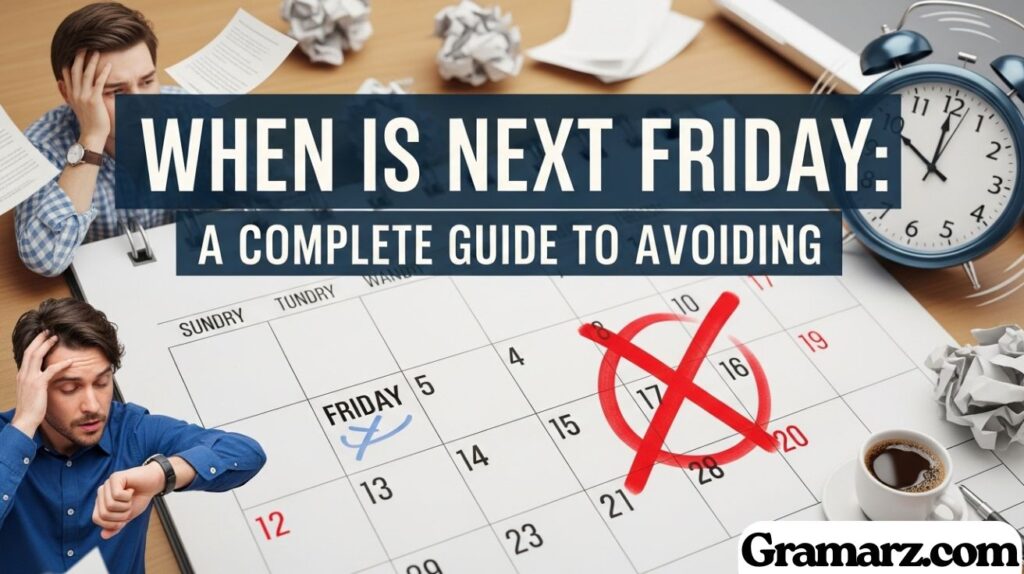
Our interpretation of “Next Friday” and “This Friday” depends on the week structure explanation we use. In the United States, weeks often start on Sunday and end on Saturday. However, many workplaces consider Monday as the first day of the week, especially in business calendars.
Here’s a breakdown showing how understanding changes depending on your current day:
| Current Day | “This Friday” Means | “Next Friday” Means |
| Monday–Thursday | The upcoming Friday (this week) | The Friday of the next week |
| Friday | Today | The Friday of next week |
| Saturday–Sunday | The Friday that just passed | The upcoming Friday |
This shows that next vs this week is a sliding concept—it shifts depending on where you are in the week. That’s why clarify calendar terms is such a useful habit when you talk about days in English.
Common Misconceptions and How to Avoid Them
Misunderstandings around “Next Friday” and “This Friday” can lead to missed meetings, late submissions, or double-booked plans. Let’s explore the most common mix-ups that cause deadline confusion and how to avoid them.
The “Seven Days Away” Trap
Many people believe “Next Friday” simply means seven days away, but that’s not always true. Depending on which day you’re speaking, “Next Friday” might be anywhere from 8 to 13 days away.
Here’s a quick table showing why:
| Current Day | Days to “Next Friday” |
| Monday | 11 days |
| Tuesday | 10 days |
| Wednesday | 9 days |
| Thursday | 8 days |
| Friday | 7 days |
| Saturday | 6 days |
| Sunday | 5 days |
This table shows how the English grammar guide around dates is flexible. To avoid confusion, always specify dates clearly, such as “Friday, November 8th,” rather than relying solely on phrases.
The Weekend Confusion
The weekend often causes the most date misunderstanding examples. On Saturday or Sunday, “This Friday” may refer to the one that just passed, while “Next Friday” refers to the upcoming Friday.
For instance, if it’s Sunday, “This Friday” was two days ago. This change in meaning proves how English time phrases can shift rapidly depending on today vs tomorrow vs next week perspectives.
The “It Depends on Who You Ask” Problem
Not everyone interprets these phrases the same way. Some people say “Next Friday” when they mean the upcoming one, while others use it to mean the one after that. The safest approach is to always ask for clarification.
This difference is often regional and part of English idiomatic expressions that vary across states and countries. To maintain communication clarity, confirm by asking, “Do you mean this coming Friday or the one after?”
Is next Friday and this Friday the same thing?
No, they are not the same. The difference between this and next Friday depends on where you stand in the week. If it’s Monday, “This Friday” is just a few days away, while “Next Friday” is more than a week away.
Understanding which Friday is next Friday is crucial in work schedule planning and personal communication. Misunderstanding this difference can cause missed deadlines or rescheduled meetings.
Defining “Next Friday” – More Than Just Seven Days Away
The next Friday meaning isn’t just about counting days; it’s about understanding context and calendar logic.
The Sliding Scale of “Next Friday”
“Next Friday” isn’t fixed. Depending on the day, it can be anywhere between 5 and 11 days away. Here’s a simple reference table:
| Current Day | Days to Next Friday |
| Monday | 11 days |
| Wednesday | 9 days |
| Friday | 7 days |
| Sunday | 5 days |
This shows why how to use next Friday correctly depends on awareness of the current day.
The Friday Exception
When it’s already Friday, “Next Friday” means exactly one week later. It’s like the counter resets, and the new cycle begins. This is one of those English idiomatic expressions that often confuses learners and native speakers alike.
The Importance of Context
Context matters. In workplaces, “Next Friday” usually means the Friday after the current week. But in casual talk, it can mean the very next one. Understanding the contextual meaning of next and this helps prevent miscommunication and improves professional reliability.
Read Also : Negative Ghost Rider Meaning, Origin and Usage
“This Friday” Explained – Navigating the Current Week

Understanding the meaning of this Friday helps eliminate Friday confusion explained. While it usually refers to the upcoming Friday, the meaning changes after the weekend begins.
The Sliding Scale of “This Friday”
The concept of “This Friday” changes through the week. From Monday to Thursday, it points to the upcoming Friday. On Friday, it means today. On the weekend, it usually refers to the Friday that just passed.
This flexibility is part of English time expressions that make language dynamic but also prone to misunderstanding.
Real-Life Examples of “This Friday”
Imagine you’re at work on Monday, and your manager says, “The report is due this Friday.” You know that means the end of the current week.
If a friend texts you on Wednesday, “Let’s have dinner this Friday,” they’re inviting you two days from now. But if someone mentions “this Friday” on Saturday, they’re talking about the day before yesterday.
These real-life examples of time phrases prove how English grammar guide phrases shift meaning as the week changes.
The Weekend Transition
Weekends cause language to flip. Once Friday has passed, “This Friday” often refers to the past, not the future. This transition can lead to deadline confusion if people don’t specify dates clearly.
Real-Life Scenarios: Examples of “Next Friday”
Work Scenarios
Let’s say your supervisor emails you on Monday: “The client meeting is next Friday.” That means you have more than a week to prepare. Using how to specify dates clearly in this case—like adding the date—prevents any mix-up.
Social Plans
If your friend texts on Wednesday, “Let’s go to the concert next Friday,” you can safely assume they mean the Friday after the current one. This helps avoid Friday date confusion in personal planning.
Personal Life
If your doctor says, “We’ll see you next Friday,” it’s the Friday of the following week. The same applies when planning trips or appointments. Remember: how to use next Friday correctly means thinking beyond the current week.
The Importance of Clarification
In all these cases, using the date (like “Friday, November 15th”) provides communication clarity and avoids misunderstandings.
Navigating Ambiguity: Tips for Clear Communication
Even with all these explanations, ambiguity can still creep in. Here’s how to ensure everyone’s on the same page in both work schedule planning and personal life.
Use Specific Dates
Always give the exact date. Instead of saying “Next Friday,” say “Friday, November 8th.” This is the best way to clarify calendar terms and avoid confusion.
Provide Context
If you must use “Next Friday,” add details like “Next Friday, the 8th” or “This Friday, the last day of the month.” It gives listeners helpful context and reinforces communication clarity.
Ask for Clarification
Never hesitate to confirm. Asking, “Do you mean this coming Friday or the one after?” can save you from serious deadline confusion.
Consider Your Audience
Different regions and cultures interpret these phrases differently. Adjust your phrasing based on where your listener is from.
Use Day Counts
You can say, “Next Friday, so 10 days from now,” to combine clarity with convenience.
Be Consistent
Stick with one pattern—always use “Next Friday” to mean the Friday after this week. Consistency builds reliability in your language tips for scheduling.
Use Digital Tools
Calendar apps like Google Calendar or Outlook automatically include dates, reducing human error. These tools are excellent for keeping track of English time expressions and how to specify dates clearly in busy schedules.
The Regional Differences in Usage
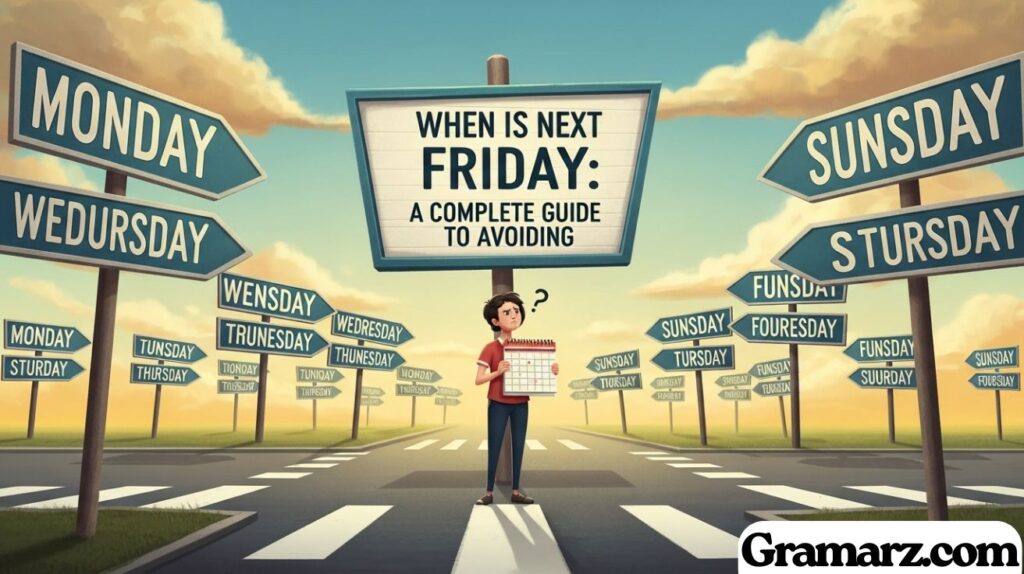
United States
In the U.S., “Next Friday” usually means the Friday of the following week. However, in some southern regions, people use it to mean the very next Friday. This difference in English idiomatic expressions is why clarify calendar terms is so useful.
United Kingdom
In the U.K., “Next Friday” generally refers to the upcoming Friday, while “Friday week” means the Friday of the next week. This is a key regional difference in how to talk about days in English.
Australia and New Zealand
These countries follow a pattern similar to the U.K. “Next Friday” means the upcoming Friday, and “Friday week” refers to the Friday after that.
Non-English Speaking Countries
In other countries, direct translation of these phrases can cause confusion. This shows how cultural context affects English time expressions and why it’s better to use exact dates internationally.
Understanding the Confusion Around “Next Friday” and “This Friday”
The difference between this and next Friday often causes confusion in English. People mix them up because their meaning changes depending on the current day. The meaning of next Friday is usually the Friday after the coming one, while this Friday meaning refers to the nearest Friday in the current week.
In American English, time expressions are flexible. For example, if today is Monday, “this Friday” means the upcoming Friday, but “next Friday” means the one after that. Understanding English time expressions helps avoid miscommunication in work and social planning.
How Week Structure Affects Friday Interpretation
The week structure explanation plays a big role in this confusion. Some people view Sunday as the week’s start, while others start on Monday. This calendar difference impacts how we interpret phrases like which Friday is next Friday or what does this Friday mean in daily conversation.
Cultural and regional habits influence interpretation too. For example, in the U.K., “next Friday” often means the upcoming Friday, but in the U.S., it usually means the Friday after that. Knowing how to clarify calendar terms ensures communication clarity and smoother work schedule planning.
The Role of Context in Friday Conversations
Context defines how we use these terms. When someone says, “The meeting is next Friday,” they might mean the Friday of next week or the immediate one. The contextual meaning of next and this depends on workplace habits, personal routines, and even the tone of the conversation.
To clarify calendar terms, always check your current weekday and setting. For instance, saying “this Friday” on a Saturday might sound confusing. The time reference in English grammar changes as the week moves, making it essential to confirm exact dates when planning deadlines or social events.
Real-Life Examples That Show the Difference
Imagine it’s Tuesday, November 4. If your boss says, “Submit the report this Friday,” it means November 7. But if they say, “Submit it next Friday,” they mean November 14. These real-life examples of time phrases show how easily deadline confusion can happen in workplace communication.
In another case, if today is Sunday, saying “this Friday” means the Friday of the current week. Once Friday passes, “this Friday” starts referring to the previous one. These examples show why it’s vital to know how to specify dates clearly and how to use next Friday correctly.
Tips for Avoiding Friday Date Confusion
To avoid Friday date confusion, always include exact dates in your messages, such as “Friday, November 8.” Using English idiomatic expressions without context often leads to mistakes. You can also mention the number of days, such as “in five days,” to add clarity and prevent misunderstandings.
When you talk about days in English, providing context matters. For instance, saying “next Friday at 3 PM” works best if paired with the date. These small adjustments in how you speak or write improve communication clarity and help prevent workplace or social schedule mix-ups.
Using Technology to Clarify Time Expressions
Digital tools can solve confusion. Apps like Google Calendar or Outlook let you set reminders with exact dates, eliminating mistakes about by next Friday meaning. These tools also help manage next vs this week schedules clearly, especially when coordinating teams or family events.
Adding time zones, dates, and event titles reduces date misunderstanding examples. Whether for work schedule planning or personal tasks, these apps help you stay consistent. They’re practical tools for mastering English grammar guide skills and improving your understanding of how to use days of the week correctly.
FAQs
What is considered next Friday?
Next Friday usually refers to the Friday of the following week, not the immediate upcoming Friday.
What is upcoming Friday?
Upcoming Friday refers to the closest Friday coming in the current week.
Is next Friday related to Friday?
Yes, next Friday always refers to a specific Friday, usually in the week after the current one.
Is it next Tuesday or this Tuesday?
“This Tuesday” refers to the Tuesday in the current week, while “next Tuesday” refers to the Tuesday of the following week.
Conclusion
Understanding the difference between this and next Friday is more than just grammar—it’s about communication clarity. Whether you’re scheduling meetings, making plans, or managing deadlines, knowing the meaning of next Friday and the meaning of this Friday helps you avoid costly mistakes.
Always remember, how to use days of the week precisely matters. When in doubt, include dates, clarify your intent, and keep your language consistent. That’s how you master how to avoid Friday date confusion like a pro.