WSP mean in texting stands for “What’s up?” It’s a short and casual way to say hello or start a chat. People use it often in messages and social media to greet friends quickly.
Have you ever received a text saying “WSP?” and didn’t know how to reply? You’re not alone. This simple slang has become one of the most common ways to start conversations online.
Today, WSP is used across platforms like Snapchat, TikTok, and Instagram. It helps people connect fast and keeps chats fun and relaxed. It’s part of modern texting culture that makes communication easier and more casual.
The Lowdown on WSP: What’s Up?
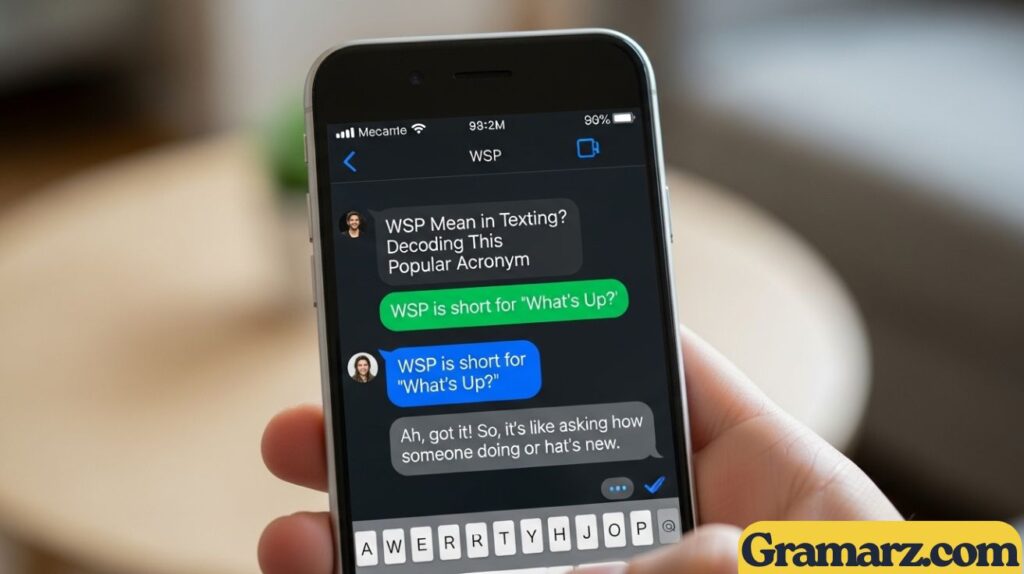
The term WSP is an acronym for What’s Up, one of the most common informal greetings online. Instead of typing the full phrase, people shorten it to “WSP” for speed and convenience, especially when chatting on platforms like Snapchat, Instagram, or text messages. In essence, when someone sends you “WSP?”, they’re just saying “Hey, how are you?” or “What are you doing?”
The WSP text abbreviation first appeared in early internet slang terms used in chatrooms and instant messaging platforms. Over time, it evolved into a mainstream casual texting expression. Today, it’s a symbol of digital efficiency — short, friendly, and familiar. Whether used by teens, young adults, or anyone active in online communication slang, WSP has become a digital handshake in modern text culture.
Emotion and Context: The Vibe of WSP
The emotion behind WSP in texting depends heavily on the context. It can be warm, friendly, flirty, or even distant depending on how and when it’s used. A message like “WSP?” from a close friend feels different from “WSP 😉” from someone you’re interested in. The addition of punctuation or emojis often changes the tone dramatically, making WSP meaning in slang flexible and open to interpretation.
Context is everything in digital conversation etiquette. For example, “WSP bro?” carries a chill, friendly vibe, while “WSP.” might sound cold or uninterested. Understanding these subtle cues can help you navigate conversations better. So, when decoding texting acronyms explained, remember that tone, timing, and relationship dynamics play major roles in how WSP is perceived.
WSP Across Social Media Platforms
The WSP in social media landscape varies by platform. On Snapchat, users send “WSP” to maintain streaks or start casual chats. On Instagram, it might be used as an opener in direct messages. On TikTok or Twitter/X, “WSP” is often used humorously in comments or captions to engage followers casually.
Each platform shapes WSP meaning in chat differently. While Snapchat users lean on it for day-to-day interactions, Instagram users might pair it with emojis or GIFs for a playful tone. TikTok creators often include “WSP?” in captions as a joke or to start interactive threads. This versatility makes it one of the most popular texting abbreviations across online spaces in the USA.
When to Use WSP (and When Not To)
Knowing when to use WSP in texting is essential. It’s perfect for casual interactions, light-hearted greetings, or checking in with friends. For example, if you haven’t talked to someone in a while, sending “WSP?” is a great way to reconnect without sounding too formal. It’s also commonly used in gaming chats or casual group messages to initiate conversation.
However, there are times when WSP meaning in slang isn’t appropriate. Avoid using it in professional emails, formal texts, or when communicating with someone unfamiliar. In these contexts, it might come across as lazy or unprofessional. Maintaining good digital conversation etiquette means knowing when informality is acceptable — and when it’s not.
| Situation | Should You Use “WSP”? | Alternative |
| Chatting with close friends | ✅ Yes | “Hey!” or “What’s up?” |
| Messaging a coworker or boss | ❌ No | “Hello,” or “How are you?” |
| Talking to someone new | ⚠️ Maybe (depends on tone) | “Hi, how’s it going?” |
| Starting a DM on social media | ✅ Yes | “Hey, saw your post!” |
Real-life Examples and Quick Replies
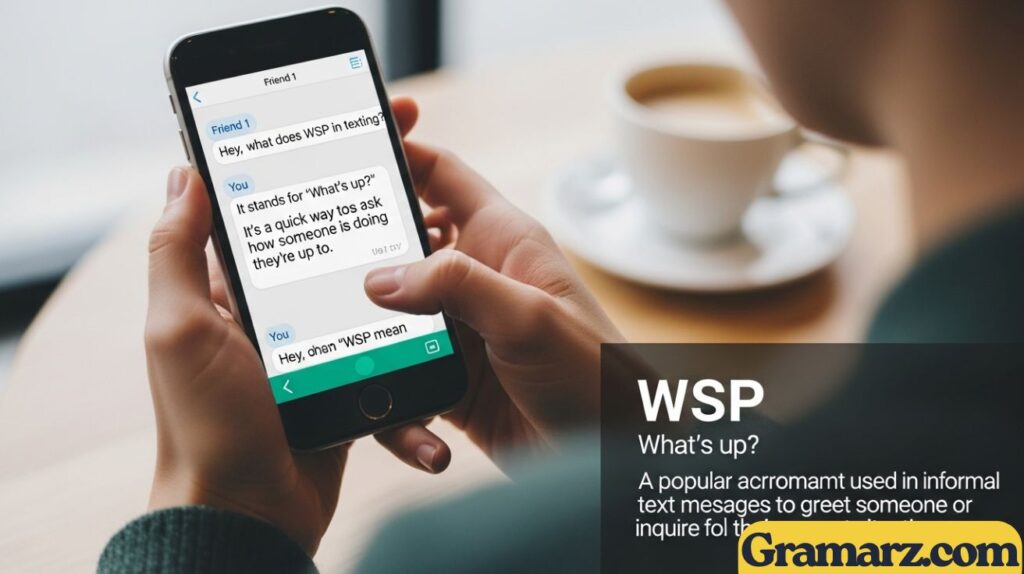
To truly understand how to use WSP in a sentence, let’s look at some WSP examples in messages. If someone texts you “WSP?”, your response depends on your mood and the relationship.
Example 1:
Friend: “WSP?”
You: “Not much, just relaxing. You?”
Example 2:
Crush: “WSP?”
You: “Just thinking about you 😉”
Example 3:
Coworker (informal): “WSP?”
You: “Busy day! What about you?”
These examples show that while WSP text abbreviation is short, it opens the door to many types of conversations — friendly, fun, or flirty. It’s a flexible phrase that adapts to context, just like meaning of WYD, HYD, and other popular texting abbreviations.
Read Also : YFM in Texting: Decoding the Digital Shorthand
Variations and Related Acronyms
Besides WSP, there are many variations in chat language trends that serve similar purposes. The most common alternative is WSP vs SUP, where “SUP” means the same thing — What’s up? Other related terms include “WYD” (What you doing?), “HYD” (How you doing?), and “Yo,” each expressing a friendly greeting in different styles.
These internet slang terms evolve constantly as people experiment with shorter, trendier ways to communicate. Younger generations might type “S’up” or even use emojis instead of words. The creativity behind these texting short forms shows how flexible and expressive informal greetings online can be in modern chat culture.
The Impact of WSP on Communication
The rise of WSP meaning in chat represents a shift in how people connect digitally. Instead of lengthy messages, people now prefer quick, engaging openers. This reflects the speed and informality of online communication slang, where clarity and tone are conveyed through brevity and emojis rather than long sentences.
From an academic perspective, WSP contributes to a broader movement in chat language trends — turning everyday speech into shorthand that feels personal and expressive. It helps users maintain connection with minimal effort, which is vital in today’s fast-paced online environment. Like many popular texting abbreviations, WSP reinforces relationships through frequent, casual contact.
The Lowdown on WSP: What’s Up?
The phrase WSP mean in texting simply stands for “What’s Up?” — a quick, casual greeting used in messages, chats, and social media. It’s one of the most common texting short forms that help people communicate faster. Instead of typing the full question, users shorten it to WSP, keeping things friendly and conversational online.
Over time, WSP meaning in slang evolved with the growth of mobile messaging. It’s used daily by friends, classmates, and even gamers to start a chat without sounding too formal. Whether it’s on Instagram, Snapchat, or text, “WSP” breaks the ice quickly and keeps the tone relaxed — perfect for modern digital conversations.
Emotion and Context: The Vibe of WSP
The tone behind WSP meaning in chat depends on context. A simple “WSP?” can sound warm, bored, or flirty, depending on punctuation or emojis. For example, “WSP 😊” feels cheerful, while “WSP?” might seem more neutral. Understanding the emotional tone helps you respond correctly in different texting situations.
Like many internet slang terms, the meaning of WSP text abbreviation changes with who’s sending it. Friends might use it casually, while someone interested romantically could use it playfully. The key is to read the conversation’s energy and match their tone — that’s part of proper digital conversation etiquette and understanding casual texting expressions.
WSP Across Social Media Platforms
Across platforms, WSP in social media takes on different roles. On Snapchat, users send “WSP?” to maintain streaks or start conversations. On Instagram or TikTok, it often appears in comments or DMs as a friendly opener. It’s a versatile phrase that fits nearly every casual online interaction.
Each platform gives WSP meaning in chat a new twist. Snapchat users might follow it with selfies, while TikTokers use it humorously. Instagram DMs may pair “WSP” with emojis for a laid-back vibe. This flexibility keeps WSP among the most popular texting abbreviations used in online communication slang across the U.S.
When to Use WSP (and When Not To)
Knowing when to use WSP in texting is important. It’s perfect for friendly chats, check-ins, or starting a conversation after a long time. “WSP?” works great when you want to sound approachable without overthinking your message. It fits well in informal greetings online and friendly texts.
However, avoid WSP meaning in slang in professional or serious messages. Using it in emails or business chats might appear unprofessional or careless. In those cases, stick to complete sentences like “Hello” or “How are you?” Using WSP wisely shows good digital conversation etiquette and helps maintain the right tone.
Real-life Examples and Quick Replies
If you’re wondering how to use WSP in a sentence, here are some simple examples. Someone might text “WSP?” and expect replies like “Not much, just relaxing,” or “Nothing much, you?” These quick answers keep the chat going and reflect the casual nature of WSP meaning in chat.
For different moods, your reply can change. You could say, “Just chilling, what about you?” for a friendly vibe or “Thinking about you 😉” for a flirty one. Such WSP examples in messages show its flexibility in expressing personality through casual texting expressions and short replies.
Variations and Related Acronyms
The WSP text abbreviation has many similar versions in chat language trends. The most common is WSP vs SUP, where both mean “What’s up.” Others include “WYD” (What you doing?) and “HYD” (How you doing?). These related phrases share the same role — easy, friendly openers in casual online chats.
Each of these popular texting abbreviations fits into the broader family of internet slang terms. They simplify conversation and save time, making messages faster to type and read. Whether you prefer WSP, SUP, or WYD, these shortcuts have become part of today’s global digital vocabulary.
The Impact of WSP on Communication
The widespread use of WSP meaning in chat shows how texting has shaped modern communication. It reflects a global move toward shorter, faster, and friendlier exchanges. Acronyms like WSP help people stay connected without needing long messages, fitting perfectly into busy online lifestyles.
This evolution in online communication slang mirrors cultural trends. Quick greetings like WSP and WSP vs SUP highlight how informal language builds connections. As part of evolving chat language trends, WSP continues to influence how people express emotion and maintain relationships digitally.
FAQ,s
What does WSP mean in text?
WSP stands for “What’s up?”, a casual greeting used to start friendly conversations or check in with someone through text or chat.
What does WSP mean response?
A typical response to WSP is “Not much, you?” or “Just chilling, what about you?”, keeping the tone relaxed and conversational.
Is “WSP” used on social media?
Yes, “WSP” is commonly used on social media like Snapchat, Instagram, and TikTok to casually greet friends or begin chats.
What is the best way to use “WSP” in a text?
Use “WSP” when you want to start a light, informal conversation or reconnect with someone in a laid-back, friendly way.
Wrapping Up: The WSP Lowdown
What does WSP mean? It’s simple — WSP is the acronym for What’s Up, a quick and casual greeting that embodies the essence of informal greetings online. It’s part of the ever-growing list of texting short forms that make digital communication faster, friendlier, and more expressive.
To use WSP effectively, remember that it’s a tool for casual connection. Whether you’re texting a friend, chatting on social media, or starting a new conversation, WSP helps you sound approachable and modern. Understanding WSP meaning in slang means more than just knowing the phrase — it’s about embracing the language of today’s online communication slang and mastering the art of casual conversation in the digital age.