The WTAF meaning is short for What The Actual F**.* It is a popular online slang term used to show shock, surprise, or disbelief. People use it often in texting, memes, and social media posts.
Have you ever seen something so unexpected that words failed you? That’s when people say WTAF! It’s a quick and funny way to express big emotions online.
The WTAF meaning is stronger than WTF meaning because it adds more feeling. It has become a part of modern internet talk, showing how people express emotions in the digital world.
Definition of ‘WTAF’
The WTAF meaning is simple yet strong. It stands for What The Actual F*. This WTAF abbreviation is an extension of the well-known WTF meaning — What The F**.* The word “Actual” adds extra emotion, making it sound more shocked or frustrated. It is a stronger, more expressive version used when something is completely unexpected or confusing.
In online slang terms, people use “WTAF” when they want to react with disbelief or surprise. For example, when someone sees a shocking video or reads unbelievable news, they might type “WTAF just happened?” to show genuine astonishment. It’s not always meant to be rude; sometimes, it’s just a way to express strong emotion in casual, reaction phrases online.
Meaning & Use
The meaning of WTAF depends on tone and context. In most cases, it expresses emotions like shock, anger, or humor. For example, someone might comment “WTAF is that outfit?” to express both surprise and amusement. This kind of digital slang expression is commonly seen on platforms like Twitter, Reddit, and TikTok.
In American culture, WTAF in social media posts is often used for humorous exaggeration rather than true anger. People use it to react to strange trends, unexpected videos, or dramatic celebrity news. It fits perfectly in today’s casual slang expressions, where people prefer short, emotional, and relatable reactions instead of long explanations.
What Does the Interjection WTAF Mean?
The word WTAF functions as an interjection, meaning it expresses sudden emotion. Like “Wow!” or “Oh no!”, interjections stand alone in sentences to show how someone feels. When people write “WTAF,” it captures an instant burst of emotion — usually surprise, disbelief, or annoyance.
For instance, imagine you open your favorite app and see a friend’s unbelievable post. You might type, “WTAF happened here?” It works like an emotional shortcut, helping users express big feelings in a few letters. That’s why this internet shorthand has become a favorite in American digital speech.
WTAFinterjection
Grammatically, WTAF stands as its own sentence or appears at the start of one. It doesn’t need extra words to make sense. For example, “WTAF?!” by itself can express confusion, while “WTAF is going on?” adds a bit more context. The tone depends on punctuation — ending with a question mark or exclamation mark changes the feeling.
Writers and users often capitalize it completely for a louder emotional tone, just like shouting in text. Using lowercase like “wtaf” makes it look softer or sarcastic. In this way, the WTAF abbreviation adapts to personal style and emotion, a key trait of online chat slang
What Does WTAF Mean in Texting?
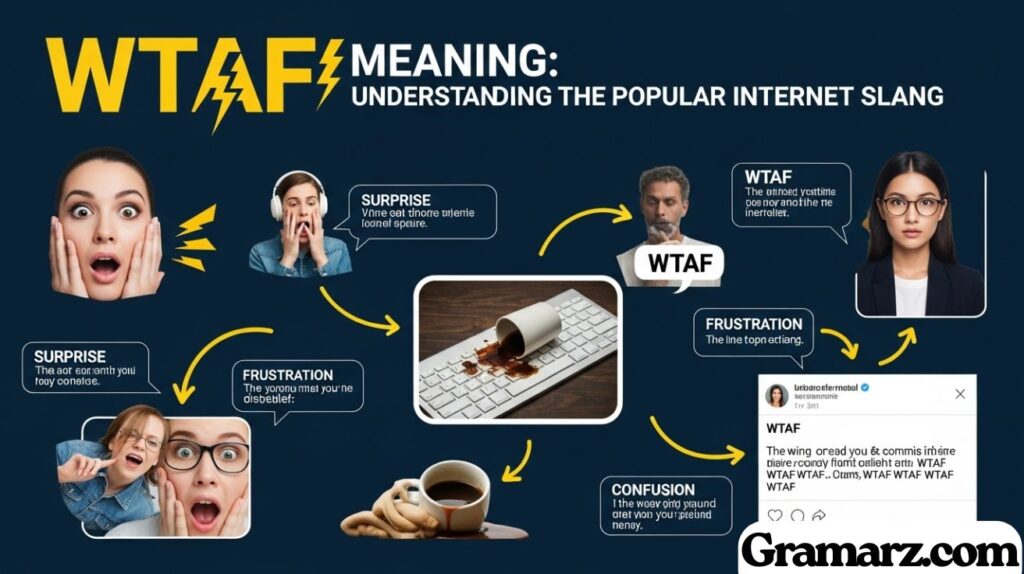
In digital communication lingo, WTAF in texting plays a big role among friends or online communities. People use it in private messages or group chats to express disbelief, surprise, or frustration. It’s more emotional than logical and adds color to conversations.
In texting culture, people often use WTAF instead of writing long sentences. It helps save time while still sounding expressive. However, it’s not suitable for professional or formal messages. For instance, you can text your friend “WTAF, did you see that?” after a shocking event, but you wouldn’t send that to your boss. That’s how casual slang expressions shape modern online speech.
Examples of WTAF in Texting
The best way to understand WTAF usage examples is by looking at how people use it in real conversations. Below are some natural texting cases that show how this digital slang expression works in different tones.
Case Study 1:
Friend 1: “I just saw a cat riding a skateboard.”
Friend 2: “WTAF! Are you serious?”
Here, “WTAF” shows surprise and amusement.
Case Study 2:
Friend 1: “My phone just ordered 10 pizzas by accident.”
Friend 2: “WTAF, how did that even happen?”
Here, it expresses disbelief mixed with laughter.
Case Study 3:
Friend 1: “They canceled the show after one episode.”
Friend 2: “WTAF? I just started watching it!”
This one expresses frustration and confusion.
WTAF in British English
While WTAF is mainly used in the U.S., it’s also common in British online spaces. However, in the U.K., people often use it with a slightly different tone. British humor tends to mix sarcasm with understatement, so “WTAF” there can sound more humorous than angry. For example, a British user might say “WTAF is that haircut?” in a joking, teasing tone.
Both American and British speakers use this internet shorthand, but the emotional weight may vary. In the U.S., it’s louder and more dramatic, while in Britain, it’s often witty and dry. This shows how digital slang expressions adapt to regional styles of humor and communication.
Variant Forms
Like most online slang terms, “WTAF” has many related versions. Its most common variant is WTF, which is slightly less intense. Other versions include “WTH” (What The Heck) and “WTHeck” for users who prefer cleaner language. Some people also write it as “WTAF?!” or “wtaf…” depending on the tone.
These abbreviations for surprise show the flexibility of modern slang. Each form expresses a similar emotion but fits different audiences. For example, “WTF” might be used on Twitter, while “WTH” could appear in a family-friendly group chat.
Forms
Different forms of WTAF appear online based on writing style. Capital letters make it louder, while lowercase makes it calmer or sarcastic. For instance, “WTAF!” sounds like shouting, but “wtaf…” feels like quiet disbelief. Punctuation also matters:
- “WTAF?” shows confusion.
- “WTAF!” shows anger or shock.
- “WTAF?!” combines both emotions.
These simple changes allow users to personalize this reaction phrase online, giving it unique emotion in every conversation.
Quotations
Some real-life examples of WTAF in social media posts help us see its emotional range:
“WTAF is going on in this season finale?” — Twitter user reacting to a show twist
“Just saw a raccoon on a scooter. WTAF 😂” — Instagram comment
“WTAF did I just read?” — Reddit post after seeing weird news
These social media expressions show that WTAF has become a natural reaction word for online audiences.
Factsheet
| Aspect | Details |
| Full Form | What The Actual F*** |
| Type | Interjection |
| Tone | Shock, disbelief, humor, or anger |
| Origin | Evolved from WTF (What The F***) |
| Common Use | Online chats, memes, comments |
| Popular Platforms | Twitter, Reddit, TikTok, Instagram |
| Cultural Use | USA and UK |
| Alternative Forms | WTF, WTH, WTHeck |
This factsheet makes it clear that WTAF is one of the most expressive texting abbreviations used in the world of online chat slang.
Where Does the Interjection WTAF Come From?
The origin of WTAF can be traced back to WTF, one of the earliest internet shorthand expressions used on forums and chatrooms in the 1990s. As online communities grew, users began to create more intense or funny versions of existing slang. “What The Actual F***” added a humorous twist and became widely popular on social media around the 2010s.
It first appeared in gaming forums and meme communities, where people needed stronger ways to express shock or disbelief. The phrase spread quickly, becoming part of everyday digital communication lingo.
Read Also : Connector or Connecter: Which is Correct in Modern English?
Etymology
Linguistically, WTAF is an acronym formed by combining the first letters of “What The Actual F***.” It evolved naturally as online culture developed. The inclusion of “Actual” made it both funnier and more intense. Over time, memes, YouTube videos, and viral tweets helped make WTAF a universal social media expression. Today, it appears in conversations, GIFs, reaction memes, and even pop culture merchandise.
Nearby Entries
Similar digital slang expressions that carry comparable emotion include OMFG (Oh My F***ing God), SMH (Shaking My Head), IDK (I Don’t Know), and LOL (Laugh Out Loud). These online slang terms work together to create the emotional tone of online speech. They help users express feelings quickly and connect over shared reactions in meme language and chat messages.
Summary
The WTAF meaning goes beyond simple surprise. It reflects the power of modern digital communication lingo, where people use short words to show big emotions. It began as a strong reaction phrase but now often carries humor, sarcasm, or shared amusement. Its journey from WTF meaning to WTAF shows how slang evolves with culture and technology.
In short, WTAF in texting and WTAF in social media have become part of daily online life, showing how humans constantly reinvent language to fit emotion and style.
The True WTAF Meaning in Modern Digital Talk
The WTAF meaning comes from the phrase What The Actual F, and it’s one of today’s most expressive online slang terms. People use it to show intense surprise, confusion, or disbelief. It’s common across social media expressions and online chat slang, helping users react instantly to shocking or funny moments in digital spaces.
This digital slang expression adds humor and personality to online conversations. Americans especially use it to express strong emotions without sounding too serious. Whether in memes, comments, or group chats, WTAF in texting perfectly captures moments of shock, making digital communication more emotional and relatable for users worldwide.
How WTAF Became a Viral Internet Slang Term
The rise of WTAF in social media began when users wanted a stronger form of WTF meaning. Adding “Actual” made it sound more exaggerated and funny. It quickly spread through memes, YouTube reactions, and online forums where people love dramatic reaction phrases online.
As meme culture grew, WTAF abbreviation became a staple in meme language and digital communication lingo. It appeared in comment sections, videos, and even TV captions. Its viral growth shows how internet users love short, powerful, and humorous words to express emotion in modern online culture.
The Emotional Tone and Usage of WTAF
The meaning of WTAF changes slightly based on context and tone. It can express disbelief, anger, or even amusement. When someone types “WTAF?!” they might be shocked or just laughing at something absurd. This flexibility makes it one of the most popular casual slang expressions online.
People use it in texting abbreviations to sound natural and spontaneous. It captures a feeling that words like “What?” can’t. In this way, WTAF in texting works as a digital emotion, blending humor and surprise in everyday online communication across platforms like Twitter or TikTok.
WTAF vs WTF: What’s the Difference?
Both WTAF and WTF come from the same roots, but their meanings differ slightly. The WTF meaning is more general, while WTAF adds intensity with the word “Actual.” It emphasizes disbelief, making reactions sound stronger and more dramatic.
In online chat slang, this difference matters. People choose WTAF when they want extra emotional weight in their messages. For example, “WTF happened?” sounds casual, but “WTAF happened?!” feels more shocked. That’s why WTAF abbreviation became the preferred version for powerful emotional reactions.
Real Examples of WTAF in Social Media Conversations
A common WTAF usage example might look like someone tweeting, “WTAF is going on in this episode?!” or commenting, “WTAF did I just see?” on a meme post. These social media expressions show shock or disbelief while adding humor to the reaction.
In group chats, people often use WTAF in texting to respond quickly to wild news or funny photos. The abbreviation saves time and energy while perfectly expressing emotion. It’s now a vital part of digital communication lingo, used by millions in daily online talk.
Why Knowing WTAF Matters in Online Communication
Understanding WTAF meaning helps people navigate internet shorthand and digital slang expressions more easily. Using it correctly can make conversations feel natural, fun, and emotionally expressive. It connects users who share the same online culture and humor.
As online communication evolves, phrases like WTAF, WTF, and other abbreviations for surprise continue shaping how people talk. Knowing their meanings keeps you fluent in modern social media expressions and helps you engage confidently in today’s digital conversations.
FAQ,s
What is the difference between WTF and WTAF?
WTF means What The F**,* while WTAF stands for What The Actual F**,* adding stronger emphasis and emotional intensity.
What does WTAF mean when texting?
In texting, WTAF shows shock, disbelief, or confusion, often used humorously or dramatically in digital communication lingo.
What does WTAF mean Urban Dictionary?
According to Urban Dictionary, WTAF means What The Actual F**,* commonly used online to express extreme surprise or frustration.
What does FKN mean in texting?
FKN is an abbreviation of F**ing,* used in online chat slang to add emphasis or emotion to casual digital messages.
Final Thoughts
The phrase What The Actual F or WTAF represents more than shock — it symbolizes creativity and connection in the digital world. It’s part of the colorful universe of online chat slang, where humor and emotion meet. Whether it’s a reaction to news, memes, or conversations, WTAF remains one of the most expressive abbreviations for surprise in today’s internet culture. Understanding it helps you not only read modern memes but also speak the language of the online world fluently.