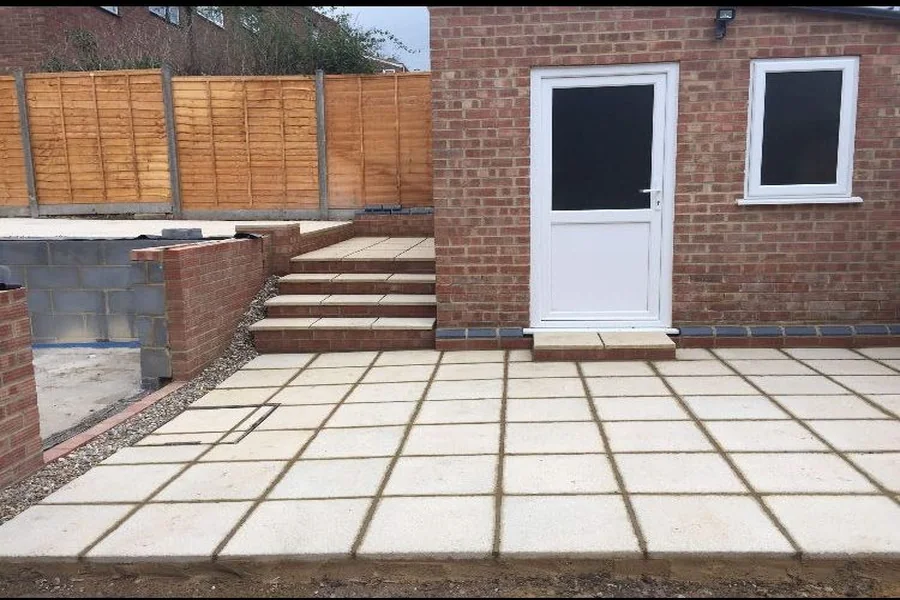
Eight hundred dollars in mortar, sand and a rented mixer bought one weekend of work and two years of regret. The 240 square foot brick patio behind a 1,200 square foot starter home in River Falls came back with a $6,400 rebuild quote, which is usually the point where a homeowner starts calling masonry contractors river falls wi instead of watching another tutorial. Effort was never the problem on that job. The mix was.
Three habits wreck almost every weekend repointing job I get called out to look at: mortar harder than the brick, joints ground wider than they were built, and a base nobody touched. Real brick work also runs slower than most people expect once a pro is holding the trowel. A May 2026 piece from GAPPSI pegs an outdoor kitchen installation at 2 to 4 weeks of active construction once permits are approved, with the full project from design to completion often stretching several months on permit approvals and material lead times. A patio is a smaller animal than that, but the honest calendar still does not fit inside a Saturday.
Hard Mortar Breaks Soft Brick Every Time
Old brick moves. It takes on water, it freezes, it expands, and it wants a joint soft enough to give a little when that happens. The bagged mix sitting on the shelf at most hardware stores is a high strength blend meant for block foundations, and it ends up harder than the clay brick it is packed against. So when the wall moves, the mortar refuses to, and the brick face gives instead. That is the flaking people blame on the winter. Winter only found the mistake.
Grinding Joints Wider Than They Started
One homeowner a few blocks off Main ground his 3/8 inch joints out to nearly 3/4 with a 4 inch angle grinder, because a grinder is faster than a chisel and the dust looked productive. Wider joints swallow more mortar, and more mortar shrinks harder as it cures. By the second spring the corner bricks rocked under a thumb. Cut back only what is loose, hold the original joint width, and the repair sits inside the wall rather than on top of it.
Skipping The Base Under The Paving
Job after job, the same thing fails first, and it is not the mortar at all. It is whatever the brick is sitting on. A patio laid over settled dirt with an inch of sand will heave through every freeze cycle no matter how clean the joints look, and by the second year the field has a low spot that ponds water right where the mortar is thinnest. Which is really a drainage argument, and I could spend a page on downspouts that dump a roof’s worth of water onto a brick edge every storm. Back to the base: six inches of compacted gravel, a screeded bedding layer, and slope running away from the house.
The Math On A Redo Versus A Repair
Run the numbers on that 240 square foot patio as an illustration. Say the weekend cost $800 in total, roughly $310 in mortar and sand, $95 to rent the mixer, $180 in replacement brick, and $215 in blades, buckets and a wheelbarrow nobody owned yet. The rebuild quote two winters later was $6,400, so the whole exercise comes to $7,200 all in. A targeted professional repair on the same patio, cutting out and repointing the 60 square feet that actually failed and resetting the low corner, would have penciled out closer to $1,900.
Nobody budgets for the second attempt. It is always the expensive one.
Match The Mix Or Hire The Match
Matching mortar to brick is not something to eyeball from a phone screen. How old and how soft the brick is, what the original joints were struck with, and what the wall goes through in a River Falls February all decide the mix, and a mason who has opened a few hundred joints reads that in about ten minutes. Paying for the same patio twice is throwing good money after bad, and an estimate on the repair usually costs nothing but an hour of your afternoon. Ask around, take two quotes, and let the masonry contractors river falls wi homeowners keep rehiring tell you whether the joints need repointing or the base needs rebuilding.