A homeowner off a quiet Baytown subdivision street spread three fence quotes across her kitchen table and asked the only question that mattered: why does the same 180 feet of front-and-side ornamental fence cost about $6,000 from one company and roughly $11,000 from another? All three sheets said aluminum. She had searched for fencing baytown tx, collected her estimates the way most first-time buyers do, and then found that the three documents barely spoke the same language. One listed a gauge, one listed an alloy, and the third said black aluminum fence, installed, and stopped there. Here is the argument of this whole piece in one line: about six spec words explain nearly the entire gap between those numbers, and once you can translate them, you are comparing fences instead of totals.
Three Quotes Can Describe Three Different Fences
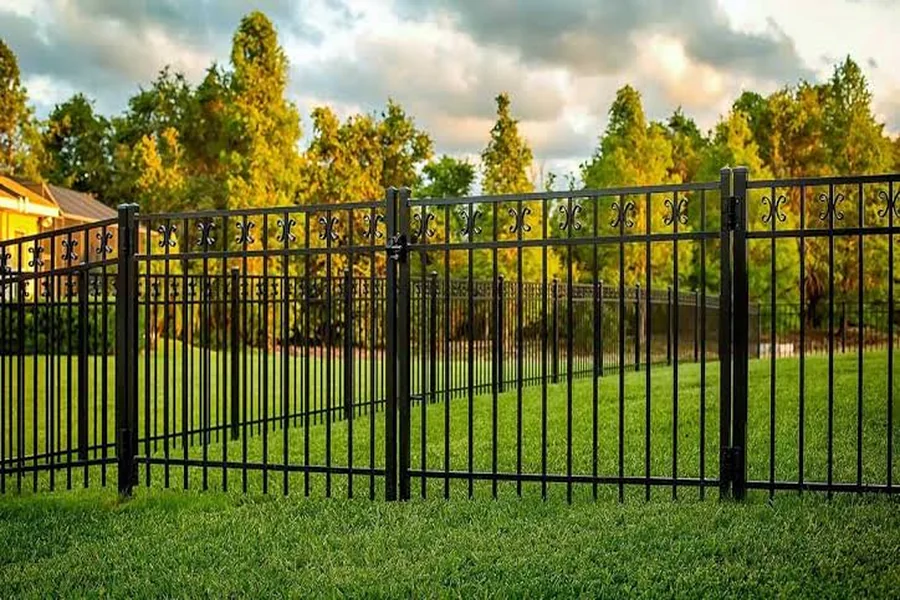
Aluminum fence is not one product. It is a family of extruded pickets and rails that ranges from a light residential panel meant to outline a flower bed to a heavy industrial section that will shrug off a riding mower backing into it. Contractors write quotes for the fence they intend to build, not for the fence the guy down the street intends to build, so two honest estimates can look wildly different on paper while both being accurate. The cheapest aluminum quote is usually a lighter fence, not a better deal. What usually turns up when we line three estimates side by side is that the low bid has thinner walls, fewer rails, and a coating warranty measured in a handful of years rather than a couple of decades.
Gauge And Wall Thickness Are Not Cosmetic
Two aluminum pickets can look identical from the sidewalk and differ by half a pound each in the hand. The number that separates them is wall thickness, sometimes written as gauge, which simply means how much metal sits between the outside of the picket and the hollow center. A residential grade picket might run near 0.050 inches; a heavier commercial section can be double that, and it costs more because there is literally more aluminum in it. Say the light panel prices out around $33 a foot installed on that 180 foot job and the heavy one lands closer to $58: on the same yard that is roughly $5,940 against $10,440, and neither installer is gouging anybody. Ask each bidder to write the wall thickness on the estimate. Most will, and the ones who will not have told you something useful anyway.
Rackable Panels Solve Sloped Yards
Rackable is the term that trips up more buyers than any other, and it means something plain: the panel can pivot at its picket joints so it follows a slope in one continuous line instead of dropping in stair steps. A drainage swale along a side yard is exactly where this matters. A quote that includes rackable panels and a quote that assumes flat ground are not describing the same install, because the second one either leaves triangular gaps under the fence or requires stepped panels and extra posts that show up later as a change order. If your lot drains toward the back, the rackable line item is the one to circle, and it is a fair question to raise before anybody signs. Good fencing baytown tx contractors will walk the grade with you first and price it correctly the first time.
Coating Grade Decides The Repaint Year
Powder coating is the finish that keeps aluminum from chalking to a dull gray, and not all of it is equal. The benchmark the industry argues over is salt spray exposure, and ASTM, the American Society for Testing and Materials, maintains the B117 salt spray test that coating suppliers cite in their datasheets. As of June 2026 that method remains the reference point for coastal-grade claims, and the coatings marketed for coastal service are the ones rated past 1,000 hours of salt spray, against roughly 500 hours for an ordinary coating. Galveston Bay is close enough that the distinction is not academic here. What I cannot tell you is how those lab hours convert to calendar years on a specific street, because nobody tracks that at the neighborhood level and the honest answer is that shade, sprinkler overspray and how often the fence gets rinsed all move the number. A coating spec still beats no coating spec every time.
Answers To The Questions Buyers Ask Most
Is aluminum fence strong enough for a big dog?
For most dogs, yes, provided the picket spacing and the fence height are chosen with the animal in mind rather than the catalog default. The failure point is almost never the aluminum itself. It is the gap under a panel on uneven ground, which is another argument for pricing the slope correctly.
Why does one quote include post caps and another does not?
Caps, finials and decorative rings are line items that some contractors bundle into the panel price and others list separately. Neither approach is dishonest. Add them up before comparing totals, because a $900 spread on a large job is often just trim priced two different ways.
How long should an aluminum fence installation take?
A straightforward residential run of this size is usually a two or three day job once materials are on site. Post setting and cure time drive the schedule more than panel hanging does. Rain and utility locates can stretch it, so treat any single-day promise with a raised eyebrow.
Read The Spec Before You Read The Total
The cheapest quote on that kitchen table was not a scam and the most expensive one was not padded. They were three different fences wearing the same word. Ask every bidder for wall thickness, alloy, rackability and coating grade in writing, then put the totals back in front of you and see whether the ranking still holds. It usually shifts, and the fence you end up choosing is the one you actually understood.