
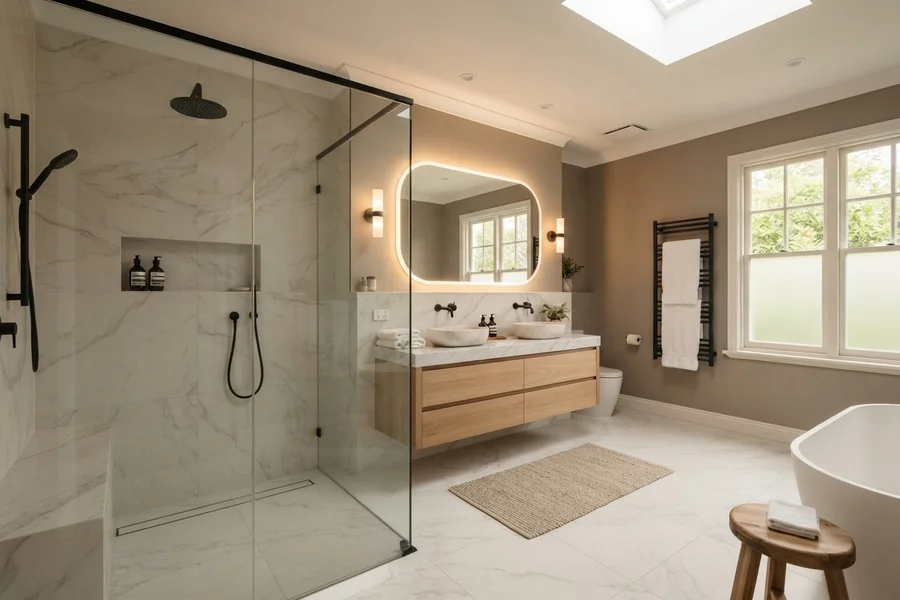
A bathroom remodel in Phoenix costs differently, permits differently, and fails differently than one in Miami — and both of those look nothing like what happens in the Pacific Northwest. In Phoenix, contractors prioritize crack-resistant grout over moisture barriers. In Miami, impact-rated windows dominate the conversation. In the Upper Midwest, freeze-thaw cycles dictate subfloor choices before a single tile gets selected. If you’re planning a bathroom remodel in Seattle, the local variables — persistent marine moisture, City of Seattle permit requirements, and a labor market shaped by a construction boom that hasn’t fully cooled — are the factors that will make or break your project budget and timeline. This article is for the homeowner doing their homework before the first contractor walks through the door.
How Regional Conditions Shape Bathroom Remodeling Costs and Choices
In Denver, bathroom remodels often run 15–20% cheaper than comparable jobs in Seattle, largely due to lower labor overhead and a drier climate that demands less moisture-proofing. In Austin, the relative lack of seismic codes simplifies structural work considerably. In Boston, historic district overlays create a permitting maze that can add weeks to a timeline.
Seattle sits at a specific intersection of challenges: a marine climate with average annual rainfall around 38 inches, a city building department that enforces Washington State’s energy code updates, and a regional labor pool that’s been stretched thin since the tech-driven construction surge of the 2010s. What that means practically is that washington bathroom remodeling projects here require more upfront planning than the national average — and more precise contractor vetting.
The good news is that Seattle homeowners who plan methodically routinely get better outcomes than those who rush. The variance between a $15,000 cosmetic refresh and a $55,000 full gut-and-rebuild is largely determined by how clearly the scope is defined before bids go out.
Seattle’s Moisture Reality: Why Ventilation Is a Load-Bearing Decision
I’ve inspected bathrooms in Seattle-area homes where the previous remodel looked flawless on the surface — until we pulled the cement board and found black mold colonizing the stud cavity. The culprit, almost every time, is undersized or improperly ducted exhaust ventilation.
In Seattle’s climate, a bathroom exhaust fan isn’t an accessory — it’s a structural decision with long-term consequences. The current recommendation from most bath remodeling Seattle professionals is a minimum of 1 CFM per square foot of bathroom space, ducted directly to the exterior (never into an attic or crawl space). For shower enclosures larger than 36 square feet, a dedicated humidity-sensing fan is worth every dollar.
When you’re reviewing contractor proposals, look specifically for how they handle vapor barriers behind tile, whether they specify moisture-resistant drywall (or cement board) throughout the wet zone, and what exhaust fan brand and CFM rating they’re specifying. Vague answers here are a red flag.
Permits, Inspections, and Why the Methodical Planner Always Wins
Seattle requires a building permit for any bathroom remodel that involves moving or adding plumbing, altering electrical circuits, or making structural changes. A straight cosmetic swap — new tile, new fixtures in existing locations, new vanity — typically doesn’t require a permit. But the moment you’re moving a toilet, adding a double vanity that requires new supply lines, or converting a tub to a walk-in shower, you’re in permit territory.
The City of Seattle’s permit processing times have improved since the backlog years of 2020–2022, but you should still budget 3–6 weeks for a standard over-the-counter permit and up to 12 weeks for more complex submittals. This is precisely why I tell planning-stage homeowners to lock in their contractor and pull permits before finalizing material orders. Lead times on tile and custom cabinetry can stretch 8–14 weeks from specialty suppliers, so a coordinated timeline is the difference between a 10-week project and a 20-week one.
Material Selection in a Wet Climate — What Works and What Warps
Seattle’s humidity changes how you should think about every surface in the bathroom. Solid wood vanities, even sealed ones, expand and contract with seasonal humidity shifts and eventually fail at joints and drawer slides. I consistently recommend PVC-core or plywood-core cabinetry with a thermofoil or painted MDF face — it holds up far better over a 10-to-15-year horizon.
For flooring, porcelain tile with a coefficient of friction (COF) rating of 0.60 or higher is the standard for wet areas. Luxury vinyl plank has become popular and performs reasonably well in bathrooms if the core is 100% waterproof and transitions are properly sealed. Engineered hardwood in bathrooms is a risk I wouldn’t recommend to any Seattle homeowner — the moisture cycling will eventually telegraph through.
Grout choice matters more than most homeowners realize. Epoxy grout costs more upfront but is virtually impervious to mold and staining — in a Seattle bathroom, the ROI over 10 years is clear.
Budgeting a Bathroom Remodel in Seattle: Real Numbers, Real Ranges
Based on current regional pricing, here’s a realistic breakdown for Seattle-area projects:
- Cosmetic refresh (new tile, fixtures, vanity — no layout changes): 10,000–20,000
- Mid-range remodel (new shower, updated plumbing fixtures, new flooring, permit-required work): 22,000–40,000
- Full gut renovation (layout changes, custom tile, heated floors, high-end fixtures): 45,000–80,000+
Labor typically represents 40–50% of the total project cost in the Seattle market, which is higher than the national average of around 35%. Bathroom remodelers seattle-based contractors will also price in the cost of permit fees, inspection scheduling, and the additional waterproofing standards required by Washington State code — all legitimate line items that cheaper out-of-area bids often omit.
How to Vet Bath Remodeling Seattle Contractors Before You Sign Anything
Ask for the contractor’s Washington State contractor registration number and verify it through the Department of Labor & Industries website (Lni.wa.gov). This takes two minutes and immediately filters out unlicensed operators.
Beyond licensing, review at least three completed bathroom projects with references you can actually call. Ask those references specifically about timeline accuracy and how punch-list items were handled at project close — that’s where contractor reliability really shows.
The home renovation experts in greater Seattle at NW Expert Builders are worth a look if you want a team with documented local project experience, proper licensing, and familiarity with Seattle’s permit process. Whatever contractor you ultimately choose, get a written scope of work that specifies materials by brand, model number, and finish — vague specs are how misunderstandings turn into change orders.
Start your contractor interviews at least 8–12 weeks before your target start date. In Seattle’s remodeling market, the best contractors book fast — and the methodical planner who starts early is the one who gets them.
