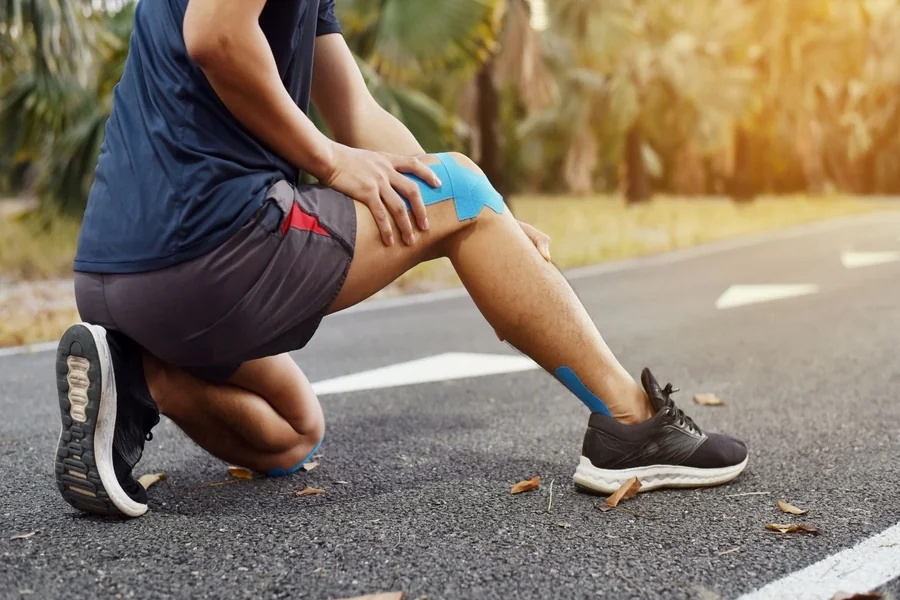
Ice buys a week. Ice buys another week, and somewhere around the third round of that cycle a runner ends up searching knee pain treatments west palm beach fl at eleven at night. Ice never buys a diagnosis. A weekend five kilometre runner on three runs a week can ride that loop through an entire Florida wet season, filing everything under runner’s knee because that is the phrase everyone uses. At least ten separate problems produce a knee that puffs up after a long run and clicks on the way down stairs, and the only one worth treating is the one the imaging actually shows.
Check Whether Swelling Follows Every Long Run
Write down which runs cause it. Not how the knee felt on a scale of ten, just the run and whether the joint puffed up afterward. Three weeks of that on a three run week gives you nine data points, which is enough to see whether the trigger is distance, pace, or the one downhill stretch on the way home. Give the log three weeks. Honestly, five is more useful once you account for the week the rain cancels everything and the week you run angry about it. Swelling that shows up after a twelve kilometre effort and never after the easy five is telling you something about load tolerance. Swelling that shows up after every run regardless of distance is telling you something else, and that second pattern is the one that gets mislabeled most often.
Check What The Clicking Is Being Called
Clicking has a dozen possible owners, so the useful question is which one somebody has actually written down. If a clinician says chondromalacia, what they mean is that the cartilage on the underside of the kneecap has gone rough, so the joint grinds in places where it should glide. Meniscus tears, IT band syndrome and patellar tendinopathy each produce their own version of the same noise. The case we see most often in recreational runners is a training load problem wearing a structural name, and the reverse turns up too, which is exactly why the label matters less than the picture it came from. Ask which diagnosis is on the chart and what imaging put it there.
Check Before Accepting Rest And Repeat
Rest works, and that is the trap. A week off calms an irritated knee enough that the next long run feels like proof the problem resolved, and then the cycle starts over on a slightly worse knee. Recovery also refuses to run on the schedule a training plan wants: a February 2026 study published in SAGE Open Nursing found that recovery from musculoskeletal trauma runs through three identifiable phases, vulnerability, then learning to manage, then adaptation, and that people move through them at an individual, non-linear pace. A knee that needs a rest week every month is not resting, it is being interrupted. Time off earns its place when it comes attached to a diagnosis and a change in load. By itself it is a pause.
Questions To Bring To A Knee Evaluation
An evaluation gets more useful when you arrive with the log and a short list. Bring the nine data points, plus every term anyone has already used for the problem, including the ones from a forum. Then ask questions that force specifics instead of reassurance.
- What is the working diagnosis, and what imaging would confirm or rule it out? A good answer names the specific study and what it would show.
- Is this a load problem, a structural one, or both? A good answer points to which findings argue each way.
- If we change training load first, how long until we know whether it worked? A good answer gives a number of weeks, not ‘a while’.
- Which options exist for this diagnosis specifically, and what does the evidence look like for someone at my age and mileage?
- What would make you change the diagnosis? A good answer describes the finding that would send you back to imaging.
Some findings skip the checklist entirely. MedlinePlus, the NIH consumer health library recommends prompt medical evaluation rather than another ice cycle for a knee that locks and will not straighten, a hot swollen knee with fever, a joint that gives way underneath you, or swelling that appears in the first 60 minutes after an injury. Get any of those looked at right away. Those are not patient patterns to log and watch.
One Season Is Long Enough To Wait
A season is a fair trial for an experiment you are genuinely running. Three months of ice and optimism is not an experiment, it is the same week repeated twelve times. Search results for knee pain treatments west palm beach fl will offer a long menu, and the filter that sorts it is whether each option names the diagnosis it treats and the imaging that established it. Bring the log, ask what the picture showed, and stop accepting runner’s knee as an answer when it is really a description of where it hurts.