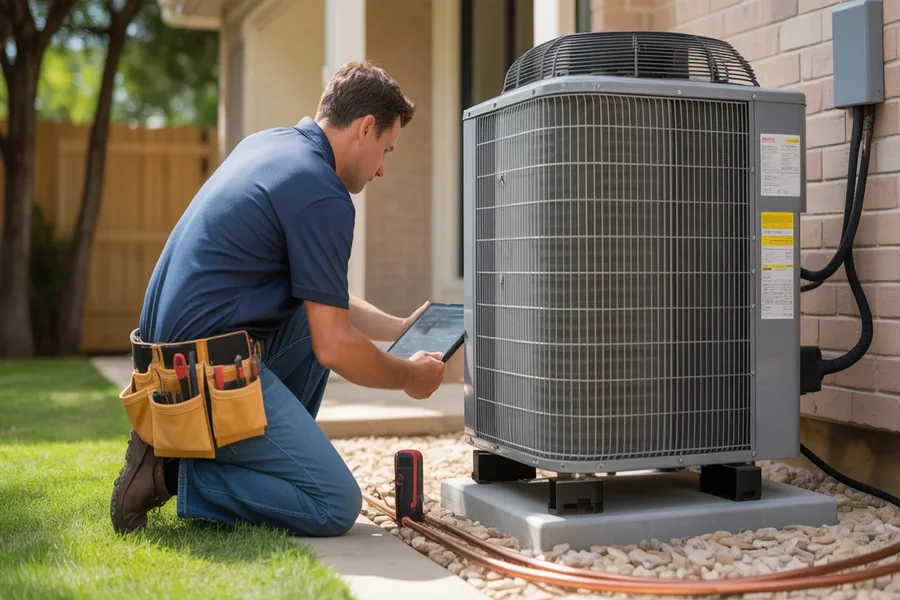
The technician was in my crawlspace for eleven minutes. He came out, typed compressor failure, recommend replacement into a tablet, turned the screen toward me and read a number out loud: 1,400 dollars, on a twelve-year-old three-ton split system in a 1990s starter home I had owned for exactly one summer. I nodded, because that is what you do. Then I asked what he had measured, and he said the unit was not cooling well. That is a symptom rather than a measurement, which is how I spent two evenings calling other ac repair companies Garner NC homeowners had used and asking one thing before I asked about price. A quote that names readings you can repeat back is a diagnosis, and a quote that names only a part is a guess with a dollar figure stapled to it.
The Invoice Read Like Another Language
The paperwork used four terms I had never said out loud: TXV, superheat, micron level, charged to spec. Not one of them sat next to a number. Think of a report card that gives a kid a C in chemistry and prints no test scores and no lab grades, nothing you could add up yourself. You cannot argue with it and you cannot check it either. The vocabulary was doing the job a measurement should have been doing.
One word I did chase down that night was capacitor, after a forum thread claimed a weak one can imitate a dead compressor. Then I read the rest of the thread. A run capacitor holds a dangerous electrical charge after the disconnect is pulled and the unit is off, so opening a condenser’s electrical panel to look at one, let alone swap it, is not a homeowner job, and the Electrical Safety Foundation International recommends that all electrical work be done by a qualified, licensed, insured and bonded electrician who pulls the required permits.
I put the screwdriver back in the drawer.
Compressor Failure Is The Expensive Guess
A compressor is the one part whose replacement can cost more than an aging system is worth, so naming it early turns a repair conversation into a replacement conversation. The pitch after that writes itself. Your equipment is old, your power bill is climbing, so pour money into it or start fresh. For what it is worth, the rate math never scared me the way it was meant to: a rate roundup I read in August 2026, WattCosts, working from EIA filings, put North Carolina residential power at 16.00 cents a kilowatt-hour against a national average of 18.56, with Raleigh at 15.54. My bill was not the problem. The eleven minutes were.
A Second Opinion Cost Nothing But Time
Four companies answered the phone. Three would sketch a range before a visit, and one declined politely, saying the readings decide the price, which I later decided was the better answer. The man who came out Thursday started at the disconnect with a meter instead of at the thermostat with an opinion. He read the capacitor’s rated microfarads off the nameplate, 45 and 5, read what the part was actually producing, then said something I have since repeated to two neighbors: a capacitor drifted out of tolerance turns up on call after call in July, and plenty of those customers have already been quoted a compressor.
The Real Fault Was Cheap And Common
The rated 45 microfarads measured 31. That part had been limping along since spring, dragging the compressor’s start current up and kicking the system out on hot afternoons. He swapped it, cleaned a condenser coil packed with cottonwood fluff, checked the temperature split between return and supply, and wrote both numbers on the invoice. The final bill was 372 dollars. A part name is not a diagnosis until a measurement sits beside it. The first quote carried exactly one number, and it was the price.
Plain Language Is A Diagnostic Signal
The technician who fixed it never said superheat to me, though he plainly knew the word. He said the coil was filthy and the start part was weak, then showed me the meter. That has been the pattern in every service call since: the people who measured are the people who can explain it in kitchen-table words, because they are describing something they saw instead of reciting a category. I cannot tell you whether the first technician was cutting corners or honestly believed his own verdict, and I went looking for a figure on how often a compressor call turns out to be a capacitor. Nobody appears to track it, which is part of why the questions fall to the homeowner.
Ask For The Reading, Not The Verdict
You do not need to learn refrigeration to survive a bad quote. You need one question: what did you measure, and will those numbers be on the invoice? A technician who took readings answers that without flinching, and some of them clearly enjoy being asked. When neighbors ask how to sort through the ac repair companies Garner NC has to offer, that question is what I tell them to open with, along with a request for itemized parts and labor rather than a lump sum. TXV, superheat, micron level: fine words, useful ones, as long as a reading follows each. My compressor is still running.