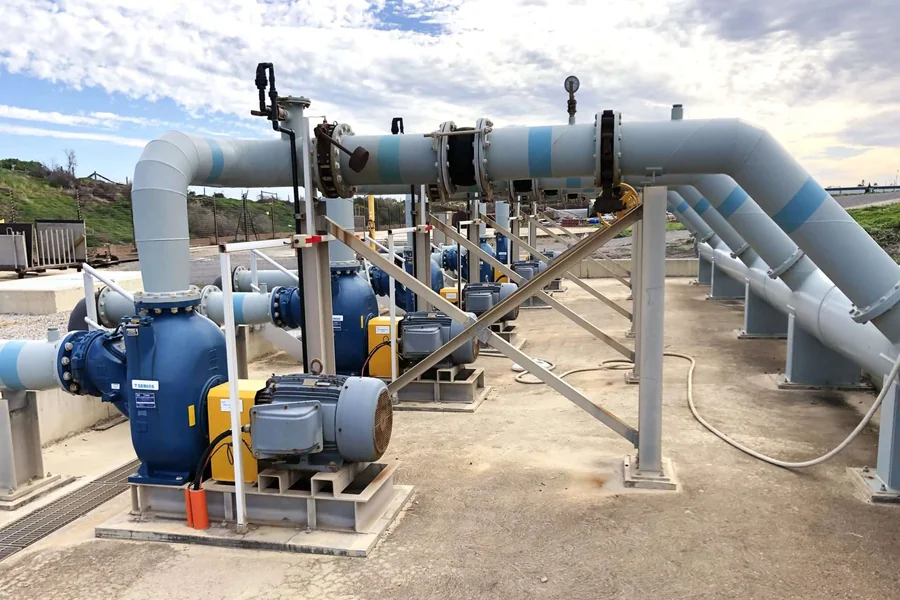
A lift station alarm is not a plumbing problem, whatever the after-hours invoice ends up calling it. If you run a sixty-unit lodging property in Branson on a private sewer main and your own pump station, that horn on the control panel is reporting on buried pipe, grade and pump capacity, not on a clogged fixture in room 212. A plumber can get the pumps running again by ten on a Saturday night. He cannot re-grade a main that has settled six inches over fifteen years. That work goes to the civil contractors Branson MO properties can put on a calendar, with a surveyor, an engineer and a county inspector in the conversation before anyone breaks ground. Replacing a failing private sewer run and lift station as planned excavation work in the slow season costs less money and far less guest disruption than patching the same run through three more show seasons.
Alarms Are Late Signals Not Early Ones
A float switch trips when the wet well is already near the top, which means the alarm is the last event in the story rather than the first. Infiltration through cracked joints after a wet spring, grease that never quite cleared, a run of pipe that lost its fall where the ground moved: all of that happened over months. What usually turns up when the pumps finally come out is not a mystery failure. It is a pump that had been cycling twice as often as it should for the better part of a year, and a panel that had been dropping hints all spring. Ten years ago nobody could have proved that. The alarm was a bell on a pole and a light nobody saw from the front desk, and the only record was whatever the night maintenance guy wrote on a clipboard. Now the panel texts three phones and logs run times, so the evidence of a slow decline sits in a report weeks before the emergency arrives, assuming somebody opens it.
Patching The Symptom Buys A Shorter Season
Once the station cannot keep up, the property runs on pump trucks, and pump trucks are priced by the trip. Say a truck bills around $450 in this market and you need two runs a day to keep sixty units moving, with roughly 900 gallons a day coming off each building through show season. Two weeks of that is real money spent on wastewater the station used to move without help, and none of it improves the pipe. The second patch buys less time than the first, because you are repairing the weakest joint in a run where every joint is the same age. A lift station replaced in February is a budget line, and the same failure in July is a refund policy. Emergency work also arrives with no choice of contractor, no engineer on the drawing and no window, so you take whoever can be there tonight at whatever the night rate happens to be.
Three Repair Paths Carry Very Different Downtime
Ask two or three civil contractors Branson MO for a scope on the same failing run and you will usually get some version of three paths. They are not priced alike and they do not take the same number of days. The difference that matters to a lodging operator is narrower than the total schedule: it is how many of those days a guest can see, hear and smell.
Example scenario for a sixty-unit property on a private main, not a quote.
| Repair Path | Typical Scope | Guest-Facing Downtime | Next Five Seasons |
| Spot repair of the failing segment | Open one 20-foot section, replace pipe and bedding | One to two days, one drive lane closed | Buys a season or two, since the rest of the run is the same age |
| Full private lateral and main replacement | New run, new bedding, rebuilt wet well and pumps | One to two weeks, phased building by building | Resets the clock and turns alarms back into routine maintenance |
| Connection to the municipal main | Engineering, easements, tie-in, station abandoned | Two to four weeks plus permitting lead time | No station to maintain, monthly sewer billing instead |
The middle row is where most sixty-unit properties land, and it is also the easiest one to phase. A crew can open one building’s service at a time, backfill, restore the drive lane and move to the next, so the property never has more than one wing affected at once. The municipal tie-in is the cleanest long-term answer where the main is close enough to reach, but easement and permitting work runs on the county’s calendar rather than yours, which makes it a conversation to start a year ahead of the shovel.
Open Trenches Beside Occupied Buildings Change The Plan
Trench work beside occupied buildings changes the plan more than the pipe spec does. Nobody enters a trench five feet or deeper without a protective system in place, meaning shoring, a shield box, or a properly benched and sloped wall, and that never gets traded away to save a day. Guests, staff and vehicles stay behind barriers set well back from the edge, because the edge is the part of an open excavation that gives way first. If a machine hits an unmarked line, OSHA’s bulletin on utility strikes during excavation is blunt about the rule: all work stops immediately, someone calls 911, and the utility company assesses the damage and the hazard before anyone resumes. For a resort that also means deciding in advance where guests walk and park while a trench is open, written into the plan rather than improvised the morning the excavator arrives.
Underground Work Can Be Scheduled Around Bookings
January and February are the months this work belongs in, and the sequence is what makes it survivable. Survey and utility locates first, then engineering, then the county, then dirt. Access is its own line item, because a track hoe and a string of dump trucks have to reach the station without cutting a rut through the lawn between two buildings. In March 2026 I went looking for a spec to hand our grounds crew and ended up in the USDA’s Natural Resources Conservation Service field office technical guide. According to that guide, a livestock lane or a high-traffic farm pad wants geotextile fabric down first, then a coarse gravel base course, then a smaller surface material on top, with a four to six degree slope so water drains off instead of standing. That is a document written for cattle and hay trailers, not guests with roller bags, and I have wandered off the point. The point is that a temporary haul lane is the same layered problem, and a crew that builds one properly leaves you a service route you keep instead of a scar you re-seed in April.
Replace In The Slow Season Not The Peak
The alarm will sound again eventually. The only question worth arguing over is whether it sounds while the property is full or while it is empty and a crew is already on site with pipe on the ground. A private station and a private main are infrastructure with a service life and a replacement cost, so they belong in the capital plan beside the roofs and the parking lot rather than in the emergency repair line. Get a survey and a camera run done in the fall, put real numbers in front of ownership before the budget closes, and hold a February window with a contractor who works with your engineer and your inspector. Do that and the worst Saturday of show season stays an ordinary Saturday.