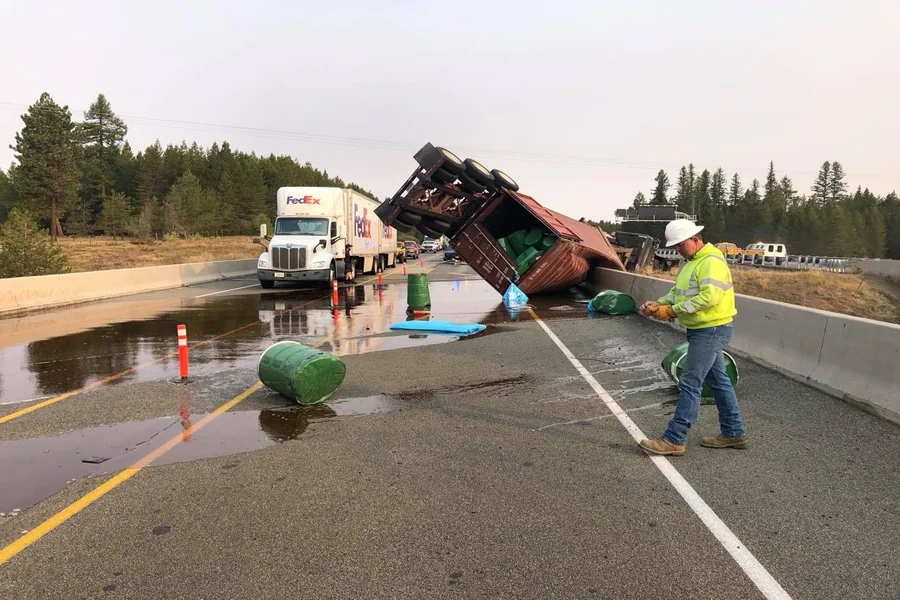
Nobody plans for a breakdown. You’re somewhere on I-84, maybe near Port Jervis, maybe further east toward Newburgh, and the truck is done. Engine warning, blowout, drivetrain failure — it doesn’t matter what the cause is. What matters is what happens in the next 30 minutes, and most drivers don’t have a clear plan for it.
The sequence is simpler than it feels in the moment. Get the truck as far off the active lane as possible, get triangles or flares out at the legally required distances, call your dispatcher, and then call someone who can actually move the vehicle. That last call is where a lot of drivers lose unnecessary time.
Heavy Duty Towing: Why Carrier Selection Matters
Heavy duty towing for a loaded semi is not the same operation as towing a pickup. The equipment required — rotators, underlift-extends, specialized rigging — isn’t something every tow company runs. Calling a standard tow truck for a 40-ton rig is a fast way to spend two hours waiting for a second call when the first truck shows up unable to do the job.
NYS Heavy Repair has been running heavy recovery in the Hudson Valley and tri-state area since 1998. Frank and Tyler Ciano have built the operation around the specific demands of commercial work — Class 7 and 8 trucks, fully loaded trailers, accident recovery on divided highways. When you call them, you’re not getting a light-duty operation that happens to own one big truck.
For drivers who run I-84, Route 6, or the I-87 corridor regularly, having the number saved is worth the 30 seconds it takes. Breakdowns have a way of happening at mile markers you don’t expect.
The Hours After the Tow
Getting the truck off the road is step one. What comes next depends on the failure. For something mechanical — engine, transmission, axle — the truck needs to get to a shop capable of handling the work at scale. Most dealerships are booked out days in advance. Independent shops that specialize in Class 8 work are faster to respond and often more flexible on the scope of what they’ll tackle.
Downtime math is uncomfortable. A truck sitting for three days waiting for a dealership appointment costs more in lost revenue than most repairs. The faster the diagnosis and parts procurement, the faster the truck is back on the road. That timeline depends almost entirely on who’s doing the work and how much of the process they control in-house.
Heavy Duty Truck Repair: What to Look for in a Shop
Heavy duty truck repair at the commercial scale means working on components most mechanics have never touched. Diesel engines running 13 liters or more, multi-speed automated transmissions, tandem axle configurations, air brake systems — the diagnostic process alone requires specialized tools and someone who knows what normal looks like on that equipment.
NYS Heavy Repair handles this work alongside their towing operation, which matters more than it might seem. When the same shop recovers the truck and does the repair, the handoff is faster, the diagnostic conversation starts earlier, and parts can sometimes be ordered while the truck is still in transit. The alternative — separate tow company, separate shop, separate scheduling — adds hours or days to the process.
Keeping Downtime Short
Experienced owner-operators tend to have two or three contacts ready before they need them: a tow operator who handles commercial work, a shop with capacity for their specific truck configuration, and a roadside assistance line for the things that can be handled without moving the truck. That preparation doesn’t take long to set up, and the first time you actually need it, it saves a lot of scrambling.
For anyone running through the Hudson Valley or the tri-state region, NYS Heavy Repair covers towing and repair under one roof. They can be reached at 845-734-1300 and run 24/7 for recovery calls.