A small damp patch behind a bathroom cabinet or an unexplained increase in your water bill might not seem urgent. But sometimes, these minor changes are the first indications of a plumbing problem developing out of sight.
Hidden water leaks can occur inside walls, beneath flooring, under concrete slabs, or along underground supply lines. Because the affected pipes are concealed, water may escape for weeks before homeowners notice anything unusual.
Recognizing the early warning signs can help prevent extensive water damage, protect building materials, and reduce unnecessary repair costs. Here are seven signs worth investigating and what you can safely check before calling a professional.
1. An Unexpected Increase in Your Water Bill
One of the earliest signs of a hidden water leak may appear on your monthly utility bill.
If your household’s water consumption increases significantly without an obvious explanation, water could be escaping somewhere in the plumbing system.
For example, a homeowner who hasn’t changed their daily routine might notice that water usage has increased despite having the same number of occupants and using the same appliances.
However, higher bills don’t automatically indicate a leak. Seasonal irrigation, guests, changes in household habits, and utility rate adjustments can also affect costs.
What homeowners can check:
Compare the amount of water consumed, rather than just the total amount charged, across several billing periods. If consumption remains unusually high, investigate fixtures, toilets, and accessible plumbing connections.
2. Damp Patches or Unexplained Water Stains
Water stains on ceilings, walls, or floors can indicate moisture entering building materials.
These stains may appear as yellowish discoloration, darker patches, bubbling paint, or areas that remain damp long after surrounding surfaces have dried.
A stain near a bathroom or kitchen might suggest a plumbing issue, but the visible location doesn’t necessarily reveal where the water originated.
Moisture can travel along framing, pipes, insulation, and other construction materials before becoming visible.
It’s also important to distinguish plumbing leaks from roof leaks, exterior water intrusion, and condensation.
What homeowners can check:
Photograph the affected area and monitor whether it expands or changes after rainfall, showers, or periods of water use. Avoid opening walls without first understanding the likely source.
3. Persistent Mold or Musty Odors
A musty smell that returns despite regular cleaning and ventilation may indicate an ongoing moisture problem.
Mold can develop when building materials remain damp, particularly in poorly ventilated spaces such as closets, bathrooms, basements, and areas behind cabinets.
Sometimes, an odor becomes noticeable before a visible stain appears.
However, mold and musty smells aren’t exclusive signs of hidden plumbing leaks. Condensation, inadequate ventilation, and exterior moisture can produce similar conditions.
Homeowners should therefore investigate the source of moisture rather than repeatedly treating the visible symptoms.
If mold covers a substantial area, keeps returning, or involves potentially contaminated water, professional assessment is advisable.
4. Sounds of Running Water When Fixtures Are Off
Your plumbing system should generally be quiet when nobody is using water.
If you hear persistent hissing, trickling, or running-water sounds while faucets and appliances are off, an unexpected flow may be occurring.
For instance, a pressurized supply pipe with a leak can sometimes generate sound or vibration as water escapes.
Before assuming that a hidden pipe is damaged, check whether a toilet is refilling intermittently, an irrigation system is operating, or an appliance is drawing water.
Water heaters and other mechanical equipment may also produce normal operating sounds.
A recurring unexplained noise deserves further investigation, particularly when accompanied by increased consumption or visible moisture.
5. Unexplained Changes in Water Pressure
A noticeable reduction in water pressure can be frustrating, especially when showering or using multiple fixtures.
In some circumstances, a significant leak in a pressurized supply line can contribute to reduced pressure.
However, pressure changes have many possible explanations, including clogged aerators, partially closed valves, pressure-regulator problems, municipal supply fluctuations, and simultaneous water use.
A pressure problem affecting only one faucet is often more consistent with a localized fixture issue than a concealed leak.
What homeowners can check:
Compare pressure at different fixtures and note whether the change affects hot water, cold water, or the entire property.
If pressure suddenly drops throughout the home, contact the water utility or a qualified plumbing professional to investigate.
6. Changes in Walls, Flooring, or Baseboards
Hidden moisture doesn’t always produce an obvious water stain.
Sometimes, its effects appear as changes in the materials themselves.
Wood flooring may begin to cup or warp. Baseboards can swell, paint may peel, and certain wall finishes may soften or deteriorate.
In tiled areas, persistent moisture can contribute to changes in grout or surrounding materials, although these symptoms can have several causes.
For example, flooring that begins lifting near a bathroom might be affected by water entering from a nearby plumbing connection. But installation defects, humidity fluctuations, and other building conditions must also be considered.
Rather than replacing damaged finishes immediately, homeowners should establish whether an active moisture source is present.
Otherwise, newly installed materials may experience the same problem.
7. Water Meter Movement When No Water Is Being Used
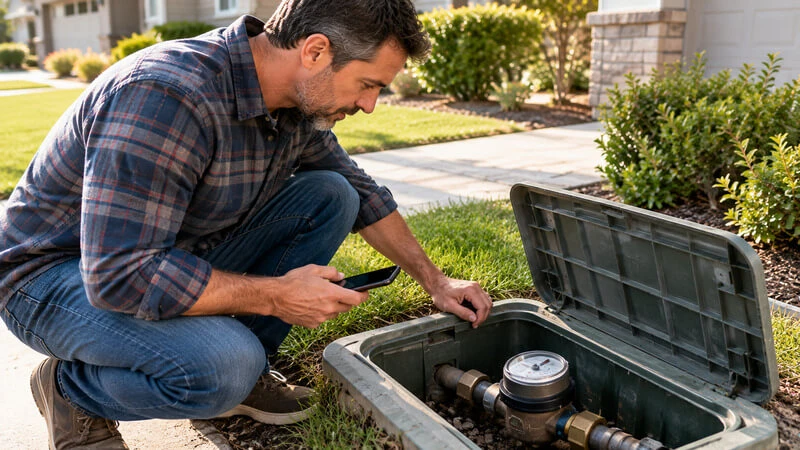
Your water meter can provide one of the most useful initial clues about a possible leak in the metered supply system.
Many meters register water flowing into the property, making it possible to observe whether consumption continues when all known water outlets are closed.
How to Perform a Basic Water Meter Check
- Turn off faucets and ensure showers, washing machines, dishwashers, and other water-using appliances aren’t operating.
- Check that toilets aren’t refilling and that irrigation systems are inactive.
- Locate the water meter and note its reading or leak-indicator position.
- Wait approximately 15–30 minutes without using water.
- Check whether the reading or indicator has changed.
If the meter continues registering consumption, an unnoticed flow may exist somewhere downstream of the meter.
This test isn’t conclusive. Automatic appliances, intermittent toilet leaks, and certain plumbing configurations can affect the results. A meter that remains stationary also doesn’t rule out every type of water intrusion or leak.
Nevertheless, it provides a useful starting point for further investigation.
How Professionals Locate Hidden Water Leaks
When basic checks fail to reveal the source, specialized diagnostic methods can help narrow down the location of a suspected leak before walls or floors are opened.
Different technologies investigate different physical signals.
Thermal imaging cameras detect temperature variations on accessible surfaces. Under suitable conditions, these patterns may help identify areas affected by moisture or changes in temperature associated with concealed plumbing. Thermal cameras do not see water directly through solid walls.
Acoustic detection equipment identifies sounds or vibrations associated with certain leaks in pressurized pipes. Its effectiveness depends on factors such as pipe material, pressure, depth, and background noise.
Tracer gas testing involves introducing an appropriate gas into a suitably prepared system and using specialized equipment to detect where it escapes. The method isn’t suitable for every installation.
Moisture meters and other diagnostic tools may also help assess the distribution of dampness and interpret the evidence.
Portugal-based TecFuga, a company specializing in water leak and infiltration diagnostics, provides information about professional water leak detection and the technologies used to investigate concealed plumbing problems.
No single technique guarantees accurate results in every situation. Professionals select and sometimes combine methods according to the building, plumbing configuration, and available evidence.
Importantly, non-destructive diagnosis doesn’t mean repairs will never require physical access. Its purpose is to reduce unnecessary exploratory damage and make subsequent interventions more targeted.
Why Preventive Maintenance Matters
Not every hidden leak can be prevented, but regular home maintenance can make plumbing problems easier to recognize before damage spreads.
Inspect accessible connections beneath sinks, around water heaters, and behind appliances where safe access is available. Replace deteriorated hoses and fittings when appropriate, and address dripping faucets or running toilets promptly.
Periodically reviewing water consumption can also help homeowners recognize unusual patterns.
For properties with basements, crawl spaces, or infrequently visited utility rooms, routine inspections are particularly valuable because moisture problems may otherwise remain unnoticed.
Avoid attempting electrical work near wet areas or opening concealed plumbing without appropriate expertise. If water is approaching electrical equipment, keep clear and seek qualified assistance.
Final Thoughts
Hidden water leaks rarely announce themselves with a dramatic burst pipe. More often, they reveal themselves through small changes: an unfamiliar sound, a rising water bill, a damp patch, or flooring that begins to deteriorate.
None of these warning signs proves that a concealed pipe is leaking. Together, however, they provide reasons to investigate rather than ignore a developing problem.
By monitoring water consumption, checking accessible fixtures, maintaining plumbing components, and seeking professional diagnosis when necessary, homeowners can make more informed repair decisions and reduce the risk of avoidable water damage.