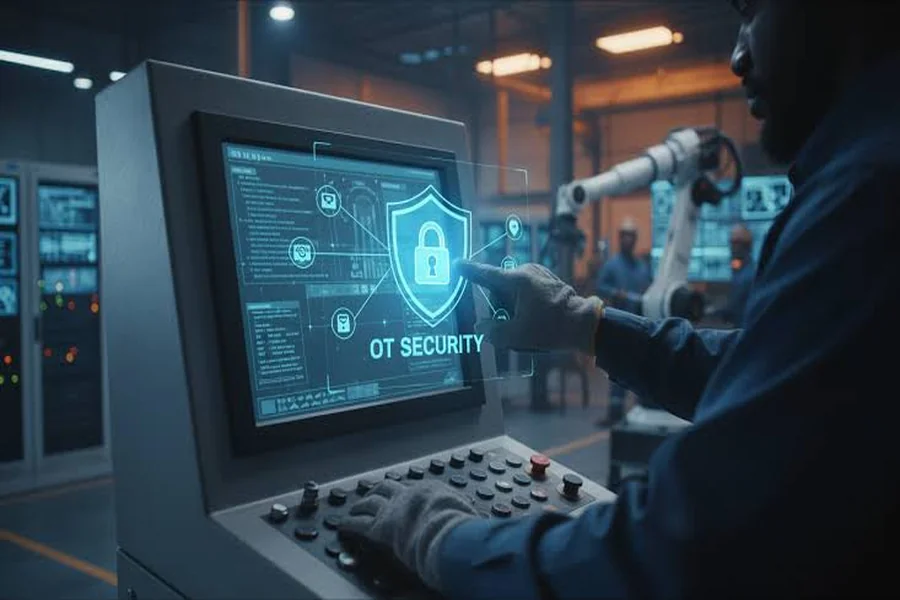
Industries utilize connected systems for controlling machinery, process monitoring, production management, and maintaining performance consistency. Be it manufacturing units or energy plants, operational technology is vital for all physical activities.
With these systems connecting with enterprise networks and remote workers, security is a critical aspect of operation. Unlike traditional IT systems, the OT system has the capability to affect the physical process directly. It can disrupt the process, harm the machinery, or even pose a danger.
What Is OT Security?
The term OT security is concerned with the means by which operational technology systems, devices, networks, and processes are secured from cyber threats and disruption. OT security for industrial systems focuses on protecting connected operational environments while maintaining the safety, reliability, and continuity of physical processes.
An OT environment might include such things as programmable logic controllers (PLCs), SCADA systems, distributed control systems (DCS), HMIs, remote terminal units, industrial sensors, robotics, and any other types of connected equipment.
Many systems run for years or even decades and may involve proprietary hardware or protocols used in industrial settings. Many cannot be shut down due to the risk of interrupting operations.
It is for this reason that OT security involves striking a balance between cybersecurity needs and operational considerations.
How OT Security Differs From IT Security
Typically, IT security deals with the protection of information, applications, end-points, users, and services. OT security ensures the protection of systems which work directly with machinery and processes.
Where an incident on the IT side will deny access to an application, an OT incident may disrupt a process on a production line.
There could be different priorities as well. Typically, IT security places importance on confidentiality, integrity, and availability. Availability, reliability, safety, and process integrity become important in OT environments.
| Area | IT Security | OT Security |
| Primary focus | Data, applications, and users | Physical processes and equipment |
| Common assets | Servers, laptops, databases | PLCs, SCADA, HMIs, sensors |
| Downtime tolerance | Often moderate | Can be extremely limited |
| System lifecycle | Frequently upgraded | May remain for decades |
| Security priorities | Confidentiality, integrity, availability | Safety, availability, reliability |
| Maintenance | Regular patching is common | Changes require testing and planning |
This does not mean that IT and OT should operate as completely separate security programs. Industrial environments depend on communication between business and operational systems.
How IT and OT Convergence Changes Risk
A lot of traditional OT infrastructure was created assuming minimal outside connection. The relative lack of connection decreased the number of systems capable of connecting with industrial equipment.
However, modern operations have changed that approach. Organizations link their OT networks with enterprise systems, remote monitoring solutions, cloud, and even other organizations. While that makes operations more efficient, it also creates ways for attack. ENISA recommendations on smart manufacturing also emphasize the necessity to secure cybersecurity of connected industrial and manufacturing infrastructure.
Remote access creates another consideration. Engineers, contractors, and service providers may need access from outside a facility. Without appropriate controls, these connections can increase the attack surface.
Legacy technology adds complexity. Older systems may lack modern authentication or straightforward patching. Replacement may be difficult because of cost, compatibility, or disruption.
Organizations therefore need to understand connected systems, communication paths, access rights, and assets critical to continuity.
Common OT Security Challenges
There are various security challenges associated with securing an operational environment within industrial organizations:
- Old systems are critical even if no patches are applied for their security.
- Low visibility will hinder the process of maintaining an asset inventory.
- Remote access can help in maintenance but will increase exposure as well.
- Flat networks can enable access towards sensitive operational assets.
- Operational limitations can render traditional IT approaches disruptive.
Certain protocols need monitoring based on industrial characteristics.
Key Elements of an Effective OT Security Strategy
An effective OT security strategy requires visibility to start with. Companies must have insight into assets, network structure, communications channels, and processes. The process of asset discovery allows identifying those assets which otherwise might be out of the scope of security teams.
Network segmentation is essential. Segmenting industrial environments in the right way helps restrict unnecessary communications and minimizes lateral movements. It is not necessary to mirror the IT environment when segmenting the network.
Access control deserves attention. Companies must limit administrative rights, implement proper authentication, review accounts, and ensure remote users receive only necessary access rights.
Continuous monitoring is an essential tool to detect abnormal behavior. The definition of the baseline of the expected behavior facilitates investigation of any connections, authentication, or modifications to the system.
Incident response planning is also necessary. The procedures to deal with incidents in the OT environment must consider safety aspects, dependencies on production, recovery of the system, and interaction with cybersecurity and operations personnel.
IEC 62443-2-1 contains requirements for security programs of asset owners who run industrial automation and control systems. It also takes into consideration that some of the existing systems might not have built-in security mechanisms.
Protecting Legacy OT Systems
The issue of legacy technology continues to be relevant for many industrial enterprises. In some cases, changing outdated solutions might prove to be expensive and risky.
In case of infeasibility of changing the technology, organizations can use various compensatory measures in the form of network segregation, limited access, monitoring, and additional protection of the vulnerable systems.
The idea is not to make all legacy devices act like modern endpoints. Instead, the organization can establish multiple levels of protection for systems that are impossible to change.
The change management process needs to be applied carefully in case of legacy systems. The security team must first assess the impact of updating, configuring, or implementing monitoring technologies before implementation.
Why OT Security Matters for Modern Operations
OT security breach consequences can go beyond the digital world. OT breach can cause the following effects: impact on productivity, deterioration of the quality of the product, equipment damage, and even safety issues.
In terms of critical infrastructure, it can cause consequences not only for the company but also for the end-user and community. Another type of business can face significant losses in case manufacturing systems are disrupted.
Security measures should provide operational resilience rather than be a technical process separated from other processes. When cybersecurity, engineering, and operations have similar visibility and response protocols, the team can make security decisions with awareness of operational needs.
Guidance provided by IEC 62443 highlights taking into account operational considerations when developing security controls for industrial automation and control systems. Security controls should not cause any negative impact on critical services and functions.
Building a More Resilient OT Environment
OT security cannot be bought as a product or done as a one-time project. It must be an ever-evolving process because of the changes that take place in industrial networks and equipment.
This process may start from conducting an asset inventory and creating a map of the network. After that, critical systems can be recognized, communication channels evaluated, excessive access limited, environments segmented, monitored, and procedures put in place.
Regular updates are important. New remote connections, connected systems, software updates, and third parties may affect the security risk landscape of the business.
Collaboration between security professionals and operational experts is required during the implementation of new security controls. Control that is effective in IT does not mean the same in the production process. Knowing about the business processes is necessary for enhancing security without causing disruptions.
Industries will become even more connected in the future. Security of the systems that control the physical operations will stay a relevant aspect of resilience. By increasing visibility, controlling access, managing legacy systems, monitoring activities, and planning incidents, the organizations can protect themselves from potential threats.
Frequently Asked Questions
1. What is OT security in simple terms?
OT security refers to the security of technology that is used for observing, controlling, and managing physical processes. This includes industrial technologies, networks, systems, and connections, among others.
2. What is the difference between OT and IT security?
OT security is mainly concerned with systems that interface with physical process control systems and equipment. The operational technology environment can be more challenging than IT due to its longer life cycles and higher availability and continuity concerns.
3. Why is OT security important for manufacturers?
Manufacturers rely on interconnected systems to control their machinery and manufacturing processes. A cyber attack could lead to production disruption, poor quality of products, machinery damage, and even risk people’s lives.
4. How can organizations improve OT security?
An organization should begin with the identification of connected devices, analysis of communication channels, segmentation of critical environments, user and remote access management, monitoring OT traffic, legacy systems management, and planning for an effective response to incidents.