Twelve people come up the dirt road on a Friday evening, three cars deep, coolers riding in the back. Showers start around seven. By Sunday night the downstairs toilet is gurgling every time someone runs the kitchen tap, and the group chat turns into a debate about who calls somebody about the septic systems prescott az cabin owners tend to forget are down there at all. The rule that matters here is unglamorous: a shared cabin’s wastewater system has to be sized and serviced for its busiest forty-eight hours, not for its yearly average. A tank permitted around a quiet two-person household can absorb most of a month’s flow in a single weekend, and it will let you know that it did.
Cabins Now Host Crowds They Never Did
Ten or fifteen years ago the cabin up a forest road belonged to one family, and it sat empty for most of the year. Two retirees over a long weekend, a week in July with the grandkids, then quiet. Now the same building is co-owned by six friends who split the dues, share a booking calendar, and each bring a partner or a couple of guests when their turn comes around. Four big weekends a year, twelve bodies at a time. The building handled that change fine. What is underground did not change at all, and in practice that is exactly where the trouble lands, because the tank and the drainfield were sized for the household that built the place rather than the group that inherited the booking spreadsheet.
Two pieces of contractor vocabulary are worth having in plain English before you call anyone. Design flow is the number of gallons per day the system was permitted to handle, and peak loading is what actually shows up on your worst day. Twelve guests also means twelve people’s worth of paper, which is not a side detail. In a May 2026 explainer on what belongs in an onsite system, CUES Inc. describes standard toilet paper breaking down in 30 seconds to 2 minutes, and points to the 30-second breakup test as the threshold for calling a paper septic-safe. Guests bring whatever was on sale at the last gas station. Stock the cabin yourself and that whole variable goes away.
Daily Gallons Per Person Explain The Alarm
Run the arithmetic on your own place and the gurgle stops being mysterious. Call it 60 gallons per person per day for a group that showers, runs towels and keeps the dishwasher going. Actually, 60 is the polite version; with three loads of laundry and back-to-back showers on a Saturday afternoon, 75 per person is closer to what a full cabin does. Twelve people at 60 gallons is 720 gallons a day, so a Friday-to-Sunday stay pushes somewhere between 1,440 and 1,800 gallons through a system permitted around two people at maybe 120 gallons a day. That is roughly twelve days of design flow arriving in two.
The tank does not overflow, exactly. Solids get stirred back into suspension instead of settling out, and partly treated water reaches the drainfield faster than the soil can accept it. The gurgle is air with nowhere else to go, pushing back through the lowest fixture in the house. Anyone who inspects septic systems prescott az cabins run on will ask about headcount and booked weekends before touching the tank, because the flow number is most of the diagnosis. Slow drains, a smell near the cleanout, or a soft wet patch downhill all point back at the same arithmetic.
Ask These Before A Big Weekend Booking
An inspection ahead of your busiest weekend is worth far more than one after it, and the value sits in what gets measured rather than what gets glanced at. Ask for design flow in gallons per day, the tank’s real capacity, and how well the drainfield is absorbing water right now. Bring the booking calendar to the appointment, because it is data. Four questions get you most of the way to a straight answer.
- What is this system’s permitted design flow in gallons per day? A good answer comes off the permit record, not an estimate based on tank size.
- How many people can stay a weekend before the drainfield becomes the limiting factor? A good answer names a headcount and says which component caps it.
- With four big weekends a year and twelve people each time, how often should this tank be pumped? A good answer ties the interval to gallons and solids rather than a flat every-three-years habit.
- If we add a bedroom or a second bathroom, what changes with the county? A good answer explains which approvals and inspections that triggers before any work starts.
- What would a larger tank or an expanded drainfield cost on this site? A good answer covers soil, setbacks and access, and arrives in writing.
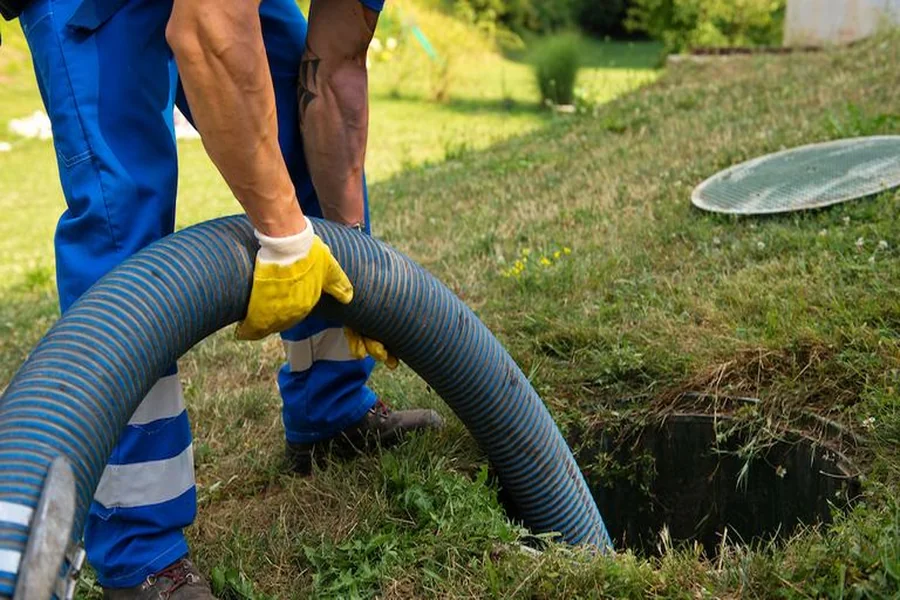
One more thing to settle before guests arrive, and it has nothing to do with gallons. Never open a septic tank lid to look inside, and never let anyone climb in, because the gases in a tank can kill in seconds. Older concrete and steel lids also fail under weight, so if a lid feels soft underfoot, keep everyone off it and get a licensed contractor out to replace it. A curious weekend crowd and an access hatch are the wrong combination, especially with kids around.
Arizona regulates onsite wastewater at the state level with county programs handling permits and inspections, so what your parcel is actually approved for varies by county and by the age of the system. Rather than assuming, ask the contractor to pull the permit record and read you what it says. A shared cabin carries an extra wrinkle here, since six owners usually means nobody is certain who holds the paperwork. That question usually turns up unanswered, and it is much better resolved on a quiet Tuesday than during a backup.
Size The System For The Busiest Weekend
Three outcomes come out of an honest capacity check, and every one of them costs less than a Sunday night emergency call. Sometimes the answer is service, which means pumping on a schedule tied to real gallons and stocking paper that clears the 30-second test. Sometimes it is hardware, a larger tank or an expanded drainfield, priced against what the soil and the setbacks on your site allow. And sometimes it is a scheduling rule the six of you simply agree to, something as dull as capping guests at eight or spreading the laundry across two days. A drainfield has no sense of occasion. Whichever it turns out to be, the number that decides it is peak weekend flow, and the group that measures that once tends not to have this conversation again next spring.