You have likely spent months, maybe years, cycling through different prescriptions. You have tracked moods, managed side effects, and waited for the “right” balance that never seemed to materialize. When your standard approach to mental health hits a wall, it is common to feel frustrated. You are not alone in this search for effective care, and luckily, new paths exist for those whose symptoms persist despite the best efforts of conventional medicine.
Understanding that medication is not the only way to support brain health is a major step forward. When your brain seems resistant to standard chemical interventions, it does not mean you have run out of options. It means it is time to look at the mechanical and electrical side of how your brain functions. Brentwood TMS therapy offers a non-invasive way to address these challenges directly.
Understanding How TMS Therapy Changes the Conversation
If you are familiar with depression treatments, you know that most medications work systemically. They aim to alter your entire body chemistry. While this approach helps many, it misses the mark for others. This is where TMS therapy in Brentwood offers a different perspective.
Transcranial Magnetic Stimulation (TMS) is not a medication. It does not circulate through your bloodstream or cause the typical issues like weight gain or fatigue that often accompany antidepressants. Instead, it uses focused magnetic pulses to gently stimulate the specific areas of your brain that are responsible for mood regulation. Think of it as a way to send a signal to underactive neural circuits, helping them wake up and start functioning at their natural baseline again.
The science behind this is fascinating. Your brain communicates using electrical signals. In some people struggling with depression or other mood disorders, specific regions show decreased activity. TMS uses a magnetic field similar in strength to an MRI to induce small electrical currents in these underactive areas. This process, called neuroplasticity, encourages the brain to reorganize itself and build stronger connections over time.
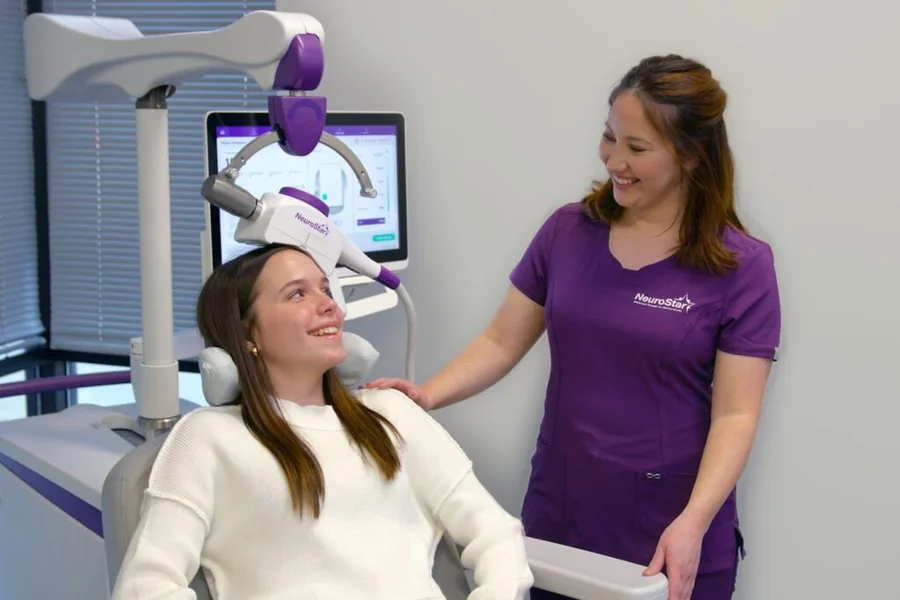
During a session, you remain fully awake and alert. There is no need for sedation or anesthesia, which means you can drive yourself to and from your appointment, return to work, or run errands immediately afterward. It is a precise, non-invasive method designed to meet you where you are, rather than asking your body to adapt to another chemical trial.
The Clinical Reality: Why Medication Falls Short
It is important to acknowledge why you might be in this position. Many people start with a primary care provider or a general psychiatrist who prescribes the most common medications. These drugs work by altering neurotransmitters like serotonin or norepinephrine. However, your brain is complex. Sometimes, the problem is not just a chemical imbalance but a circuit regulation issue. If the circuits are not firing correctly, changing the chemical environment might provide only temporary relief or none at all.
This is why treatment-resistant depression options like TMS are gaining popularity. They bypass the chemical route entirely. By focusing on the physical structures of the brain that govern mood, TMS addresses the root cause of the dysregulation. You are effectively retraining your brain to respond more normally to the stimuli in your environment.
What to Expect from Your Treatment Journey
Taking the first step toward something new can feel daunting, but the process is straightforward. When you explore your options, you want clarity and consistency. In the Brentwood area, the focus is on a mapped, individualized plan rather than a one-size-fits-all template.
Your journey begins with a consultation where a professional assesses your history and determines if this technology is the right fit. It is a collaborative process. They look at which treatments you have tried, how you responded to them, and what your goals for recovery look like.
- Precision Mapping: Your provider will identify the specific region of your brain that needs support, ensuring the magnetic coil is positioned accurately for every single session. This is the “map” that makes the treatment so effective.
- Consistent Routine: Most treatment courses last a few weeks, with daily sessions that usually take less than half an hour. You sit in a comfortable chair, listen to the rhythmic tapping of the device, and that is it. It is a quiet time to reflect or just relax.
- No Down Time: One of the biggest advantages is that you do not need recovery time. You can incorporate these sessions into your workday or your personal schedule without disrupting your life.
- Measurable Progress: Many people start noticing a shift in their outlook after a few weeks. Because this method directly targets the brain circuits involved in mood, the results often feel more sustainable for those who have struggled to find relief elsewhere.
Managing Expectations and Focusing on Results
It is reasonable to be skeptical when you have tried so many things before. You might wonder if this will really be different. The key to success with TMS is commitment. Because it is a form of brain training, it works best when done consistently over the recommended number of sessions. Your brain needs the repetition to build those new pathways and improve its communication, much like muscle memory develops through repetitive exercise.
As you progress, you will likely notice gradual shifts. You might find it easier to get out of bed, your focus might sharpen, or you might start experiencing moments of joy that have been missing for a long time. These small changes add up. Your provider will monitor your progress throughout the process, adjusting the plan if necessary to ensure you are getting the most out of every session.
You deserve a treatment plan that acknowledges the reality of your experience. If you are tired of the cycle of failed medications, it might be time to learn more about how this technology can help you regain your quality of life. The path to wellness is rarely a straight line, but having the right tools can make all the difference in the world.